
Last updated September 23, 2026
Whole-system duct and dryer vent check with before-and-after photos - you see exactly what came out of your vents
That "$99 whole-house special" is a bait ad - the real number appears once they are in your hallway, or the "clean" is a shop-vac at the register. We photograph the inside of your ducts before and after instead.
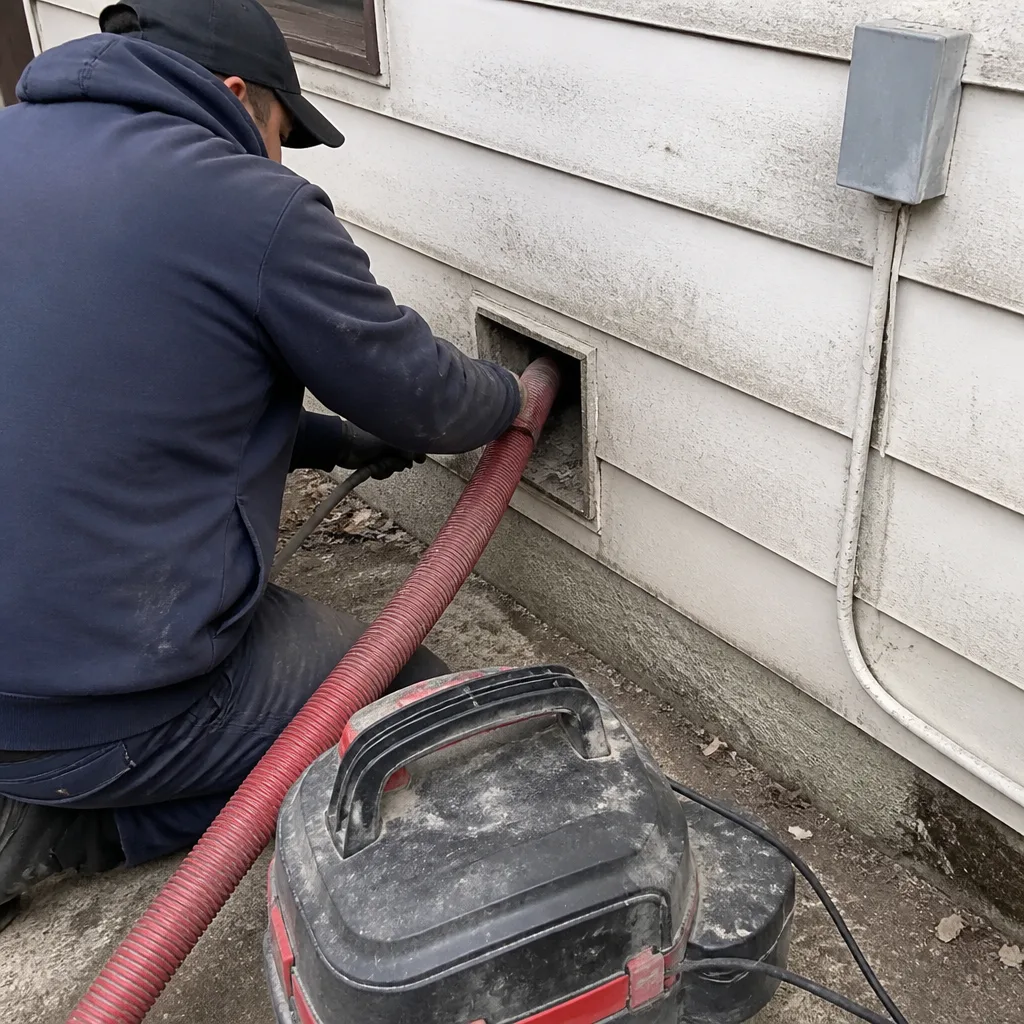 Before
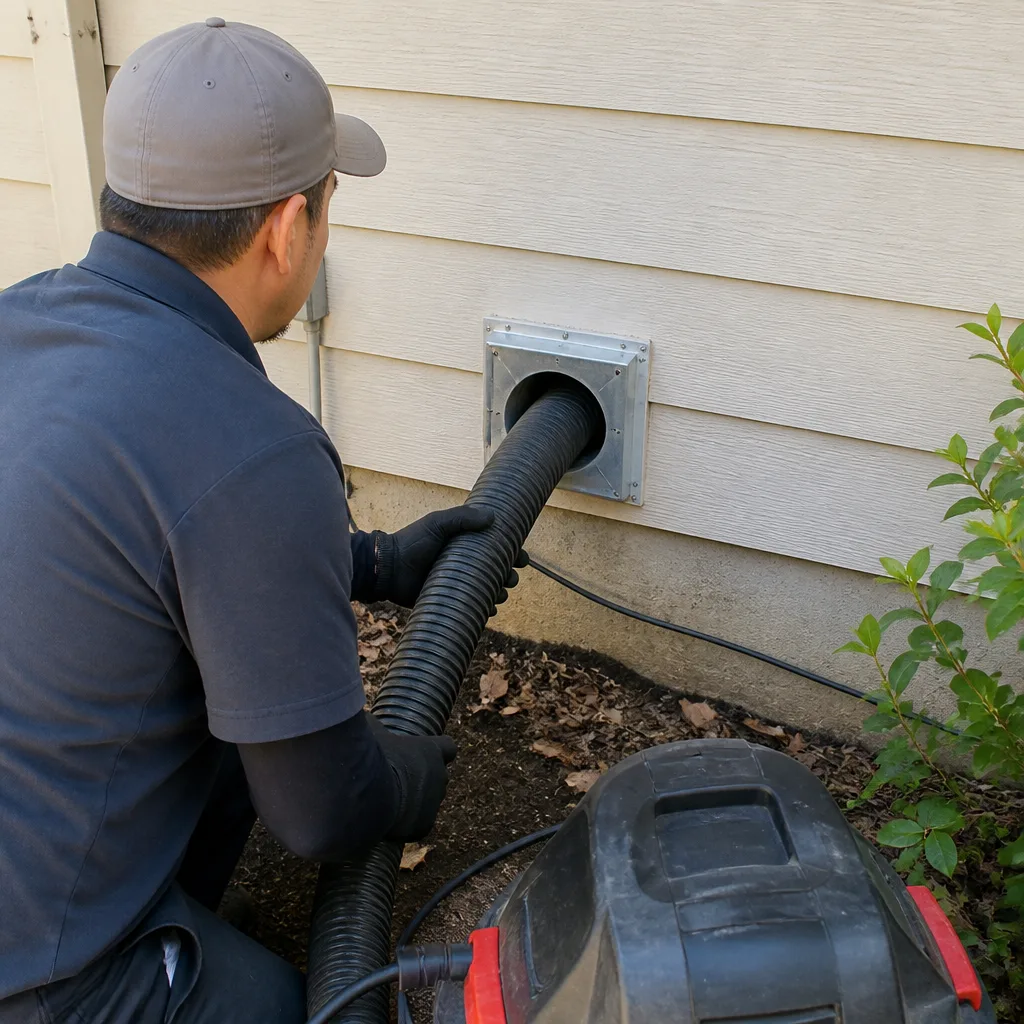 After
After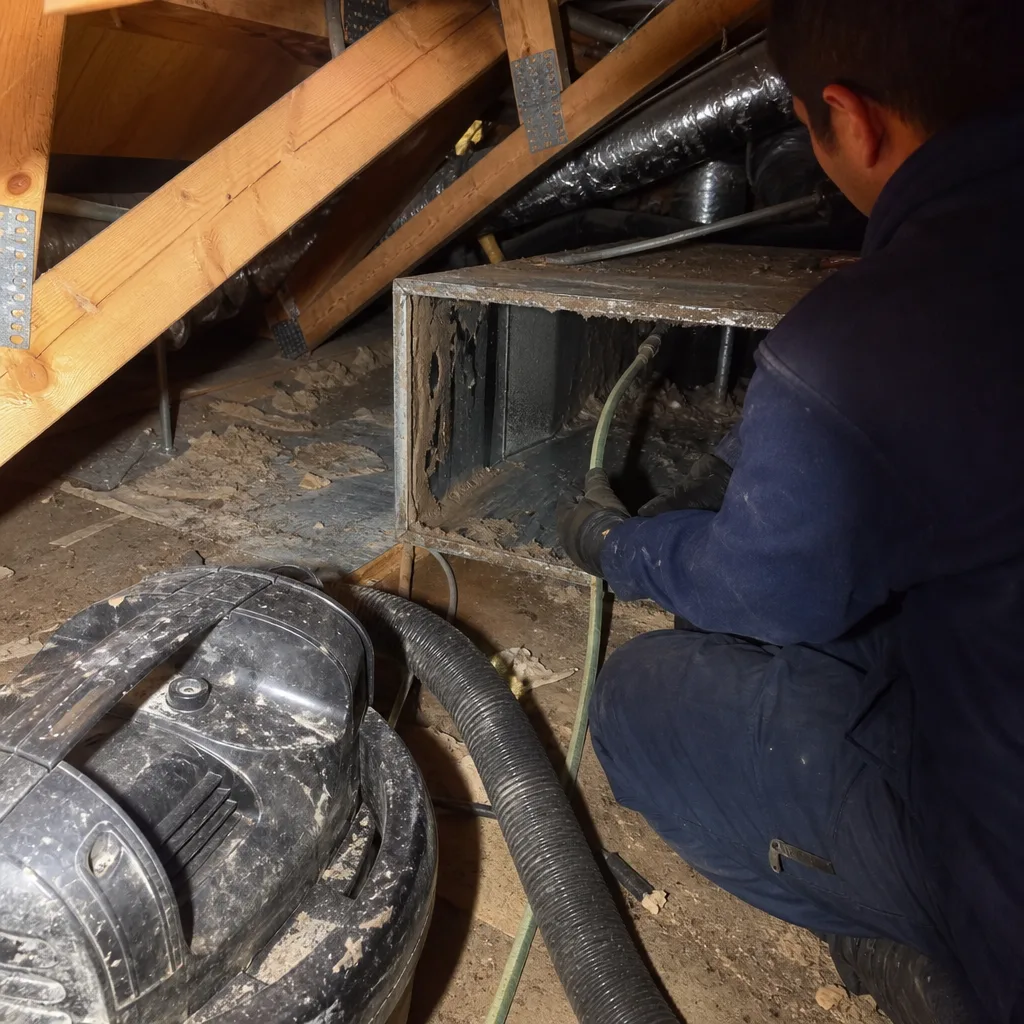 Before
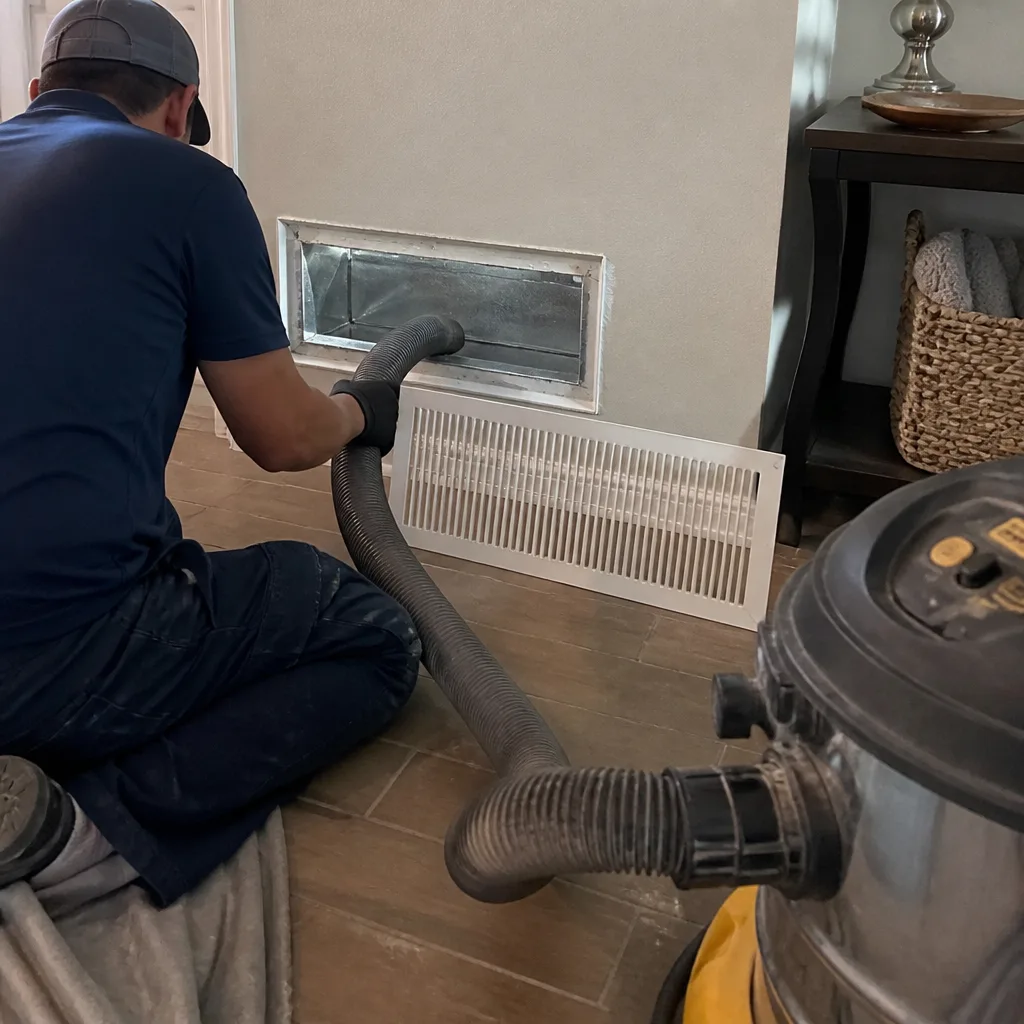 After
After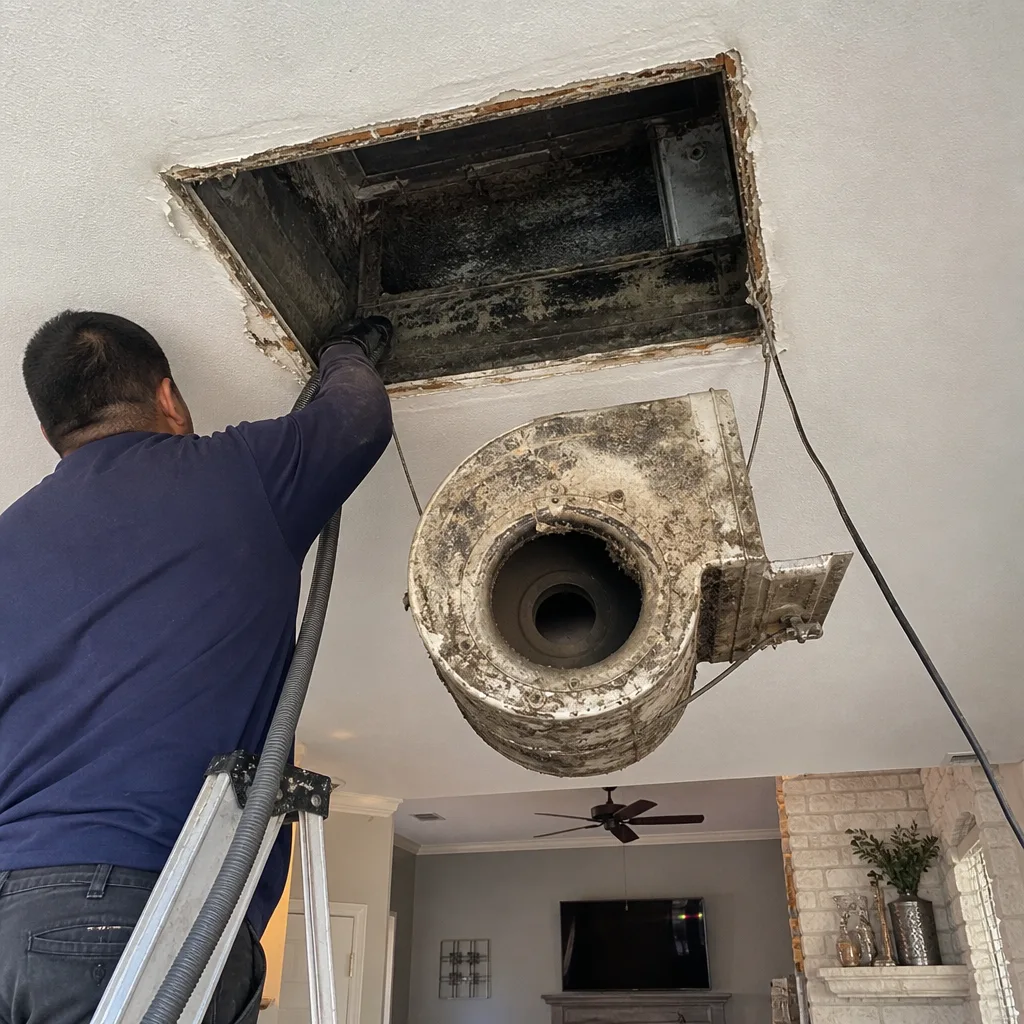 Before
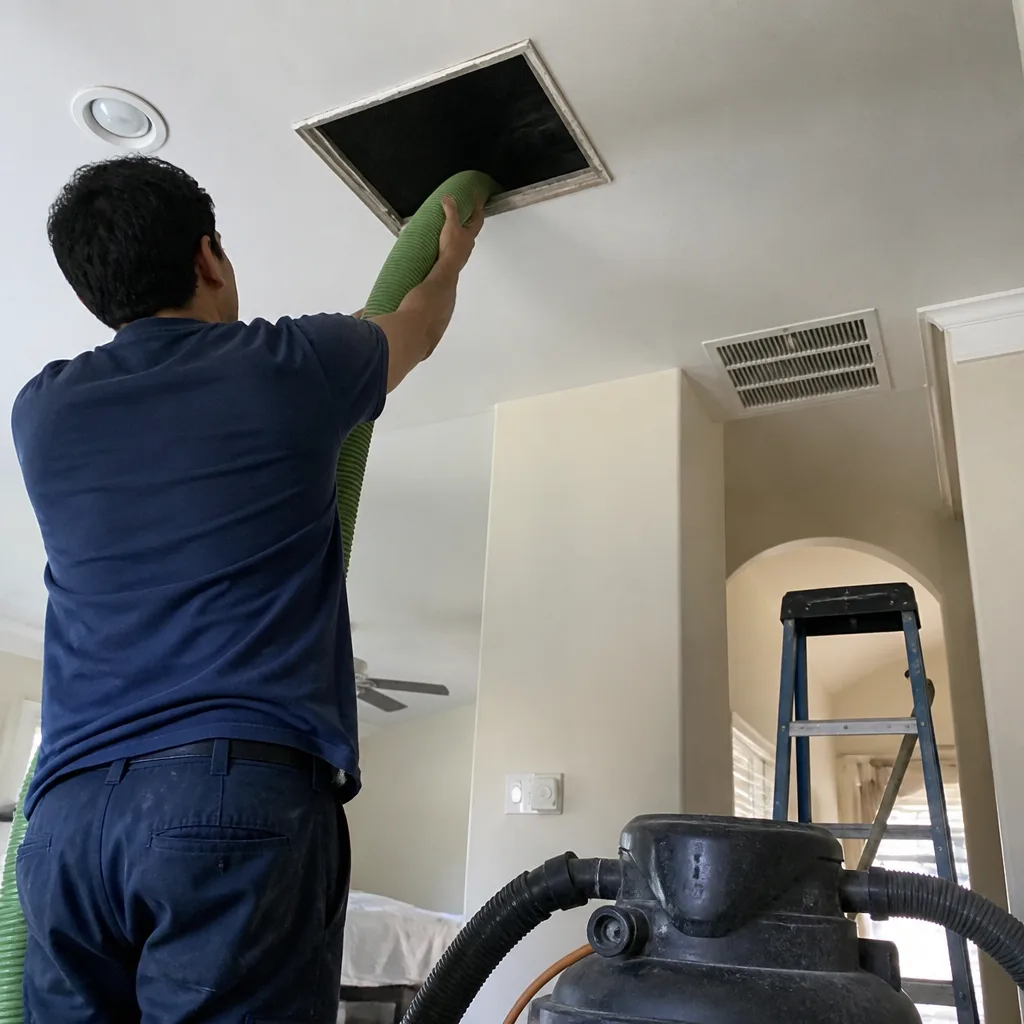 After
AfterAir Duct Cleaning Cost Breakdown: The Leander Homeowner’s Reference for 2026
A 2,400-square-foot Leander home with a two-story flex duct system has approximately 18-22 individual duct runs. A $149 whole-house quote works out to roughly $7 per run, which tells you something specific about what’s being done inside each one. This guide breaks down what our Air Duct Cleaning services actually cost in Leander, what drives the price spread from $79 to over $600, and how to read a quote so you’re comparing real scope, not just numbers on a flyer. By the end, you’ll know what a legitimate job looks like in Williamson County, what documentation separates professional work from vacuum noise, and what questions to ask before anyone touches your HVAC system.
Quick Answer
In Leander, professional air duct cleaning for a typical 3-bedroom, 2-bathroom single-story home runs $280-$420 in 2026. A 4-bedroom two-story with 18-22 duct runs typically costs $380-$550. The final price depends on run count, duct material (flex vs. sheet metal), accessibility, and whether the scope includes the return plenum, air handler, or dryer vent. Add-on services like microbial treatment or UV light installation are separate line items and should always include documented findings.
Table of Contents
- How Air Duct Cleaning Pricing Actually Works
- 2026 Leander Market Price Ranges by Home Type
- Line-Item Cost Drivers: What Each Component Should Cost
- Why Leander Home Vintage Changes Your Quote
- The Add-On Upsell Anatomy: Legitimate vs. Suspicious
- What a Written Estimate Must Contain to Be a Real Price
- Equipment and Documentation: What Professional Work Looks Like
- Common Mistakes to Avoid
- When to Call a Professional
- Frequently Asked Questions
- The Bottom Line
BeforeAfterHow Air Duct Cleaning Pricing Actually Works
Most homeowners in Leander receive one of three pricing structures when they call for air duct cleaning. Understanding which one you’re looking at explains most of the price variation you’ll encounter.
Per-vent or per-run pricing. This is the most transparent method. Each supply register (the vent that blows air into a room) and each return grille connects to a duct run, which is the actual tube or channel inside your walls, attic, or crawl space. In 2026, legitimate per-run pricing in the Leander market ranges from $15-$35 per run, depending on duct material, accessibility, and whether the run includes multiple bends or long horizontal spans through the attic. A typical Leander home has 12-16 supply runs and 2-4 return runs. At $25 per run, that’s $350-$500 for the ductwork alone.
Flat-rate whole-house pricing. This is common for homes under 2,500 square feet with straightforward access. The contractor estimates average run count and labor time, then bundles it into one price. The risk here is scope ambiguity: does “whole house” include the return plenum (the large box that collects air before it reaches the air handler)? Does it include the air handler cabinet itself? In Leander’s competitive market, flat rates of $199-$299 often exclude these components, which is how a $249 quote becomes a $449 invoice.
Per-system or per-furnace pricing. Homes with zoned HVAC or dual systems (common in larger Leander builds from 2015 onward) have two complete sets of ductwork. Pricing per system typically runs $240-$380 for the first system and $180-$280 for the second, reflecting shared mobilization costs.
The structure matters because it determines what happens when the technician finds something unexpected. Per-run pricing scales naturally. Flat-rate pricing often triggers change orders, which is where the $79-to-$600 spread originates.
2026 Leander Market Price Ranges by Home Type
These ranges reflect actual quotes collected from Williamson County contractors in late 2025 and early 2026, including CleanRun’s own written estimates. They assume standard accessibility (attic or crawl space, no structural obstacles) and include supply runs, return runs, and the return plenum. Air handler cleaning, dryer vent service, and add-ons are separate.
| Home Type | Approx. Run Count | Price Range | Notes |
|---|---|---|---|
| 3-bed/2-bath single-story, 1,400-1,800 sq ft | 12-16 runs | $280-$420 | Most common Leander home type; built 1995-2015 |
| 4-bed/2-bath two-story, 2,200-2,800 sq ft | 18-22 runs | $380-$550 | Flex duct common in post-2010 builds |
| 5-bed/3-bath or larger, 3,000+ sq ft | 24-30 runs | $520-$720 | Often dual-zone; per-system pricing may apply |
| Pre-1990 home with sheet metal duct | 10-14 runs | $320-$480 | Higher labor time; sealed joints, rust assessment |
| New construction, 2020+, still under warranty | 14-20 runs | $240-$380 | Minimal debris; often preventive cleaning |
Prices below $240 for any home over 1,200 square feet warrant scrutiny. At $149, a contractor is either absorbing a loss to upsell later, using equipment that doesn’t achieve negative-pressure extraction (the industry standard for containing dislodged debris), or performing a surface-only cleaning of registers without entering the duct runs.
Leander’s rapid growth since 2015 has created a split market. Established neighborhoods like Crystal Falls, Deerbrooke, and Travisso have homes with mature duct systems that may need repair attention before cleaning is advisable. See our Air Duct Cleaning Maintenance Checklist for Leander Homeowners for seasonal guidance. Newer developments in Bryson and Bar W Ranch often have construction debris still present in ducts from the build process, which changes the scope and sometimes the price.
Line-Item Cost Drivers: What Each Component Should Cost
A legitimate quote breaks down into specific, line-item tasks. Here’s what each should cost in Leander’s 2026 market and what it should include.
Per-Run Duct Cleaning: $15-$35 per run
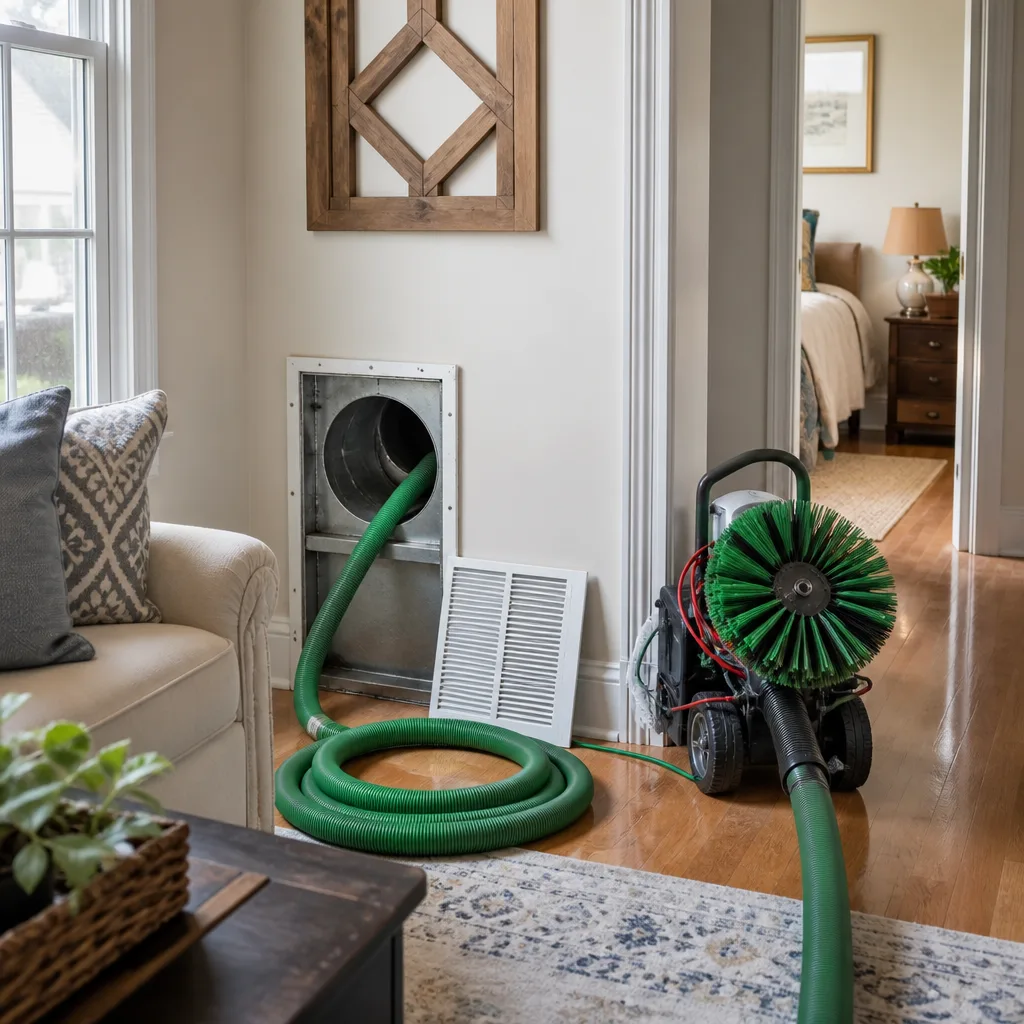
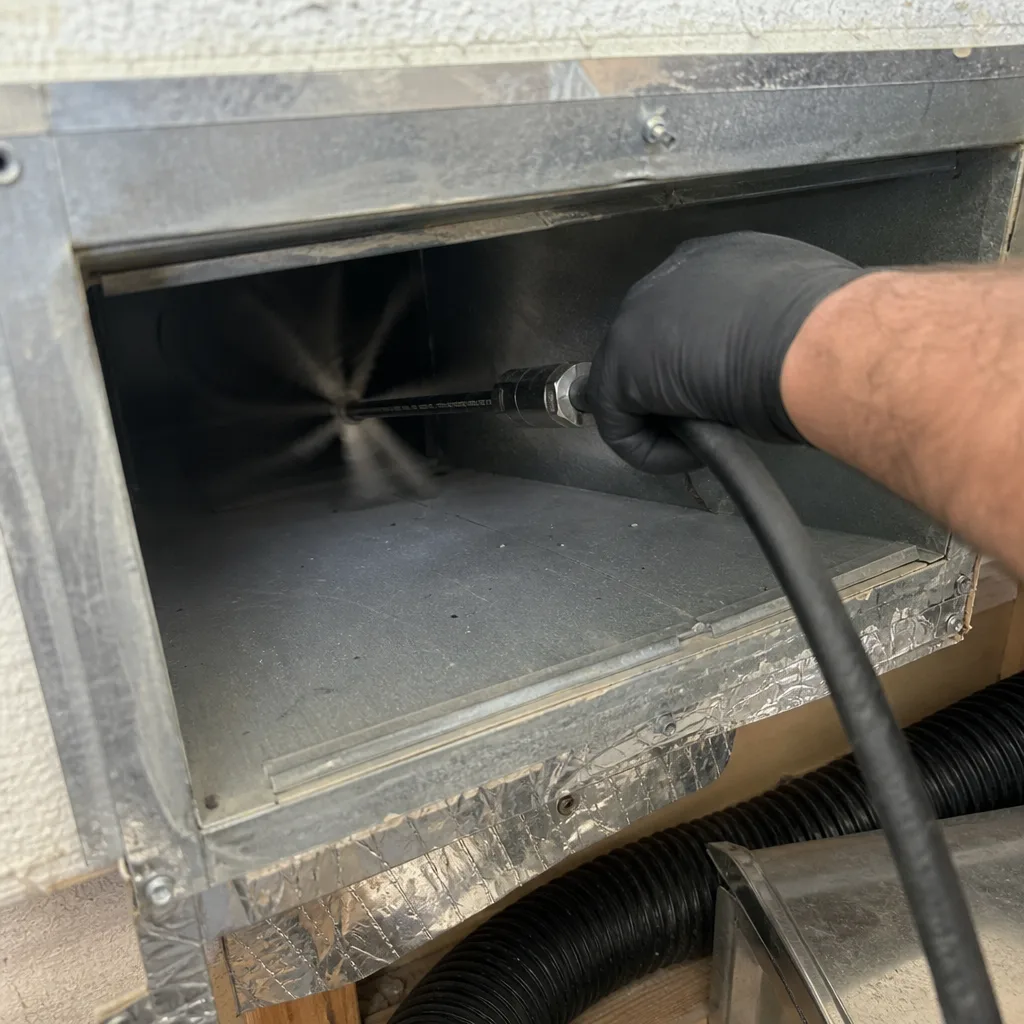
This covers the supply run from the plenum or trunk line to the register, or the return run from the grille to the plenum. What’s included: negative-pressure extraction using a HEPA-filtered collection unit, mechanical agitation (typically a rotating brush or compressed air whip) to dislodge debris, and register/grille cleaning. What’s not automatically included: repair of disconnected or damaged duct, sealing of leaks, or cleaning beyond the first elbow in complex runs.
Return Plenum Access and Cleaning: $45-$85
The return plenum is the large sheet metal box where all return ducts converge before air enters the air handler. It’s often the dirtiest component in the system because it collects unfiltered air. Cleaning requires cutting an access panel (if none exists), vacuuming, and sealing the panel. In Leander, many pre-2000 homes lack proper access panels, which adds $30-$50 for panel installation. This should be stated explicitly, not buried in “additional labor may apply.” For details on regulatory requirements, read our guide to Air Duct Cleaning Permits, Codes & Inspections in TX: What You Need to Know.
Air Handler Cabinet Cleaning: $60-$120
The air handler contains the blower motor, evaporator coil, and heat exchanger. Cleaning here is separate from duct cleaning and requires opening the cabinet, removing the blower assembly if necessary, and cleaning the coil and drain pan. In Leander’s climate, where cooling runs eight months of the year, the evaporator coil often shows microbial growth that should be documented photographically before any treatment is proposed.
Dryer Vent Cleaning (Add-On): $85-$150
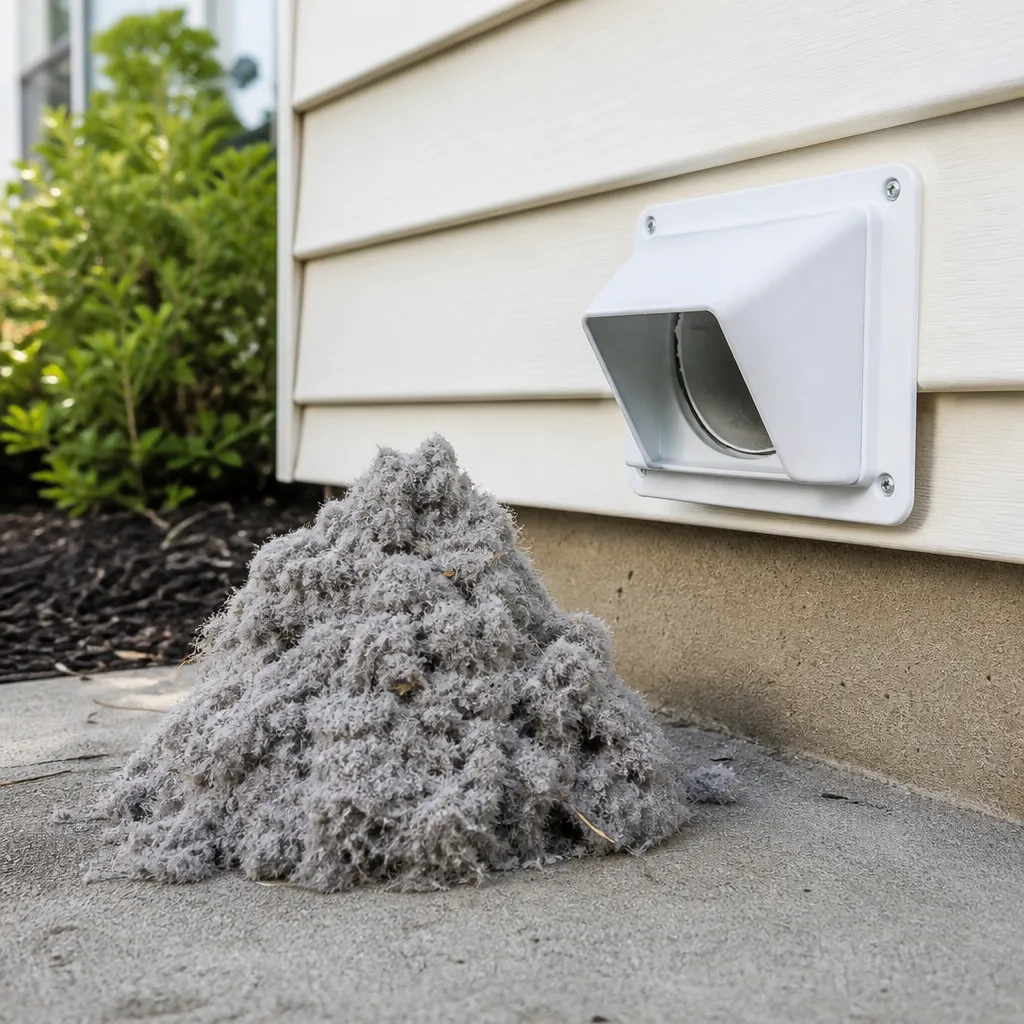
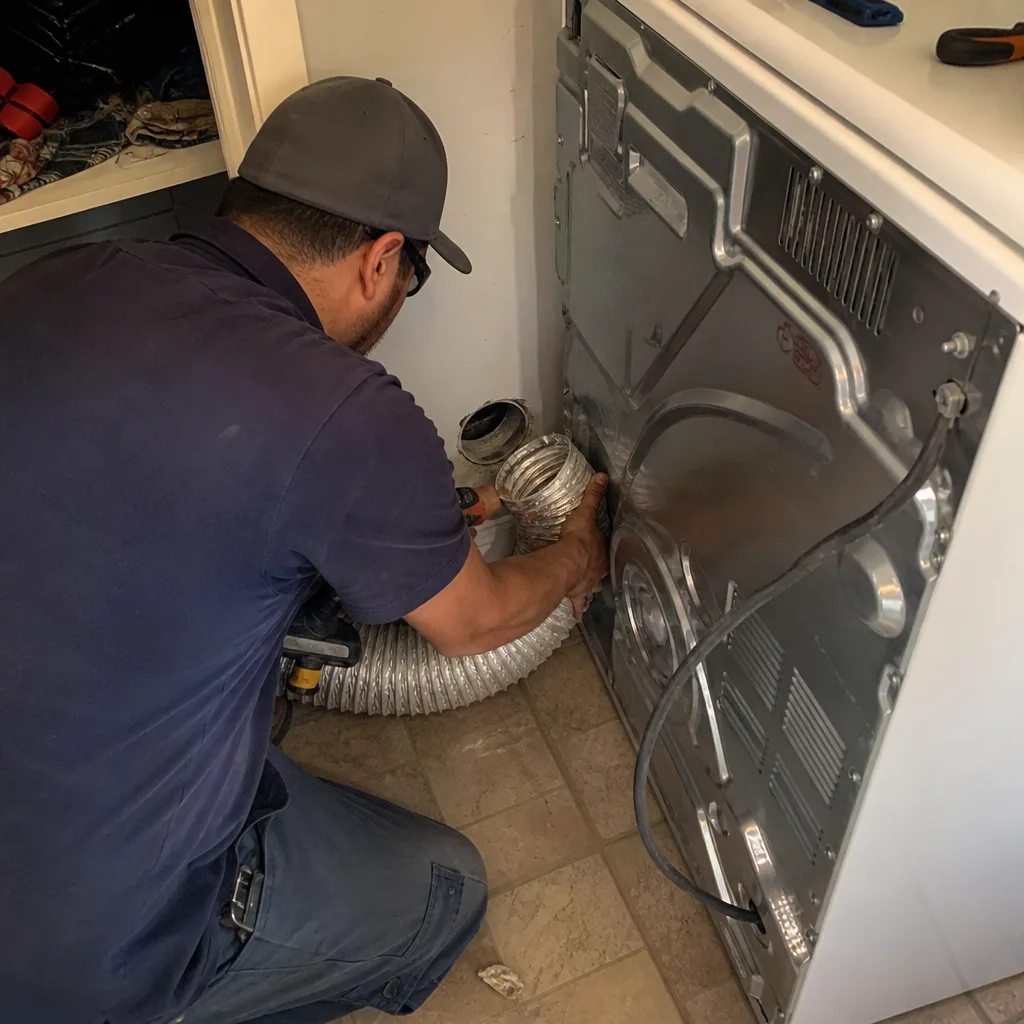
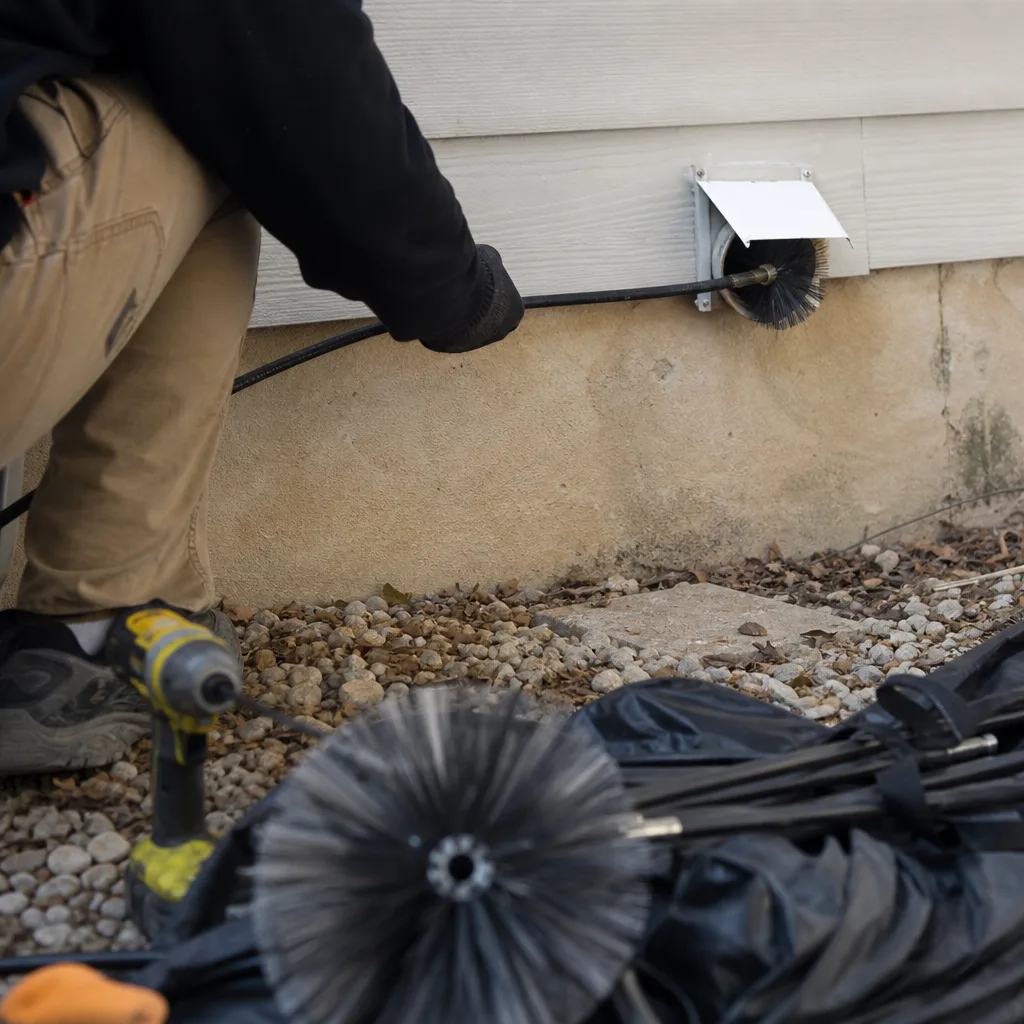
This is not the same as duct cleaning. Dryer vents are separate exhaust channels that carry lint and moisture outside. In Leander’s Hill Country terrain, longer vent runs (20+ feet to reach an exterior wall) are common and increase fire risk if obstructed. A legitimate dryer vent cleaning includes airflow testing before and after, not just vacuuming the accessible portion. Dryer Vent Cleaning in Leander covers this service in detail.
Microbial Treatment or Sanitizing: $120-$280
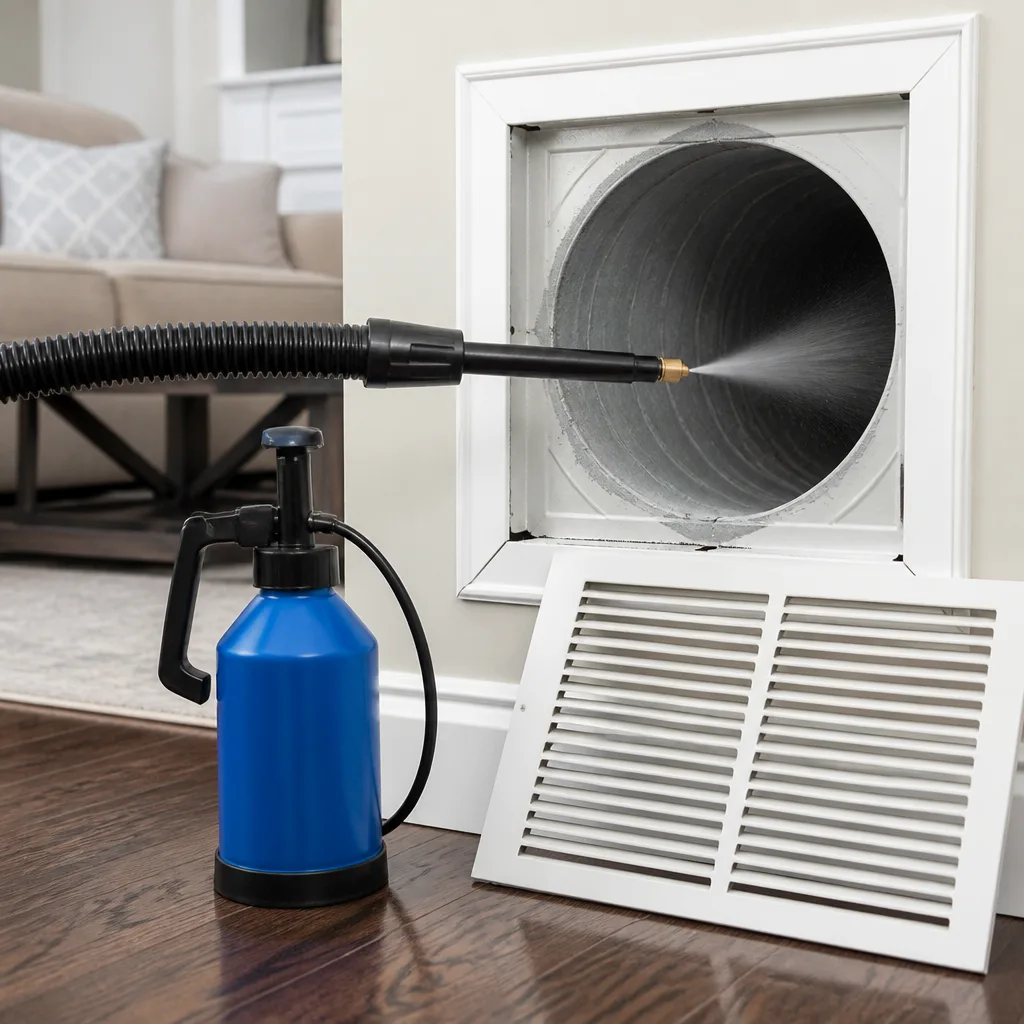
This is where the industry sees the most abuse. A legitimate microbial treatment follows documented evidence: moisture staining, musty odor confirmed at multiple registers, or visible microbial growth in the photo record. The treatment should use EPA-registered products applied with controlled droplet size to avoid coating the entire system unnecessarily. A $200 “sanitizing” spray applied without documented findings is not a treatment; it’s an upsell.
Duct Repair or Sealing: $150-$400+
Disconnected flex duct, torn insulation, or failed tape at joints reduces system efficiency and reintroduces attic debris. Repair should be proposed only after inspection, with photo documentation of the damage. In Leander’s older neighborhoods, we’ve found sheet metal duct with original fibrous glass insulation that has degraded to the point of releasing particles into the airflow. This requires replacement, not cleaning, and should be quoted separately.
Why Leander Home Vintage Changes Your Quote
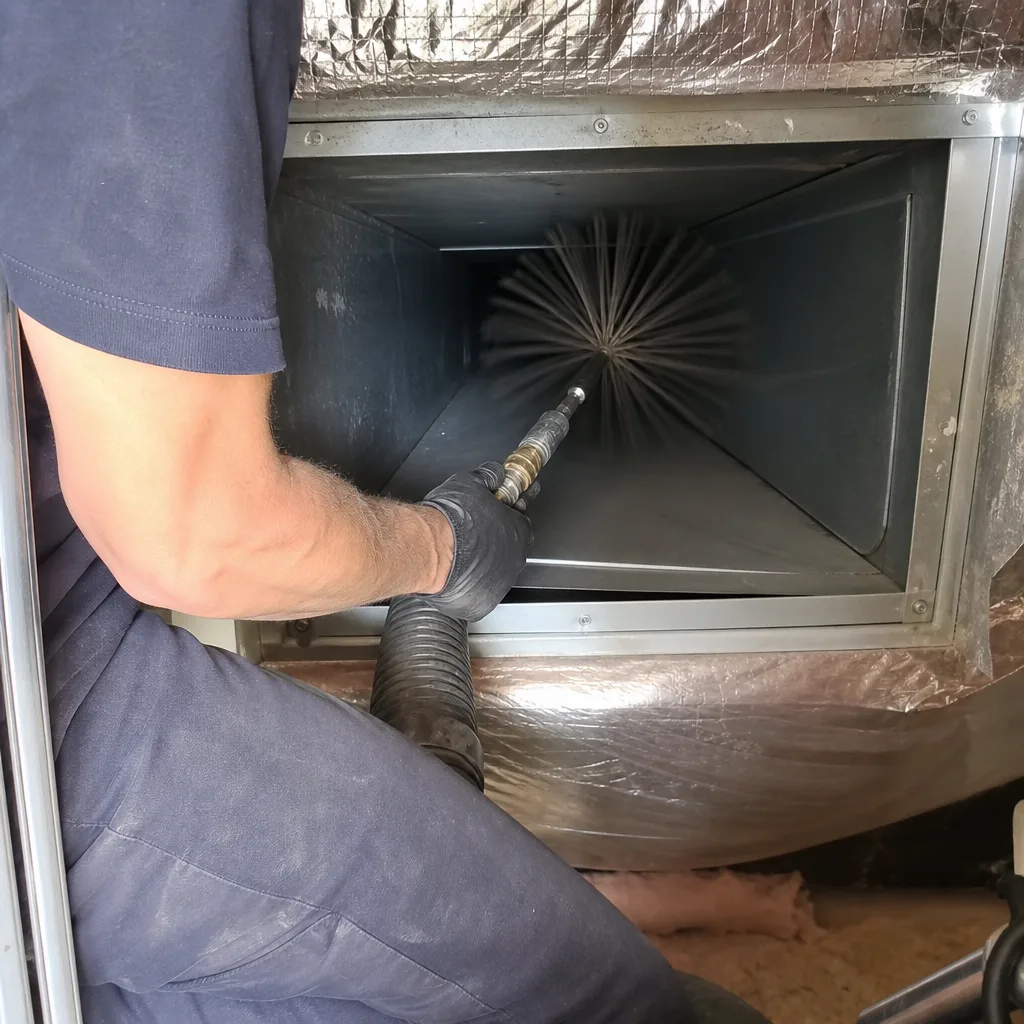
Leander’s building history creates three distinct duct system profiles, each with different cleaning requirements and pricing implications.
Pre-2000: Sheet metal with fibrous glass insulation. Homes in older Leander neighborhoods like Mason Creek and portions of Old Town Leander often have galvanized steel duct with external insulation that has degraded over 25+ years. The metal itself cleans well, but the insulation may be friable (crumbling). We’ve opened systems where the camera showed insulation particles accumulating at low points in the duct. Cleaning without addressing this condition redistributes those particles. These jobs take 30-50% longer, and the quote should reflect either careful cleaning around compromised insulation or recommendation for duct replacement in severe cases.
2000-2015: Transitional flex duct systems. This era saw widespread use of flexible duct (flex), the ribbed plastic-and-fiberglass tube common in attics. Flex duct is easier to install but more fragile. Over time, the inner liner can sag, creating debris traps at low points. In Leander’s hot attics, the adhesive connecting the inner liner to the insulation blanket can also fail. A 2010-built home in Leander’s Parkside at Crystal Falls may look pristine from the register but show separated liner three feet inside. Professional cleaning requires lower suction pressure and careful brush selection to avoid damage. These jobs run toward the higher end of per-run pricing.
2015-present: Sealed flex duct with better access design. Newer Leander builds, particularly in master-planned communities, often use flex duct with improved vapor barriers and more frequent access points. Construction debris is the primary concern; we’ve found drywall dust, wood scraps, and even beverage containers in ducts of homes less than five years old. The cleaning is straightforward but should be thorough enough to remove construction residue, which is finer and more pervasive than household dust.
Leander’s location on the edge of the Texas Hill Country also means variable soil conditions. Homes on the limestone-heavy western edge (toward Lago Vista) may have more foundation movement, which can stress duct connections in crawl space systems. This isn’t a pricing factor until inspection reveals it, but it explains why two identically sized homes in different Leander neighborhoods might receive different quotes.
The Add-On Upsell Anatomy: Legitimate vs. Suspicious
The air duct cleaning industry’s reputation problem stems largely from add-on selling: a low entry price that balloons once the technician is inside the home. Here’s how to distinguish legitimate additional services from pressure tactics.
Legitimate Add-On: Documented, Conditional, and Specific
A legitimate add-on follows three rules. First, it addresses a documented condition. The technician shows you a photo of moisture staining in the return plenum, or a blower wheel caked with debris that restricts airflow. Second, it’s conditional: “If we find X, we recommend Y” was stated before work began, not invented on site. Third, it’s specific: “UV-C lamp installation at the evaporator coil, Honeywell or Aprilaire brand, $285 including electrical connection” - not “mold treatment, $199.”
At CleanRun, our written estimates include a conditional add-on section: “If inspection reveals the following conditions, the following scope and pricing apply.” This is Haven Standard Clause 1 in practice. The customer sees the trigger and the price before any work starts.
Suspicious Add-On: Vague, Universal, and Post-Arrival
Red flags include: “Everyone in Leander needs microbial treatment because of the humidity” (universal application without inspection); “I can smell something in your ducts” (unverifiable claim); pricing presented only verbally after the crew has begun work; or a “health certificate” or “seal of cleanliness” with no technical meaning.
Particularly suspect is the “before” photo that doesn’t match your home. We’ve encountered customers shown generic photos of severely contaminated ductwork that wasn’t theirs. The CleanRun Air Duct Cleaning Leander home process includes time-stamped, location-tagged photos of your specific system, delivered as part of the standard job record.
UV Light Installation: $250-$450
UV-C lamps installed at the evaporator coil can reduce microbial growth in that specific location. They do not clean ducts or improve air quality throughout the home. A legitimate proposal specifies lamp brand (Honeywell, Aprilaire, or equivalent), replacement bulb cost and interval, and warranty. It does not claim to “purify your whole home’s air.”
Whole-Home Air Purification: $800-$2,500+
This is a separate product category, not an add-on to duct cleaning. Electronic air cleaners, media filters, and ERV systems require dedicated installation and electrical work. If proposed during a duct cleaning visit, it should include a separate written quote with manufacturer specifications, not a verbal “today only” price.
What a Written Estimate Must Contain to Be a Real Price
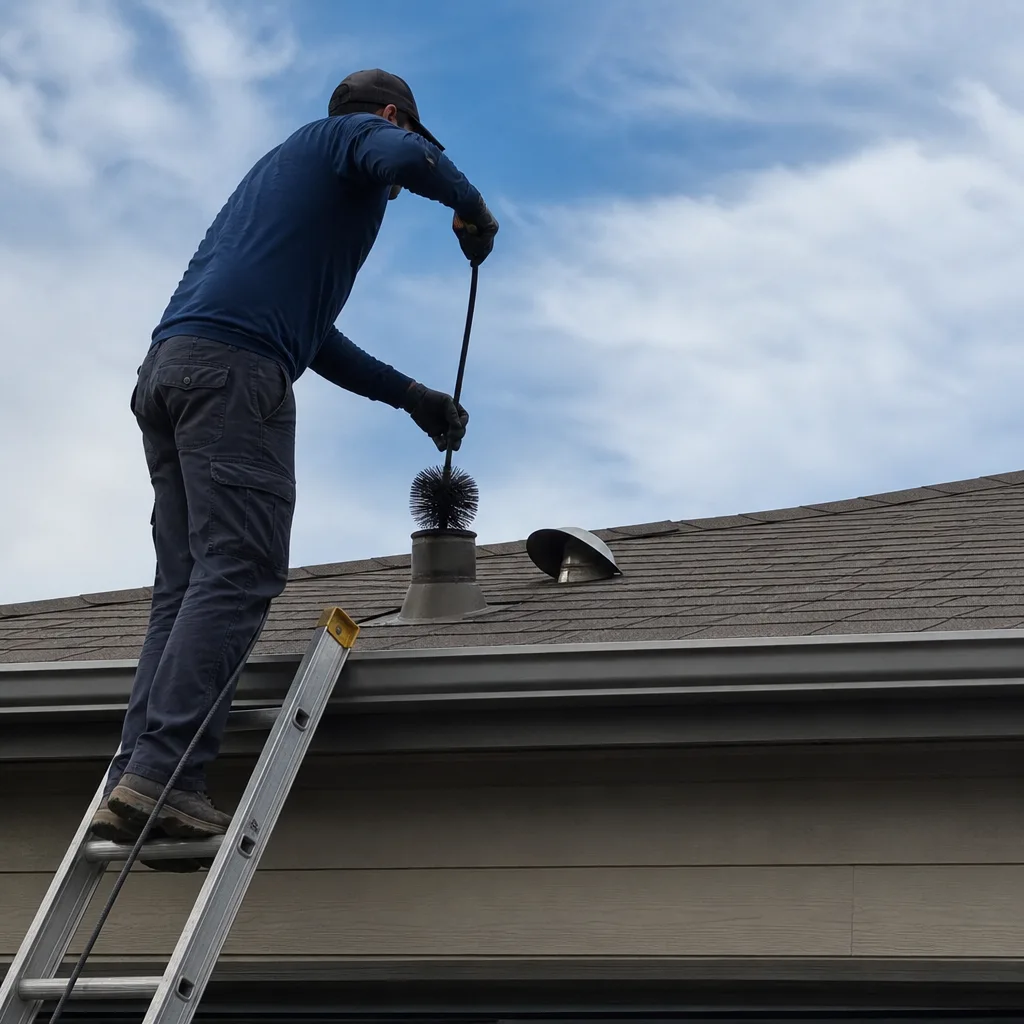
Haven Standard Clause 1 requires a written price before any work starts. But not all written estimates are equal. Here’s what separates a binding scope from a marketing piece.
- Specific run count or linear footage. “Clean all supply and return ducts” is vague. “Clean 14 supply runs and 3 return runs, approximately 180 linear feet total” is specific. If your home has 18 runs and the quote specifies 14, you know four were excluded.
- Component-level scope. The estimate should state whether each of these is included: supply duct runs, return duct runs, return plenum, air handler cabinet, evaporator coil, blower assembly, registers/grilles, and dryer vent.
- Equipment specification. Professional-grade equipment from trade-recognized brands should be named. CleanRun uses Rotobrush and Nikro for mechanical agitation, Abatement Technologies for negative-pressure collection, and Honeywell, Aprilaire, and Guardsman for air quality components. Customers can verify these specifications independently.
- Exclusions and change order triggers. What happens if the technician finds disconnected duct, asbestos-containing material, or an inaccessible run? The estimate should state these conditions and how they’re priced.
- Documentation deliverables. What does the customer receive? CleanRun’s standard deliverable includes the written scope, the written price, before-and-after photos of every duct run, and the 365-Day Done Right Promise. These are not extras; they’re the baseline.
- License and insurance verification. The estimate should include or reference the contractor’s license number and proof of insurance. CleanRun publishes this information on every written estimate.
A phone quote, email “ballpark,” or website calculator output is not a written estimate. It’s a lead generation tool. The actual price is established only after inspection, and the inspection should be free, with no obligation. CleanRun offers free estimates and a Free Second Opinion on any written estimate from another contractor: bring their quote, and we’ll put our number next to it in writing.
Equipment and Documentation: What Professional Work Looks Like
The equipment used and the documentation provided are the two factors most homeowners never see discussed in competitor content. They’re also the clearest differentiators between professional work and superficial cleaning.
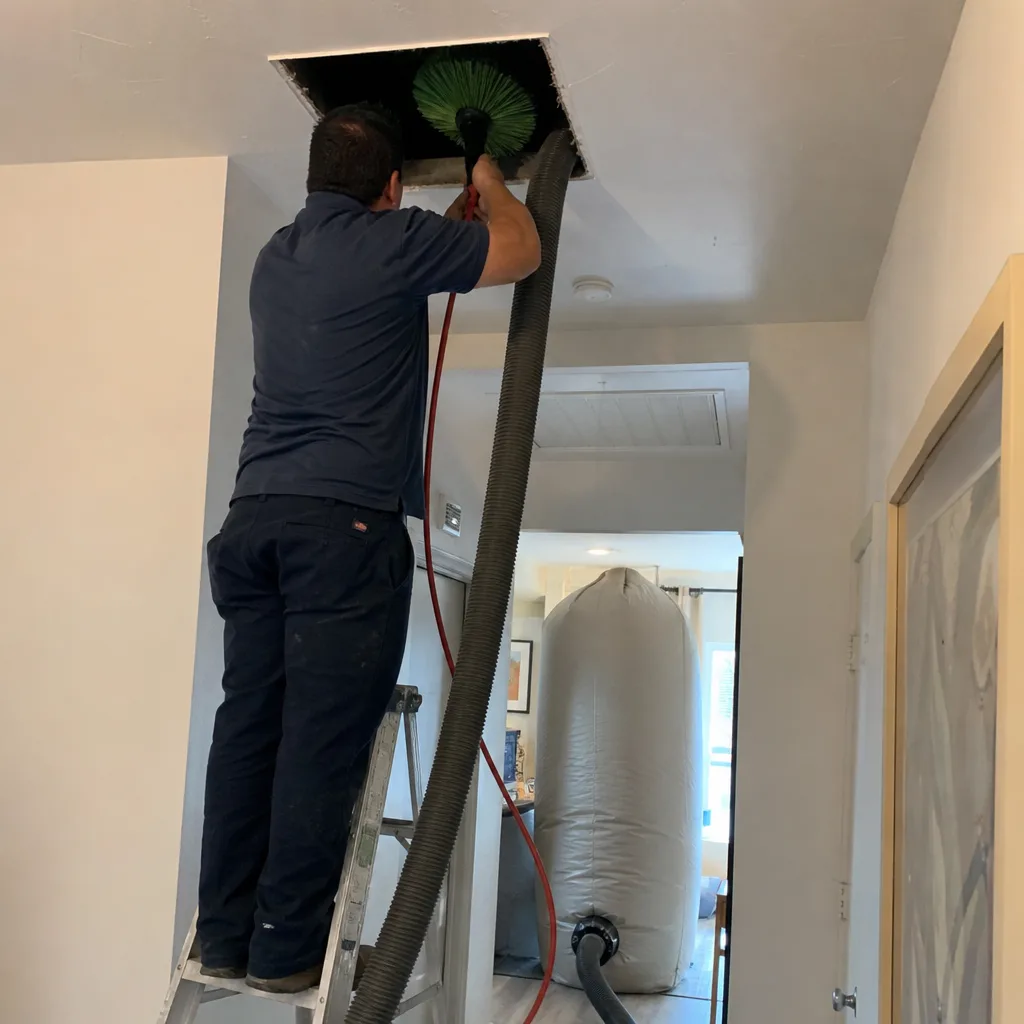
Negative-pressure extraction. This is the industry standard for containing debris during cleaning. A large vacuum unit (typically mounted on a truck or as a portable HEPA-filtered collector) creates suction at one point in the system, usually near the air handler. As each duct run is agitated with a rotating brush or compressed air tools, the dislodged debris is drawn into the collection unit rather than escaping into the home. Without negative pressure, “cleaning” simply redistributes dust through registers and into living spaces.
Mechanical agitation tools. Rotobrush systems use a rotating brush on a flexible cable to scrub duct walls. Nikro and similar brands offer compressed air whips that strike duct surfaces in a controlled pattern. The tool selection depends on duct material: flex duct requires lower torque and softer bristles to avoid liner damage, while sheet metal can tolerate more aggressive cleaning.
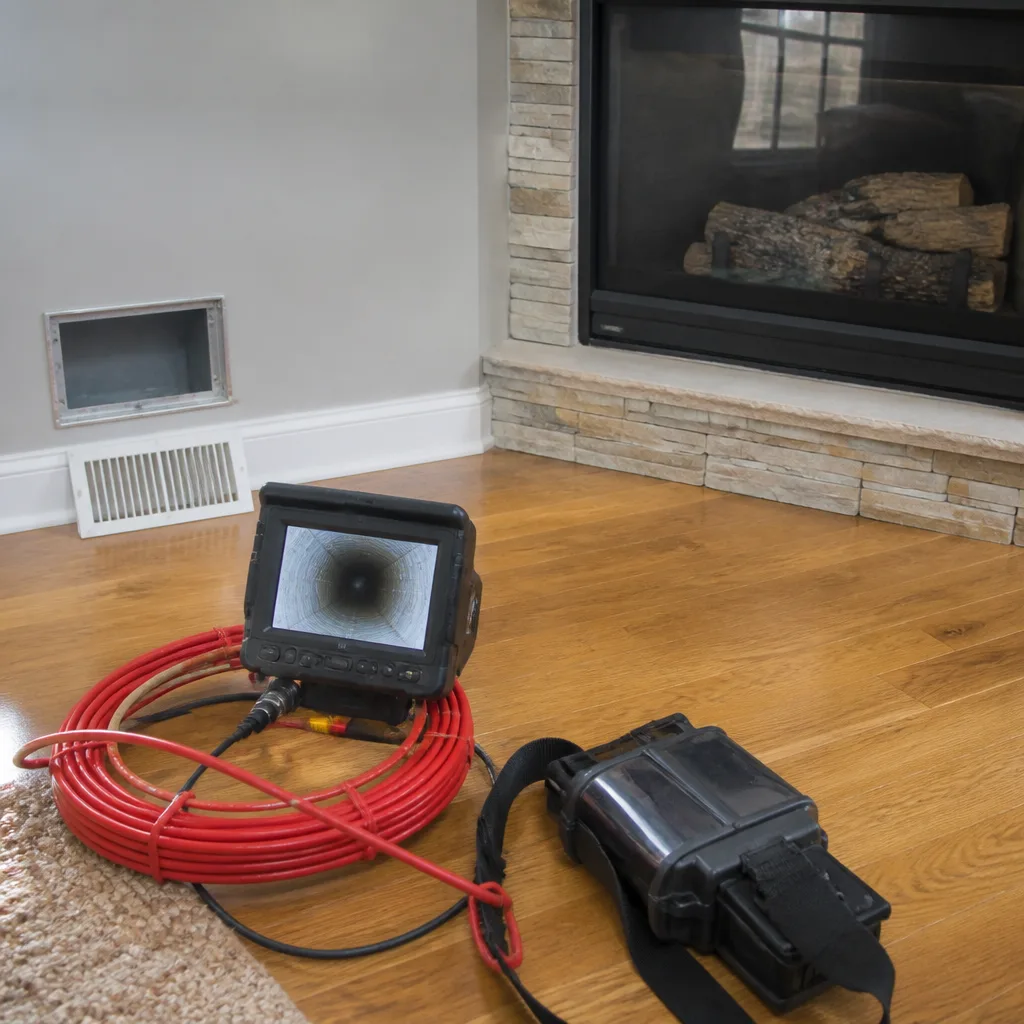
Documentation equipment. Professional inspection cameras (not smartphone cameras on sticks) produce clear images of duct interior conditions. These should be time-stamped and location-tagged. At CleanRun, every photo record includes the register location, the approximate distance into the run, and the direction of view. A customer in Leander’s Travisso neighborhood can compare their February 2026 photo record to their neighbor’s and see the actual condition of their specific system.
Post-cleaning verification. Some contractors perform airflow testing or particle counting after cleaning. While not universally required, this provides measurable evidence of improvement. At minimum, the photo record should show visible reduction in debris accumulation.
The 365-Day Done Right Promise backs this documentation: if the work is not right, CleanRun makes it right. This is a written guarantee on every job, not a policy subject to manager approval. Since 2013, we’ve served 52,000+ homes with this standard, every one with a written price before work started and a documented photo record when the crew left.
Common Mistakes to Avoid
- Comparing only the bottom-line number. A $199 quote that covers 10 runs and excludes the plenum is not cheaper than a $380 quote that covers 16 runs including plenum and air handler. Calculate per-run cost to compare apples to apples.
- Accepting verbal pricing. In Texas, a verbal quote for home services is not enforceable. If it’s not in writing before work starts, it’s not a price. This is particularly important in Leander’s competitive market, where door-to-door and nextdoor-app solicitations are common.
- Ignoring home vintage. A 1995 Leander home with original ductwork may need repair before cleaning is advisable. Cleaning damaged flex duct or degraded insulation can worsen air quality. The estimate should include a condition assessment, not just a cleaning price.
- Paying for “sanitizing” without documented need. EPA-registered antimicrobial treatments have specific application protocols. Without moisture findings, visible growth, or odor complaints verified at multiple points, sanitizing is preventive at best and unnecessary at worst.
- Neglecting the dryer vent. In Leander’s Hill Country terrain with longer vent runs, dryer vent obstruction is a genuine fire hazard. It’s also a separate service from duct cleaning. Bundling it can obscure whether each was actually performed thoroughly.
- Failing to verify equipment brands. “Professional equipment” means nothing. Ask for specific brands. Rotobrush, Nikro, Abatement Technologies, Honeywell, Aprilaire, and Guardsman are trade-recognized names customers can research independently.
- Skipping the photo record. If a contractor can’t or won’t show you the inside of your ducts before and after, you have no evidence the work was performed. This is non-negotiable for accountability.
When to Call a Professional
Call for an inspection, not just cleaning, when you notice reduced airflow at specific registers, visible dust accumulation shortly after cleaning, musty odors when the system cycles, or unexplained increases in energy bills. In Leander’s climate, where systems run heavily from March through November, these symptoms often develop gradually and are attributed to normal operation until they’re severe.
Also call before major home changes: adding a room, finishing an attic, or replacing an HVAC system can all affect duct configuration and should include a condition assessment of existing ductwork.
Air Duct Cleaning in Leander from CleanRun includes free estimates with written pricing, documented photo records, and no obligation. Call (737) 252-1285 to schedule. All calls are answered by a live person, and technicians are background-checked, uniformed, and identified by name before arrival under Haven Standard Clause 3: Verified Crews.
Frequently Asked Questions
A typical 3-bedroom, 2-bathroom single-story home in Leander costs $280-$420 for complete duct cleaning in 2026, while a 4-bedroom two-story runs $380-$550. Prices below $240 for homes over 1,200 square feet typically indicate excluded components or superficial scope. Call (737) 252-1285 for a free written estimate with exact pricing for your home.
Low quotes usually exclude the return plenum, air handler, or multiple duct runs. A $149 “whole house” special often covers only easily accessible supply registers with a portable vacuum, not negative-pressure extraction of the complete system. The real cost appears in upsells once the technician arrives. Always request a written scope with run count and component list before comparing prices.
Demand a documented photo record of every duct run, before and after, with location tags. Professional equipment includes inspection cameras that produce clear interior images. At CleanRun, this photo record is a standard deliverable on every job, not an extra. If a contractor won’t provide it, that absence is itself information.
For most Leander homes, every 5-7 years is adequate under normal conditions. Homes with pets, recent construction, or occupants with respiratory sensitivities may benefit from 3-5 year intervals. New construction homes in Leander’s recent developments should be cleaned within the first two years to remove construction debris. The need should be determined by inspection, not calendar alone.
Yes. Leander’s combination of Hill Country pollen, dust from limestone soils, and extended cooling season means HVAC systems run more months per year than in cooler climates, increasing particle accumulation. The area’s occasional severe weather and high winds also introduce more outdoor debris. However, this doesn’t justify annual cleaning for most homes; inspection-based scheduling is more accurate.
Air duct cleaning addresses the distribution channels (duct runs, plenums, registers). HVAC Cleaning in Leander includes the air handler components: blower motor, evaporator coil, heat exchanger, and drain pan. These are separate scopes with separate pricing. A complete system cleaning includes both, but they should be quoted as distinct line items so you know what’s included.
The Bottom Line
Air duct cleaning in Leander costs what it costs because of specific, measurable factors: run count, duct material, accessibility, and scope completeness. The $79-to-$600 range reflects real variation in what’s being sold, not just market competition. A homeowner who understands per-run pricing, demands written scope, and insists on documented photo evidence can evaluate any quote on its own terms. The lowest price is rarely the best value when it excludes components you’ll need or delivers vacuum noise instead of actual cleaning. Since 2013, CleanRun has operated on the principle that documented evidence does the persuading: written prices, photographed results, and guarantees in writing rather than promises in conversation.
Written by Tomas Reyes, Owner at CleanRun Air Duct Cleaning Leander, serving Leander since 2013.