
Last updated September 23, 2026
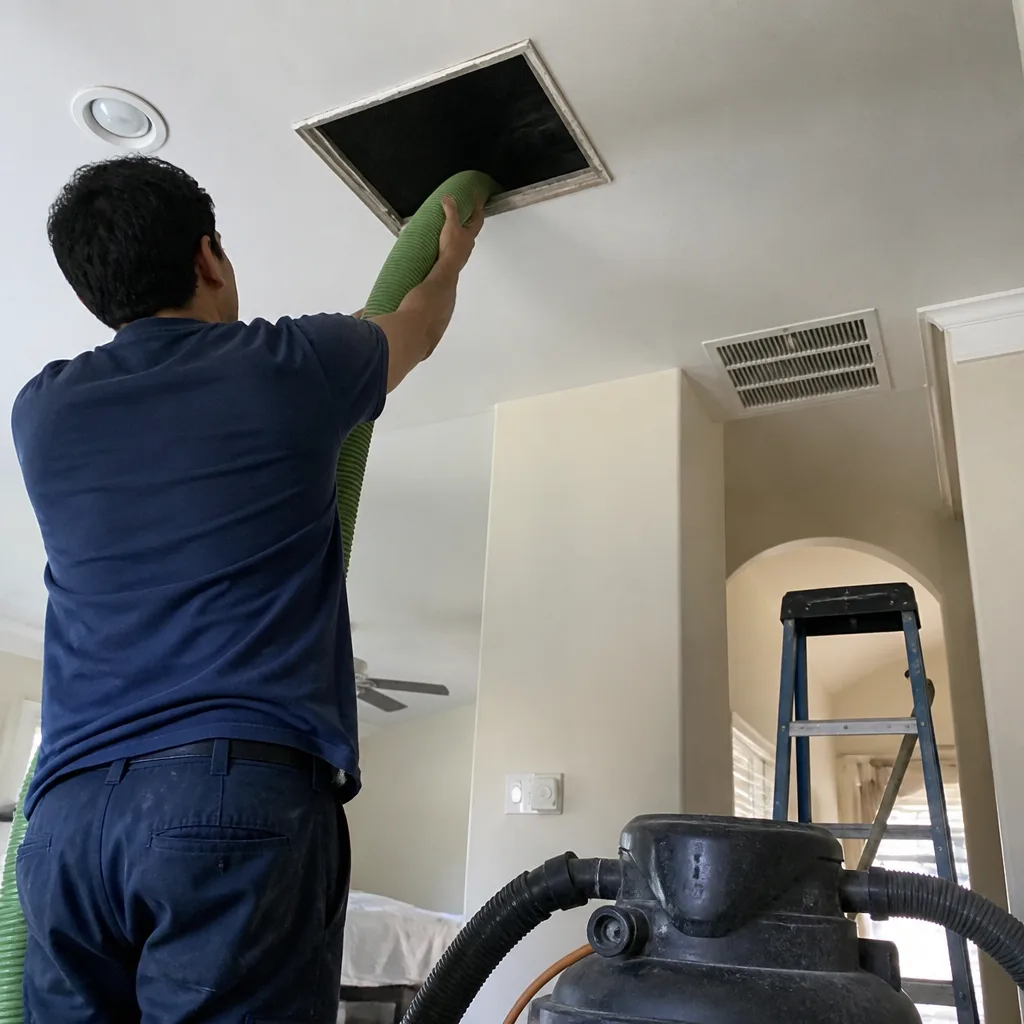
Whole-system duct and dryer vent check with before-and-after photos - you see exactly what came out of your vents
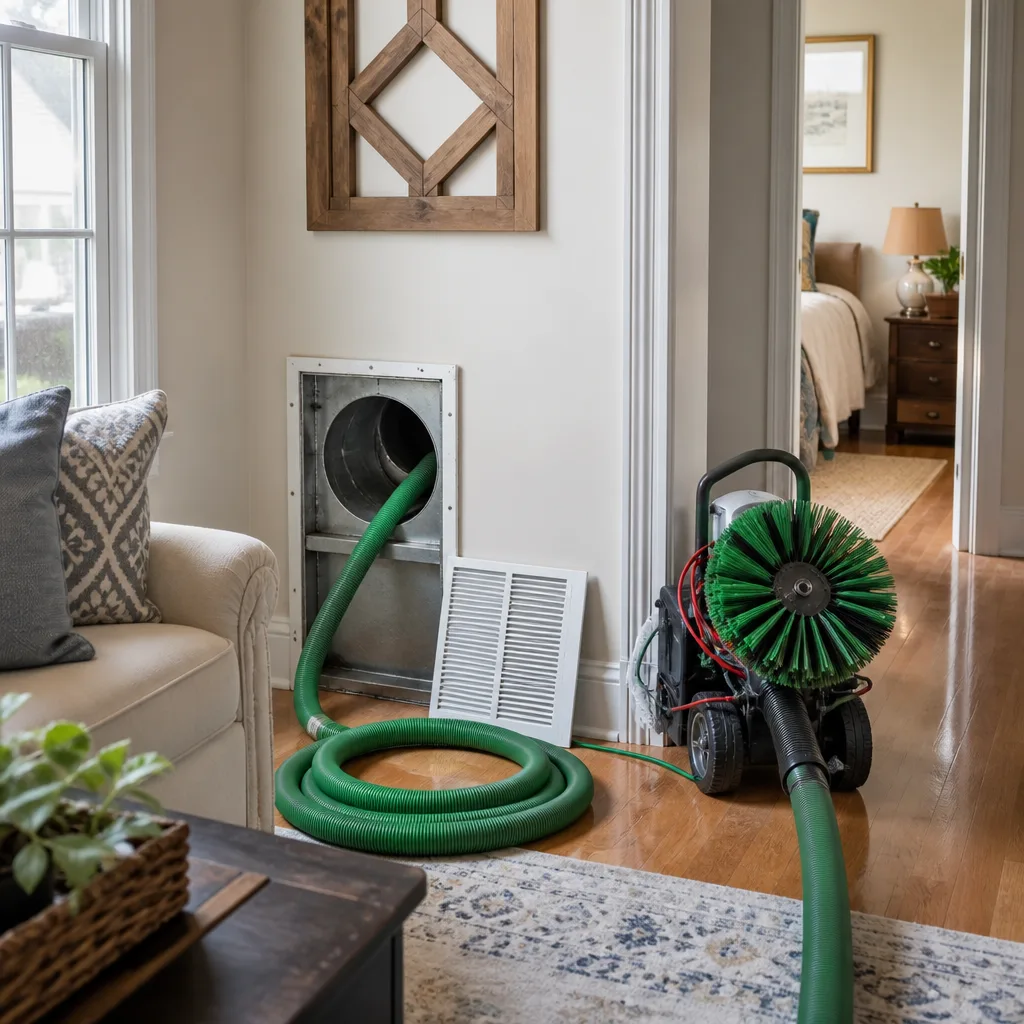
That "$99 whole-house special" is a bait ad - the real number appears once they are in your hallway, or the "clean" is a shop-vac at the register. We photograph the inside of your ducts before and after instead.
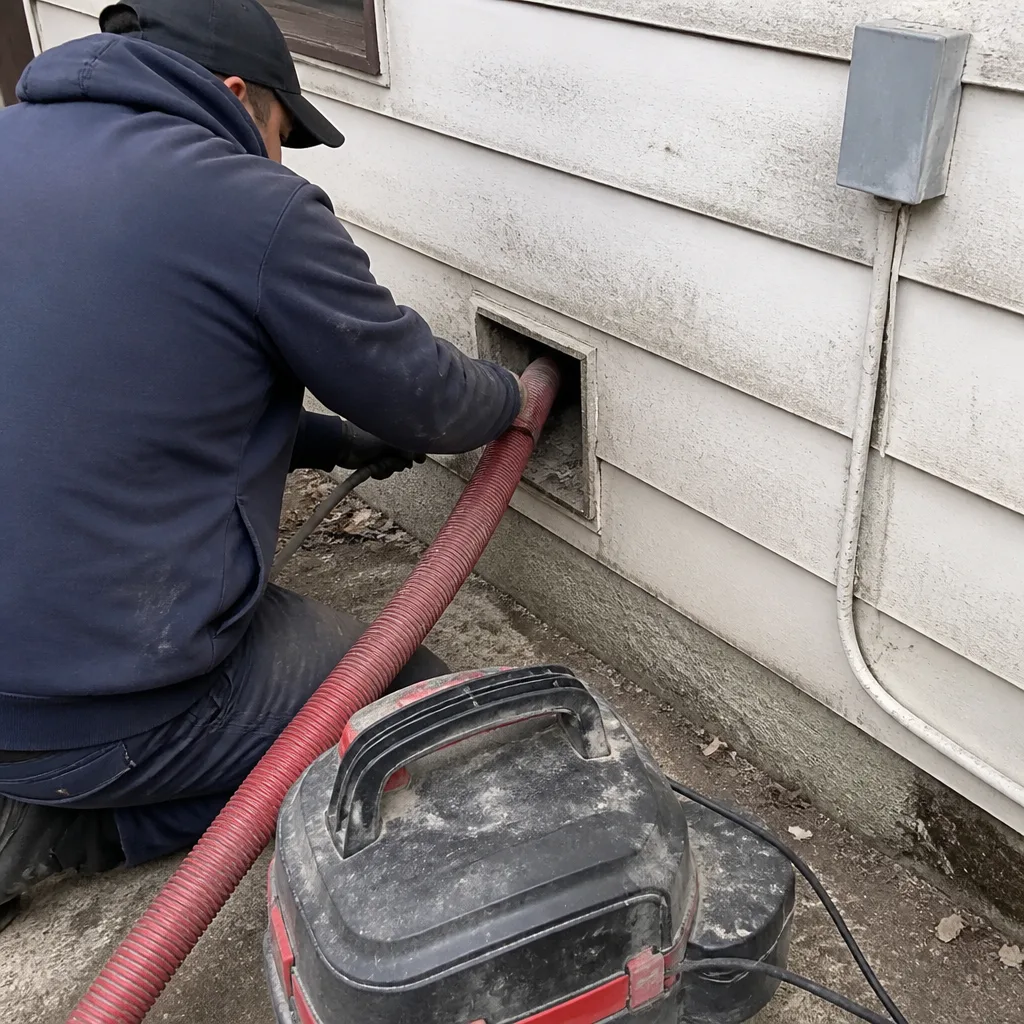 Before
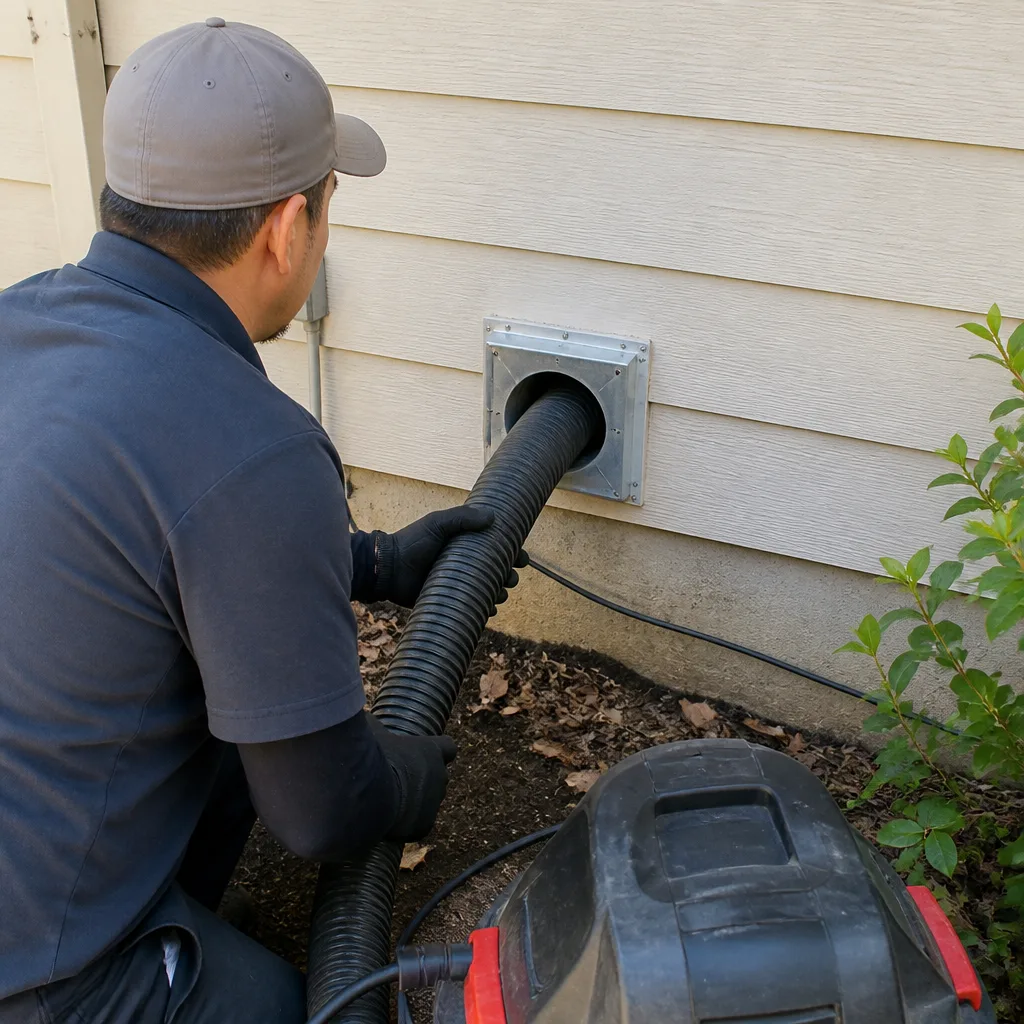 After
After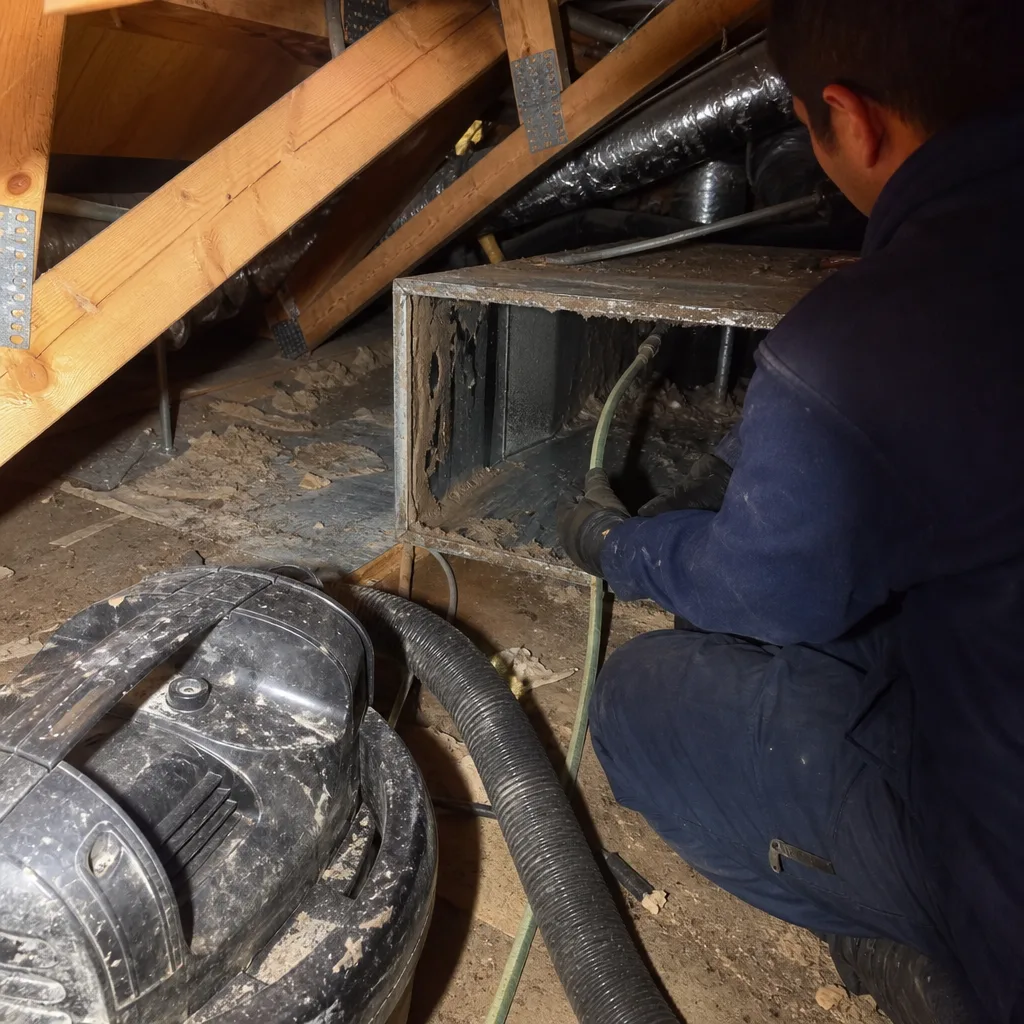 Before
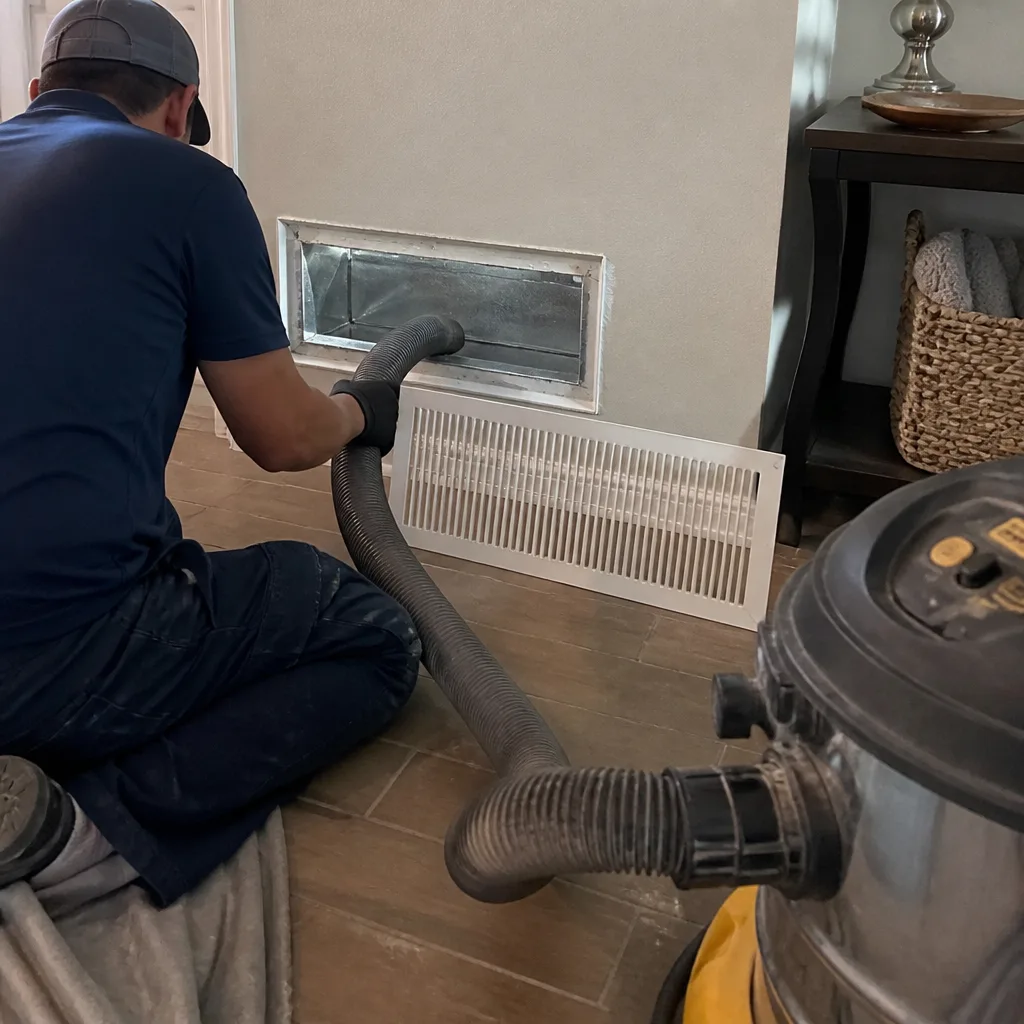 After
After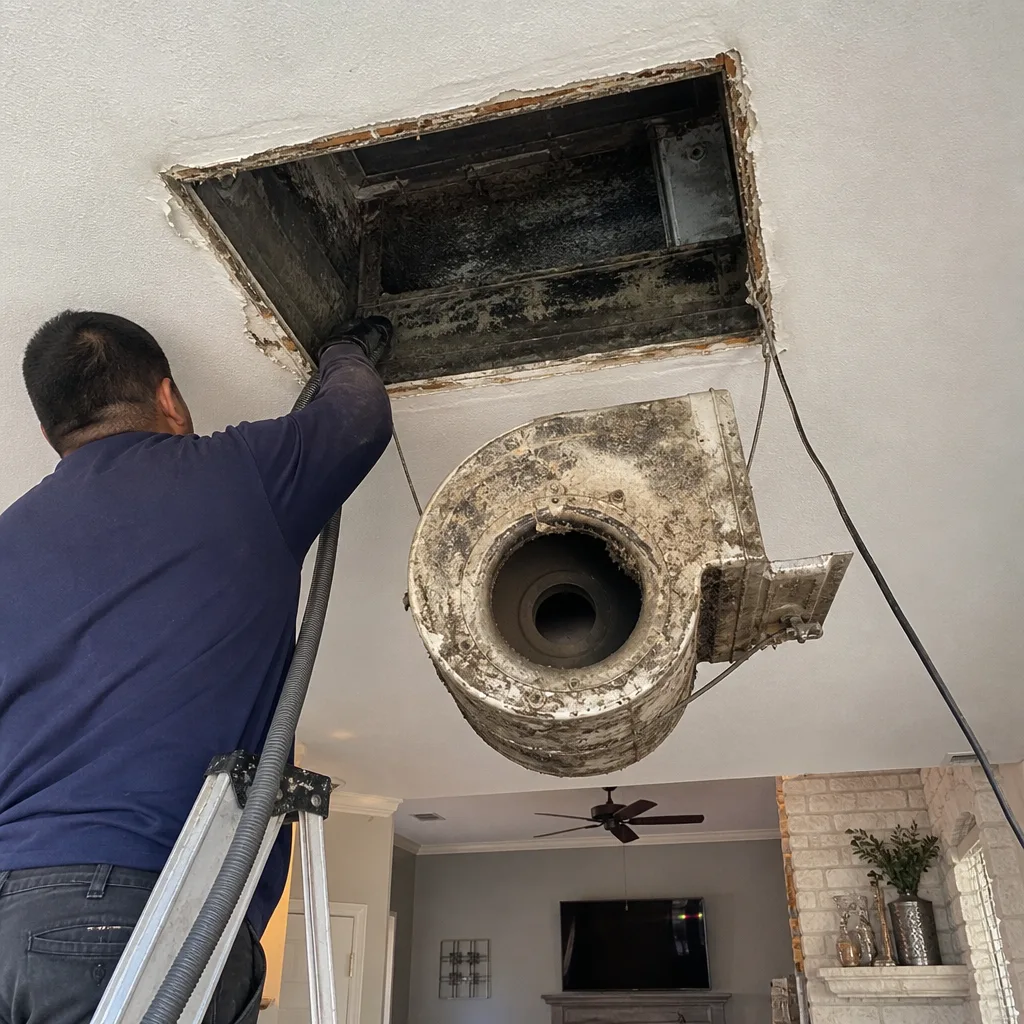 Before
 After
AfterAir Duct Cleaning Maintenance Checklist for Leander Homeowners
Most homeowners in Leander replace their HVAC filter on a schedule but have never looked inside a supply register. A 30-second phone-flashlight check at any vent opening will show you more about your duct system’s condition than a year of filter changes. This guide gives you a repeatable inspection routine built around observable evidence, not vague reminders, so you can build a real maintenance record and hand it to any contractor with confidence. For Air Duct Cleaning Warning Signs: A Leander Homeowner’s Reference Guide, see our companion post.
Quick Answer
A proper air duct maintenance checklist for Leander homeowners includes quarterly register inspections with photo documentation, seasonal filter and return grille checks, annual air handler cabinet and plenum examination, and a written log of findings with dates. Most homes in Leander need our Air Duct Cleaning services every 3 to 5 years, sooner if you observe visible debris buildup, musty odors, or have completed recent renovation work.
Table of Contents
- The 15-Minute Room-by-Room Register Inspection
- What to Photograph and How to Log It
- Leander-Specific Triggers That Accelerate Duct Contamination
- Air Handler Cabinet and Return Plenum Checks Most Homeowners Skip
- Filter Maintenance That Actually Protects Your Ductwork
- How to Hand Your Log to a Contractor for Accurate Quotes
- Common Mistakes to Avoid
- When to Call a Professional
- Frequently Asked Questions
BeforeAfterThe 15-Minute Room-by-Room Register Inspection
This is the inspection almost no homeowner performs, yet it reveals more than any other single check. You need a flashlight and your phone camera. Remove the register cover from one supply vent in each room, set it aside, and look inside with the flashlight held at an angle, not straight in. Angled light casts shadows that show texture and depth.
Here’s what you’re looking for, room by room:
- Living areas and bedrooms: Look past the first 6 inches. Normal ductwork shows light dust coating, maybe a few small debris particles. Problem buildup appears as clumped, fibrous material stuck to duct walls, or a visible ridge of debris at joints and elbows. In Leander, we regularly see cedar pollen accumulation in spring that forms a yellow-green film on metal duct walls. Photograph anything thicker than a business card.
- Kitchen and utility areas: Grease vapor from cooking enters supply ducts even with range hood use. Look for sticky, yellow-brown residue that attracts dust. This is different from dry dust; it indicates your ducts are acting as a grease trap and will require more than vacuuming to clean properly.
- Bathrooms: High humidity rooms grow different problems. Look for dark spotting on metal surfaces, not just dust. This may indicate mold-friendly conditions in the duct run, especially if the bathroom exhaust fan is undersized or ducted improperly.
- Return air grilles: These are the large vents, usually in hallways or central areas. Remove the filter first, then shine your light into the return plenum, the sheet-metal box behind the grille. This is where the heaviest accumulation occurs because all household air passes through here. Normal: light dust. Concerning: visible debris piles, insect fragments, or construction debris in newer Leander homes.
Document the date, room, and what you observed. “Light dust, no clumping” is a valid entry. So is “fibrous buildup 1/4 inch at first elbow, living room supply.” Vague entries like “looks okay” waste your time.
For homes in Leander neighborhoods like Crystal Falls, Travisso, or the older sections near Bagdad Road, pay special attention to supply ducts in rooms farthest from the air handler. These runs have the lowest air velocity and deposit debris first.
What to Photograph and How to Log It
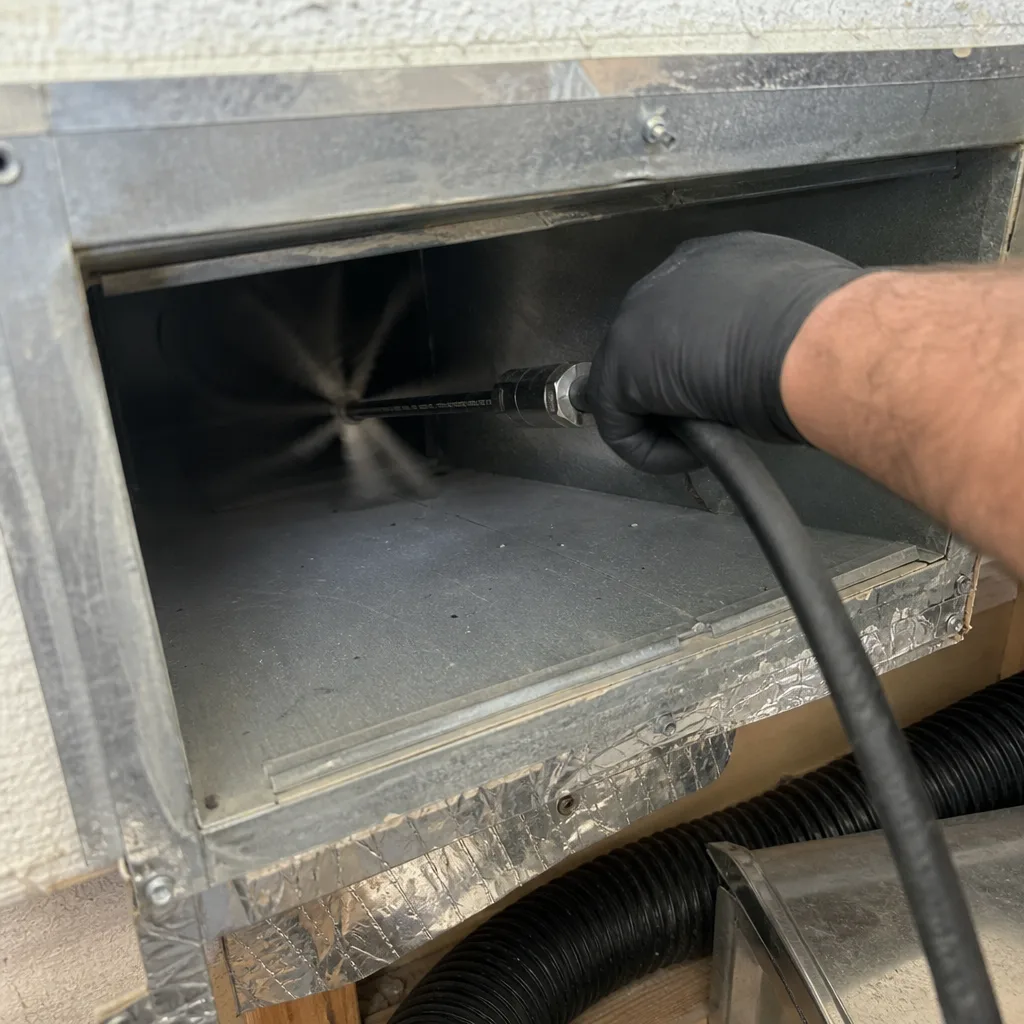
A photo log transforms your maintenance from guesswork into evidence. Here’s the standard we recommend based on what CleanRun technicians document on every job.
Photo standards:
- Take two photos per register: one straight-on showing the duct opening, one angled to show wall texture
- Include a reference object in at least one photo (a quarter, a pen) so scale is visible later
- Photograph the register cover itself, especially if the fins are clogged with dust that restricts airflow
- Photo the filter at each change, not just the new one going in
Log format:
Use a simple spreadsheet or notebook with these columns: Date / Location / What I Observed / Photo File Name / Action Taken. Example row: “2024-03-15 / Master bedroom supply / Yellow-green film on duct walls, photo_0315_mb_01 / Scheduled professional inspection.”
This log becomes valuable in three situations. First, when you request quotes, you can send photos and receive estimates based on actual conditions, not square-footage guesses. Second, after any cleaning, you can compare before and after photos to verify work quality. Third, if you sell your Leander home, the log demonstrates maintenance to buyers and inspectors.
CleanRun has delivered a Documented Photo Record on every visit since 2013, and we’ve found that homeowners who keep their own parallel records catch problems faster and hold contractors accountable more effectively.
Leander-Specific Triggers That Accelerate Duct Contamination
Leander’s environment and growth patterns create conditions that standard national checklists miss. Here are the local factors that should shorten your inspection intervals.
New construction nearby: Leander has been among Texas’s fastest-growing cities for a decade. If you’re within a half-mile of active construction, fine particulate from grading, concrete cutting, and drywall installation enters your HVAC system through outdoor air intakes and envelope leaks. We’ve photographed construction dust in ducts of homes a quarter-mile from building sites. Inspect monthly during active phases, not quarterly.
Cedar pollen season: Central Texas mountain cedar releases pollen December through February, with peaks that can exceed 20,000 grains per cubic meter. This pollen is oily and adheres to duct walls. Homes with fresh air intake systems or older window seals see accelerated buildup. Check return grilles weekly during peak season; the yellow-green film is unmistakable once you know to look for it.
HVAC system age milestones: Ductwork in Leander homes built during the 2015-2020 boom is now reaching the 5-10 year range where original construction debris, if not cleaned initially, has compacted. Fiberglass-lined ducts, common in that era’s construction, hold debris more tenaciously than bare metal. If your home was built 2015-2020 and has never had ducts cleaned, this is your trigger year.
Post-renovation windows: Any renovation involving drywall, flooring, or wall removal generates fine particulate that overwhelms standard filtration. The post-renovation inspection is non-optional. Wait 30 days after work concludes for dust to settle into the system, then perform full register inspection. We regularly find drywall compound and insulation fragments in ducts after kitchen and bathroom remodels in Leander’s older neighborhoods.
Hard water and humidifier residue: Leander’s water hardness exceeds 180 ppm in many areas. Whole-house humidifiers with evaporative pads leave mineral scale in ducts that attracts dust. If you run a humidifier, inspect supply ducts annually for white, crusty buildup that differs from normal dust.
Air Handler Cabinet and Return Plenum Checks Most Homeowners Skip
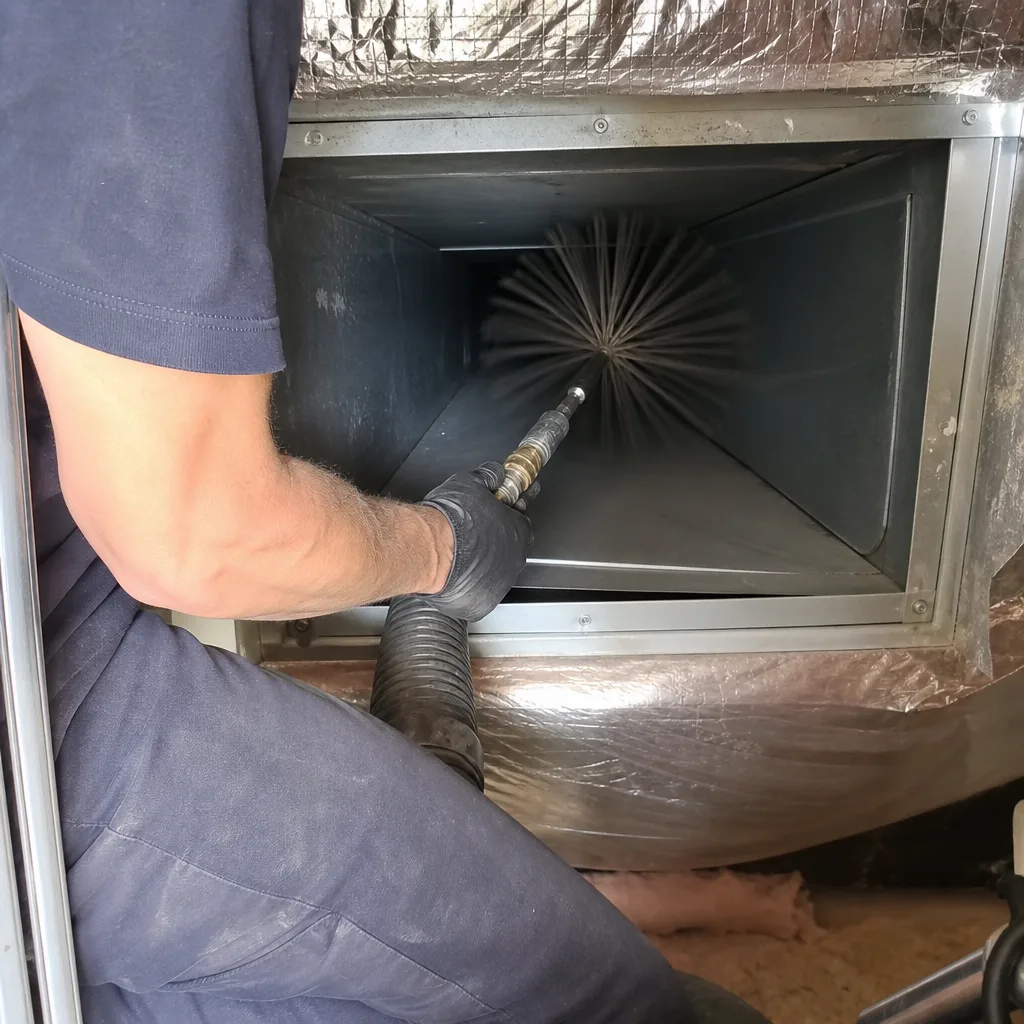
The register inspection covers the distribution side. The air handler cabinet and return plenum, the collection side, often hide worse conditions. These checks require opening panels, so know your limits. If your breaker panel makes you nervous, skip to the filter section and call a technician for this part.
Return plenum inspection:
- Turn off the HVAC system at the thermostat
- Remove the return air grille and filter
- Shine your flashlight into the plenum, the large sheet-metal box behind the grille
- Look for: debris piles at corners, dark staining indicating past moisture, gaps where the plenum meets the air handler (these leak unfiltered air into the system)
- Photograph any gap wider than a pencil; this is a duct leakage point that bypasses your filter entirely
Air handler cabinet:
- With power still off, open the blower compartment panel, usually held by thumb screws or quarter-turn latches
- Examine the blower wheel blades. Normal: light dust film. Concerning: clumped debris that throws the wheel out of balance, causing vibration and bearing wear
- Check the evaporator coil visible above the blower (in cooling systems). Normal: clean aluminum fins. Concerning: matting between fins that restricts airflow and raises energy use
- Look for standing water in the drain pan or rust streaks indicating past overflow
These components affect duct cleanliness directly. A dirty blower wheel recirculates debris back into ducts. A clogged evaporator coil creates moisture conditions that support microbial growth throughout the system.
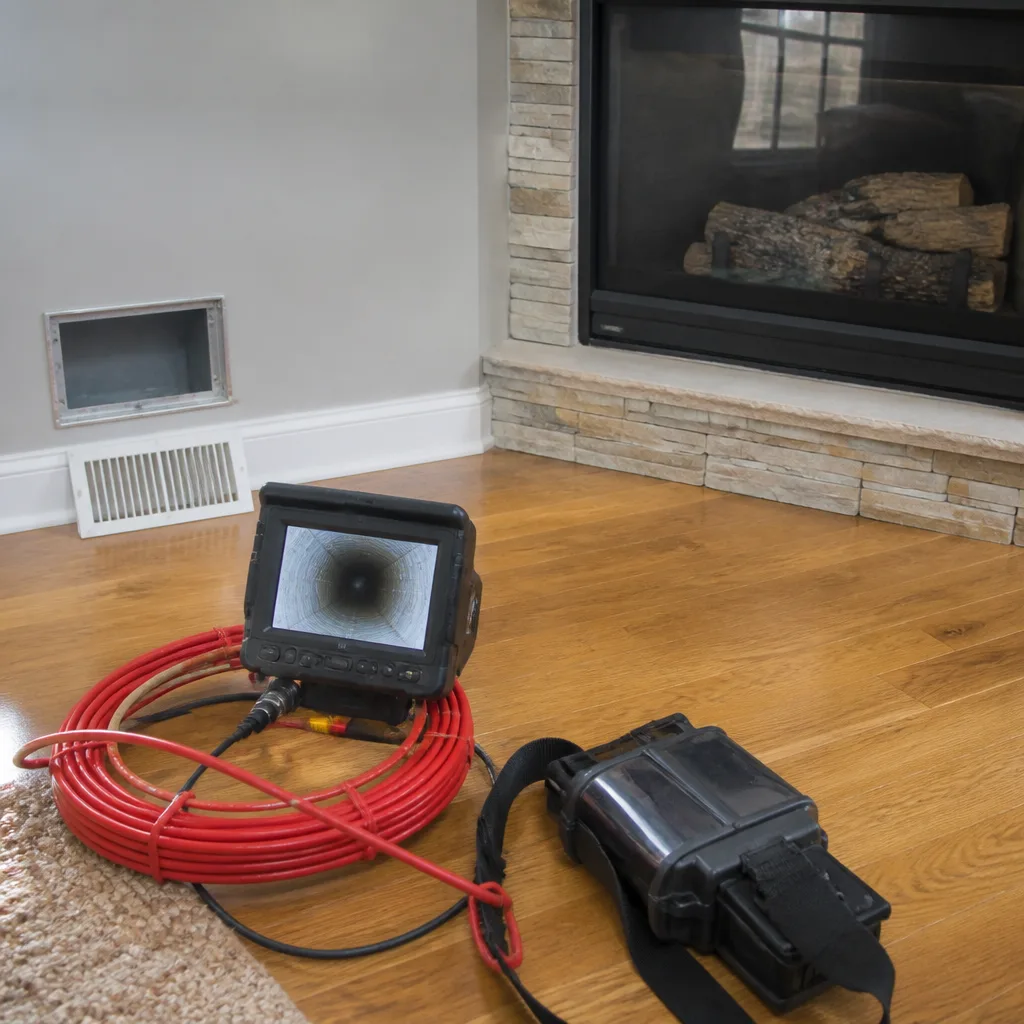
In Leander’s cooling-dominant climate, the evaporator coil runs eight months or more annually. Annual inspection is warranted, not optional. CleanRun technicians use cameras to document coil condition as part of our HVAC Cleaning in Leander service, and we include these images in the standard job record.
Filter Maintenance That Actually Protects Your Ductwork
Filter replacement is the most performed and most misunderstood maintenance task. The wrong filter, installed correctly, protects poorly. The right filter, installed poorly, bypasses entirely.
Filter selection for Leander conditions:
- MERV 8-11 for standard residential use; higher MERV restricts airflow in systems not designed for it
- Pleated media, not fiberglass panels, which have low capture efficiency and structural failure rates
- Proper dimensions with no gaps; a 16x25x1 filter in a 16x25x2 slot allows unfiltered bypass
Installation check:
Every filter has an airflow arrow printed on the frame. This arrow points toward the air handler, not toward the room. Reverse installation loads the filter media backward and increases bypass. After installation, run the system and feel for air leaks around the filter frame with your hand. Any leak indicates a size mismatch or damaged track.
Replacement interval:
Standard guidance is 90 days. In Leander, during cedar season or active construction nearby, 30-45 days is realistic. The filter is a consumable; running it past capacity sends debris downstream into ducts. When you remove a filter, photograph the loaded side and note the date. A filter with visible debris on the clean side indicates either filter failure or bypass.
For homeowners using Aprilaire or Honeywell whole-house media filters, the 6-12 month manufacturer interval assumes average conditions. Check the media at 90 days and photograph for your log. Replace based on loading, not calendar.
How to Hand Your Log to a Contractor for Accurate Quotes
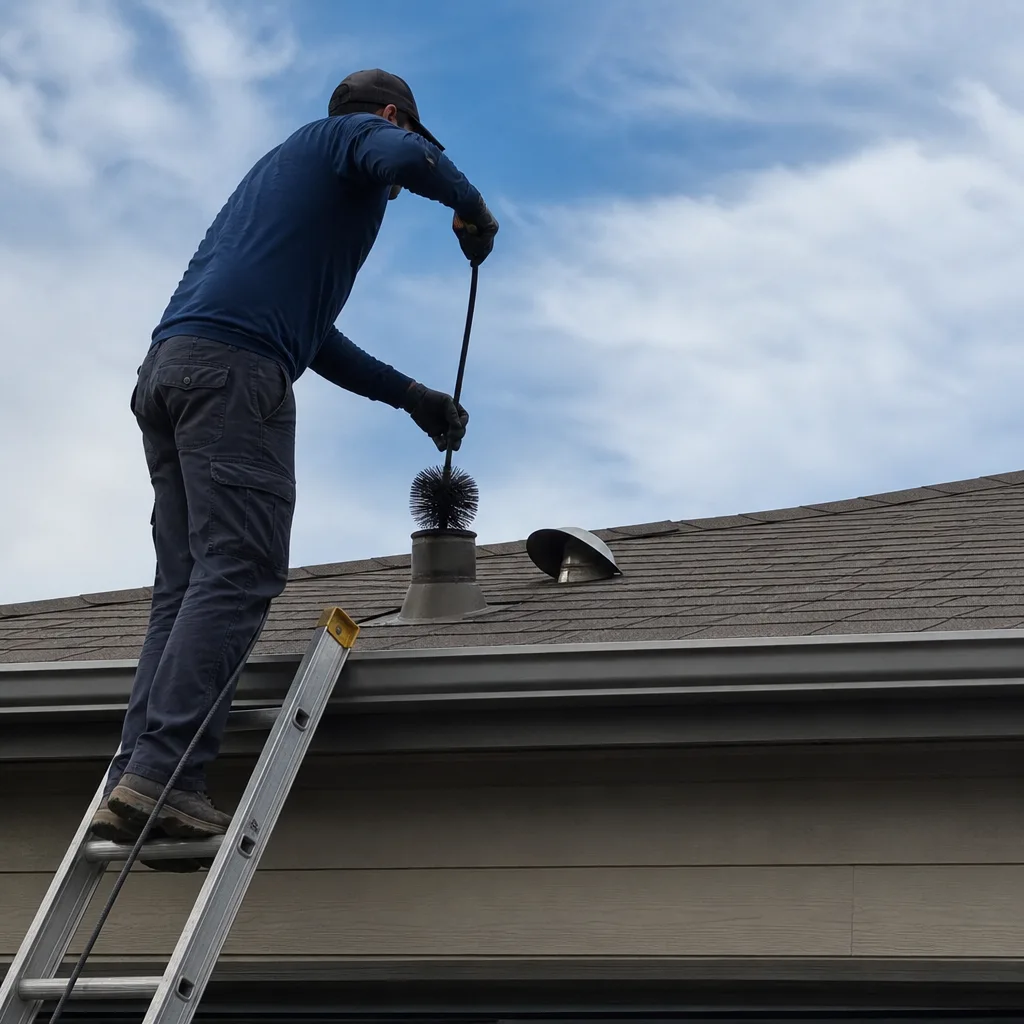
Your maintenance log has value only if you use it. Here’s how to leverage it when contacting professionals.
Before requesting quotes:
Compile your best photos from the last 12 months. Include: the worst supply duct, the return plenum condition, the filter loading pattern, and any air handler findings. Email these with your service request. A contractor who responds with a firm price without seeing conditions is guessing. A contractor who asks follow-up questions or requests a brief site visit is demonstrating professional diligence.
During the estimate:
Walk the technician to your worst finding first. Show them your log. Ask them to photograph the same locations and compare. This establishes baseline expectations. Request that their proposal include: scope of work by duct run, equipment to be used (specific brands like Rotobrush or Abatement Technologies, not “professional equipment”), and deliverables including before/after documentation.
After service:
Compare the contractor’s after photos to your before photos at matching locations. Verify that every duct run they claimed to clean is documented. The photo record is your verification tool; absence of documentation for a claimed duct run is a red flag.
CleanRun’s Haven Standard Clause 1 requires a written price before any work starts, with scope detailed by duct run. Our standard deliverable includes the Documented Photo Record for every run, before and after, delivered to the customer before the crew departs. If you maintain your own log, the comparison is immediate and transparent.
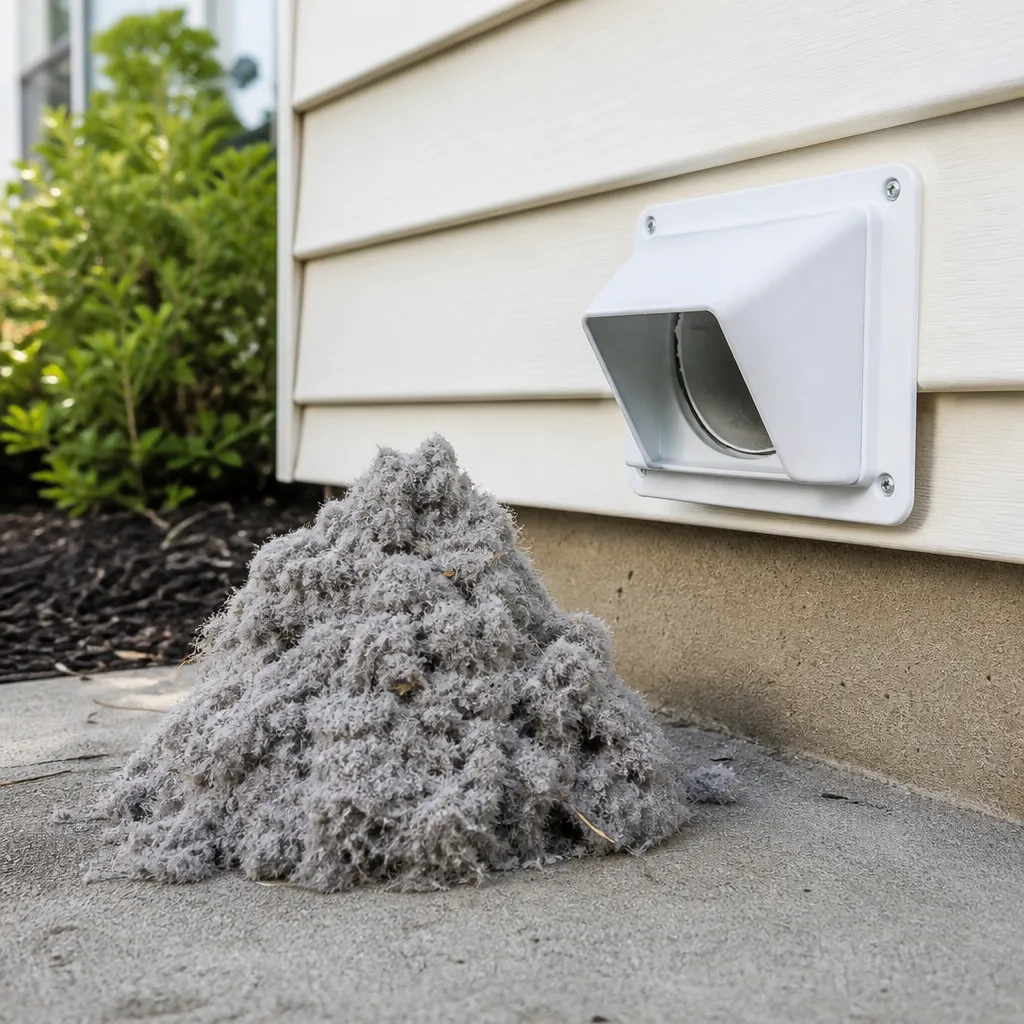
For Dryer Vent Cleaning in Leander, the same documentation standard applies. Dryer vent blockages are a leading cause of house fires, and photo verification of lint removal is the only way to confirm the work was performed thoroughly.
Common Mistakes to Avoid
- Inspecting only the nearest register. The register closest to your air handler has the highest air velocity and stays cleanest. The master bedroom at the end of a long duct run tells the real story. Check the farthest room first.
- Confusing register dust with duct dust. Dust on the register cover surface is normal household settling. Dust packed 6 inches into the duct boot, the transition piece behind the register, indicates duct contamination requiring professional cleaning.
- Ignoring the return side. Supply vents blow conditioned air; return grilles pull household air back. All airborne debris passes through returns. A clean supply system with dirty returns recontaminates itself within days.
- Using the “white glove test” on duct walls. Duct metal is not painted drywall. A light dust film is normal and harmless. The problem indicator is clumped, fibrous, or sticky buildup that restricts airflow or supports microbial growth. Don’t overreact to benign conditions.
- Scheduling cleaning based on calendar alone. “Every three years” is a starting point, not a rule. A home in Leander’s Crystal Falls with active construction nearby and three shedding pets needs different intervals than a single-occupant home in a mature neighborhood with no nearby building.
- Accepting per-vent pricing. This structure incentivizes minimal work per vent and surprises at invoice time. Request whole-system pricing with scope defined by square footage or duct run count, not per-register rates.
- Not photographing before the contractor arrives. Once work begins, your evidence of prior condition is gone. Photograph the day before, every time.
When to Call a Professional
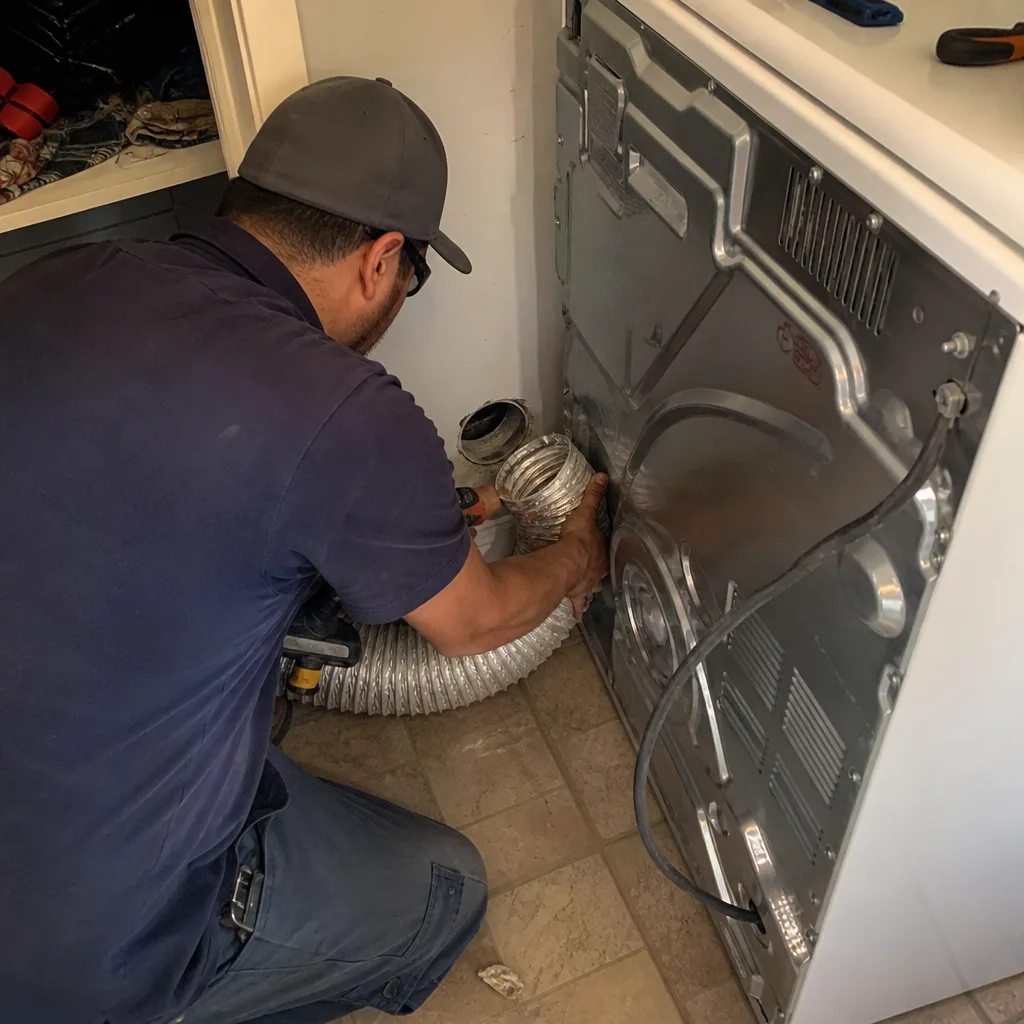
Call a technician when your inspection reveals: clumped debris beyond the first elbow of any duct run, musty or chemical odors from registers when the system runs, visible mold or dark staining on metal surfaces, post-renovation debris including insulation or drywall compound, or blower wheel and evaporator coil contamination you are not equipped to address safely. Also call if your energy bills have risen without thermostat changes; restricted ducts force longer run times.
CleanRun Air Duct Cleaning Leander offers free estimates in Leander. Call (737) 252-1285. Every estimate includes a written price before work begins, under Haven Standard Clause 1, with no obligation. Bring any competitor’s written quote; we provide a free second opinion in writing.
Frequently Asked Questions
Whole-system air duct cleaning in Leander typically ranges from $450 to $850 for a standard single-system home, depending on duct run count, accessibility, and contamination level. CleanRun provides a written price before any work starts, with scope defined by duct run, not per-vent add-ons. Call (737) 252-1285 for an exact quote based on your home’s specific conditions.
Low quotes often reflect limited scope: only visible register cleaning, no air handler work, no documentation, and equipment that amounts to a shop vac with a long hose. The $79 coupon model relies on upselling once inside your home. A legitimate quote specifies equipment by brand, documents every duct run, and holds the price in writing. Ask what is excluded from a low quote; the answer usually reveals the gap.
Require before-and-after photography of every duct run, delivered as part of the standard job record, not available “on request.” CleanRun has photographed every duct run on every job since 2013; the photo record is included, not optional. Compare contractor photos to your own inspection log. If a run lacks documentation, it likely lacked cleaning.
Most Leander homes need professional cleaning every 3 to 5 years. Shorten to 2 to 3 years if you have pets that shed, active construction nearby, recent renovation work, or occupants with respiratory sensitivity. Extend only if your quarterly inspections consistently show minimal accumulation. The inspection log, not the calendar, should drive the decision.
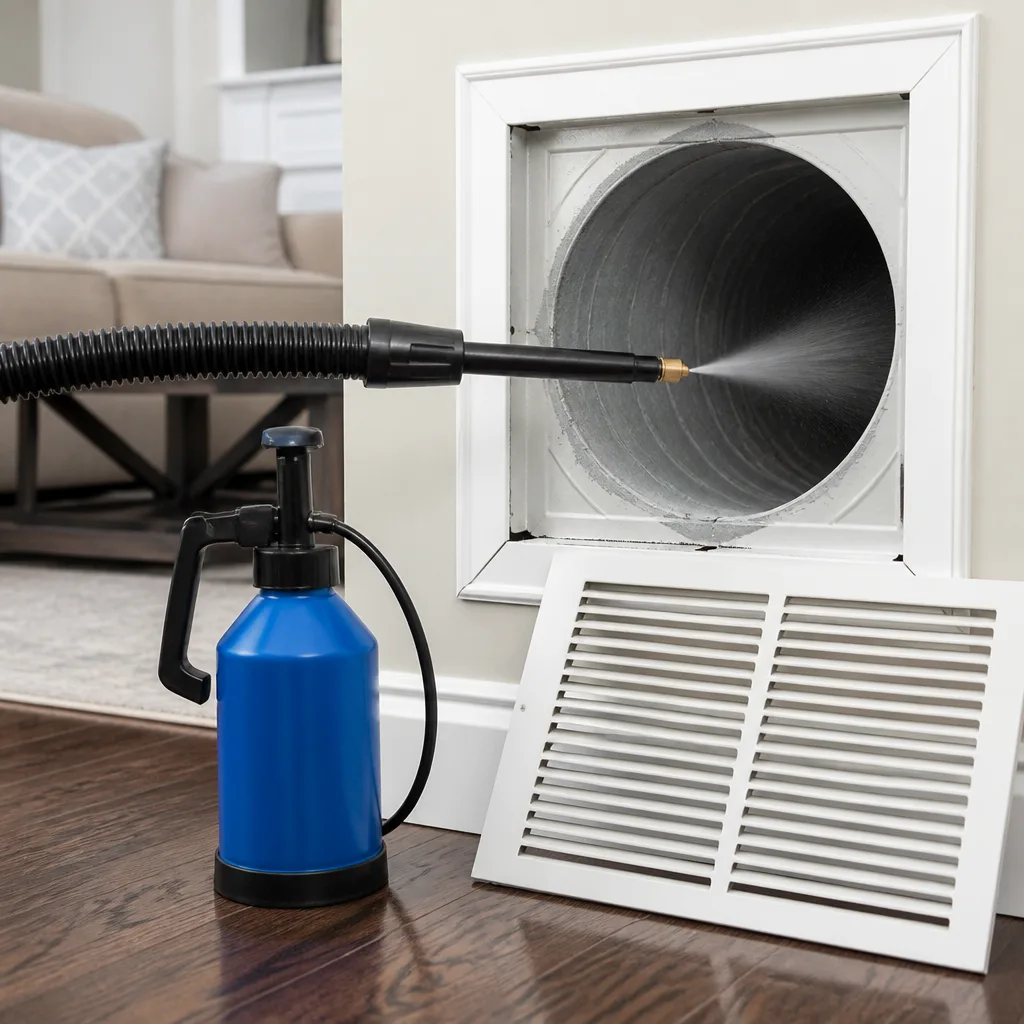
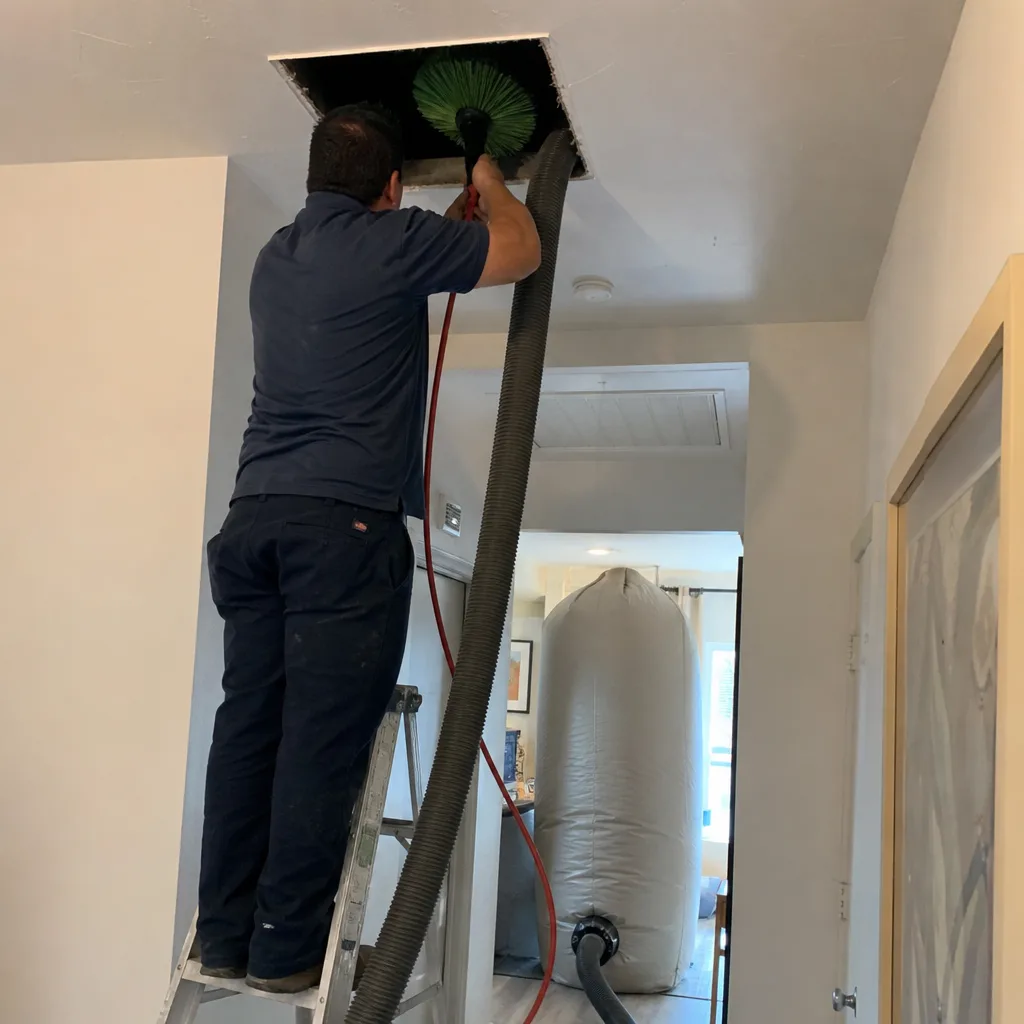
Homeowner-accessible areas, register covers and nearby duct boots, can be cleaned with a vacuum and soft brush. Beyond the first few feet, duct runs require negative-pressure extraction equipment and rotary brushes to dislodge debris without damaging duct seams. Attempting deeper cleaning with household tools risks duct damage and personal injury from sharp metal edges. We recommend professional service for full-system cleaning.
Hard water affects ducts indirectly through whole-house humidifiers and evaporative coolers, which leave mineral scale that attracts and binds dust. In Leander, where water hardness exceeds 180 ppm, humidifier maintenance is critical. Clean or replace evaporative pads per manufacturer interval, and inspect supply ducts annually for white, crusty buildup distinct from normal dust. This scale requires different cleaning methods than standard particulate removal.
The Bottom Line
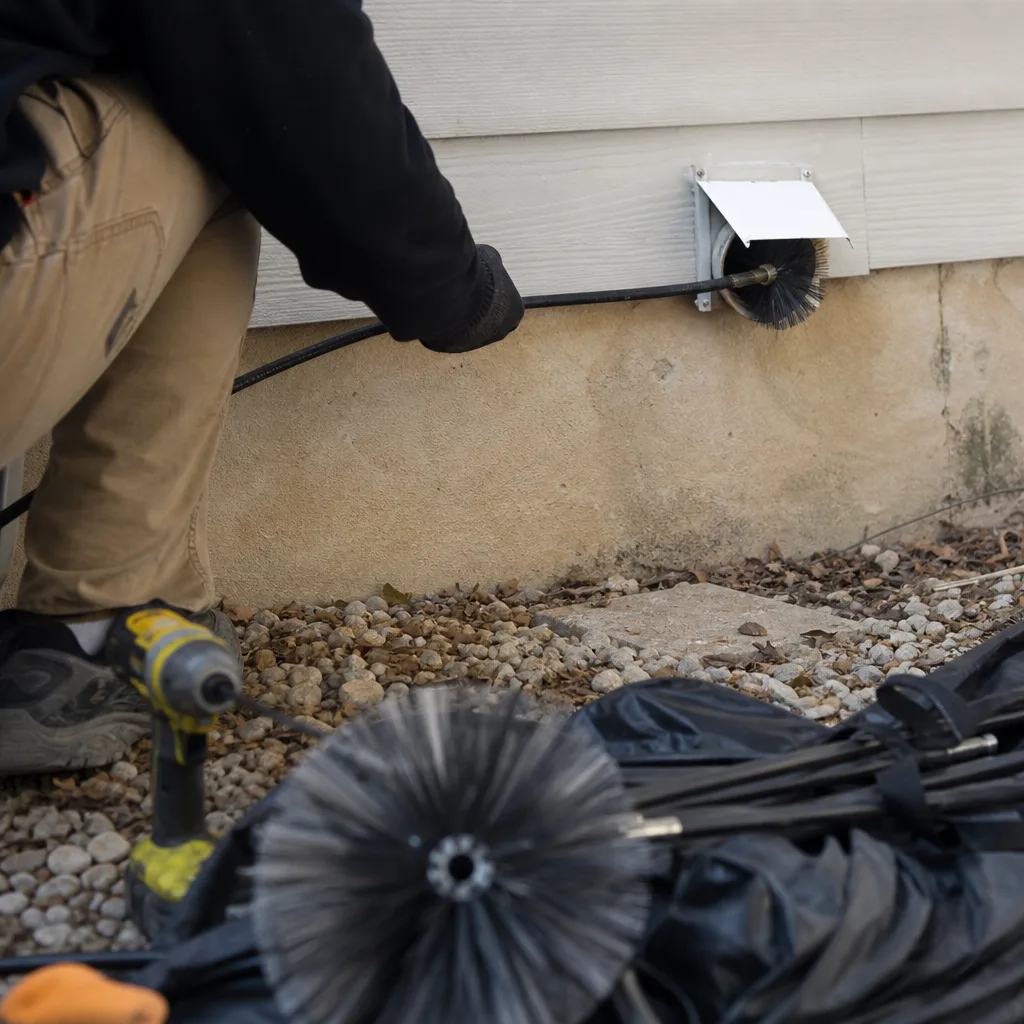
A useful air duct maintenance checklist produces evidence, not reassurance. Inspect your registers quarterly with a flashlight and camera. Log dates, locations, and observations in writing. Account for Leander’s specific triggers: construction, cedar pollen, system age, and renovation history. Check the air handler and return plenum annually. Hand your log to contractors for accurate quotes, and verify their work against your prior documentation. For more guides & resources, explore our blog. The homeowners who get the best outcomes are not the ones who clean most often; they are the ones who observe most carefully and document what they find.
Written by Tomas Reyes, Owner at CleanRun Air Duct Cleaning Leander, serving Leander since 2013.