
Last updated September 23, 2026
Whole-system duct and dryer vent check with before-and-after photos - you see exactly what came out of your vents
That "$99 whole-house special" is a bait ad - the real number appears once they are in your hallway, or the "clean" is a shop-vac at the register. We photograph the inside of your ducts before and after instead.
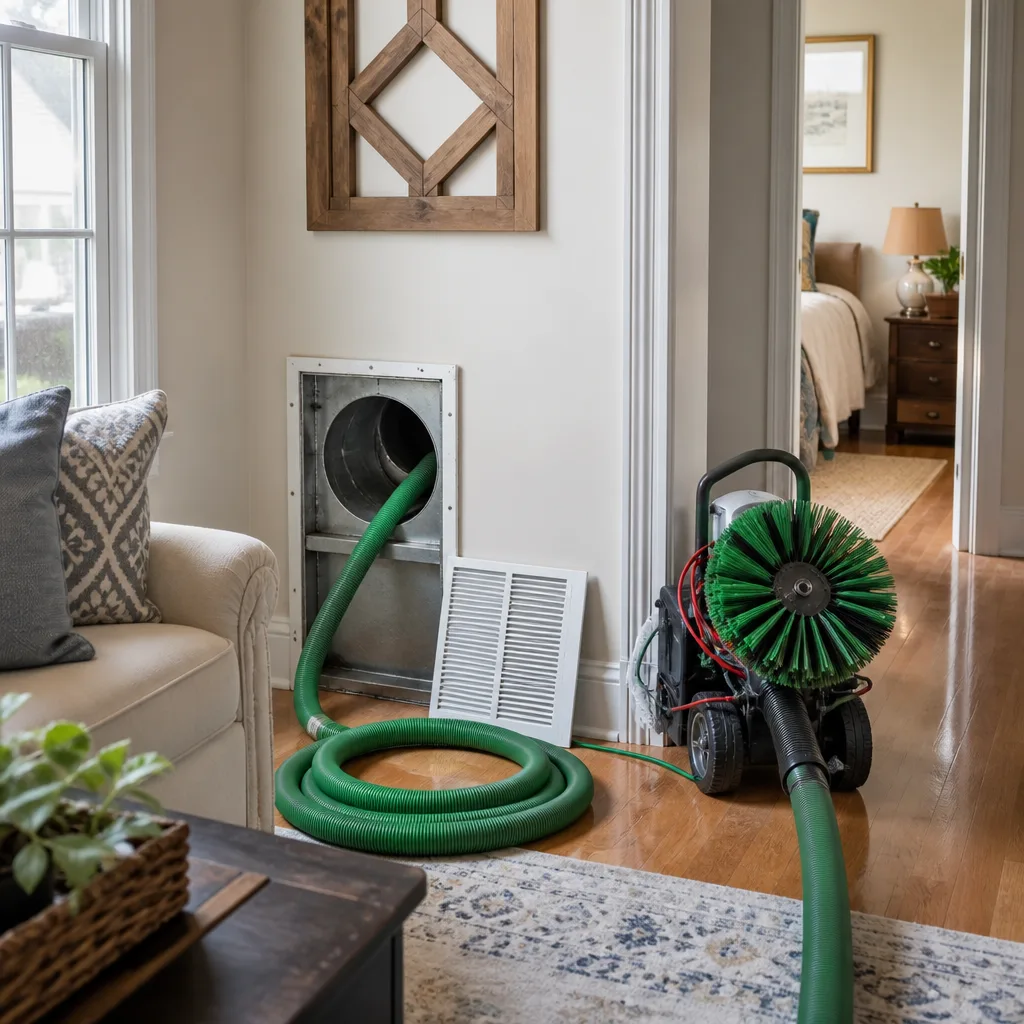
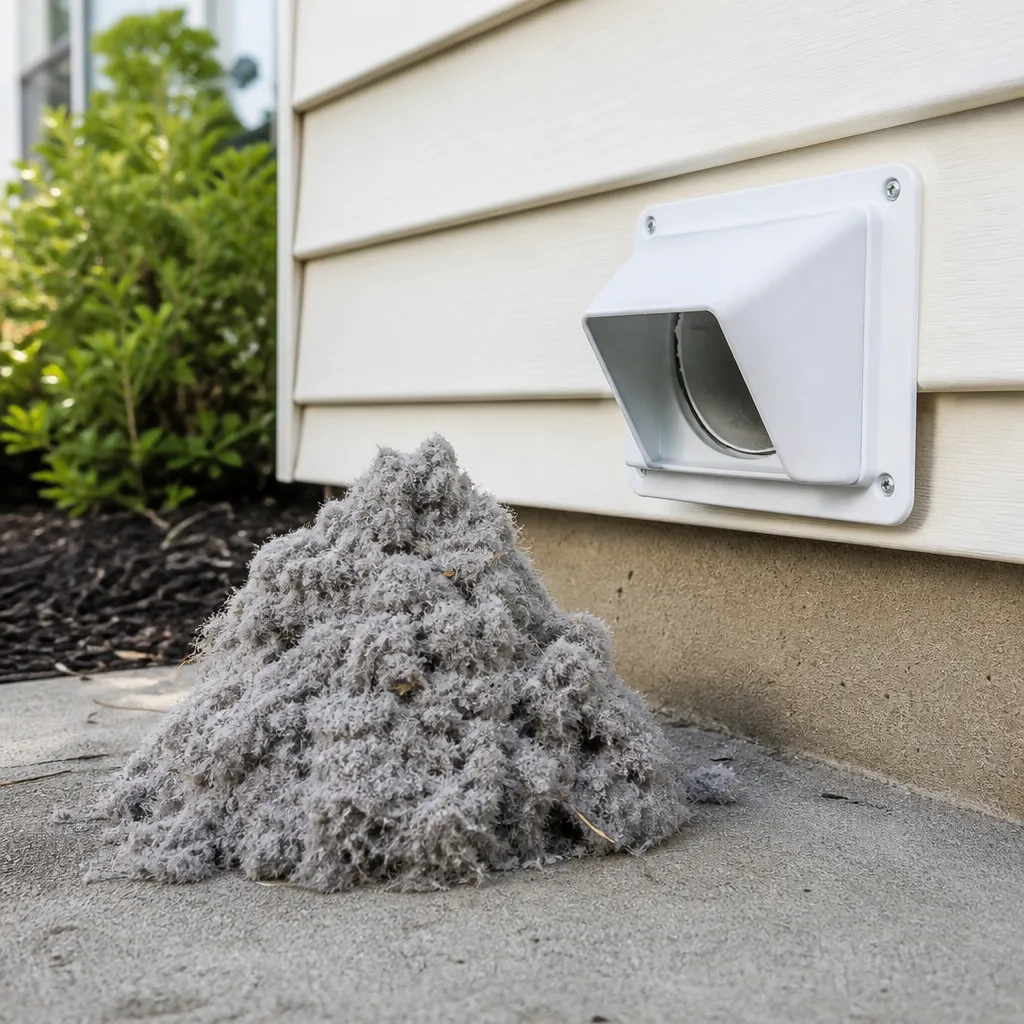
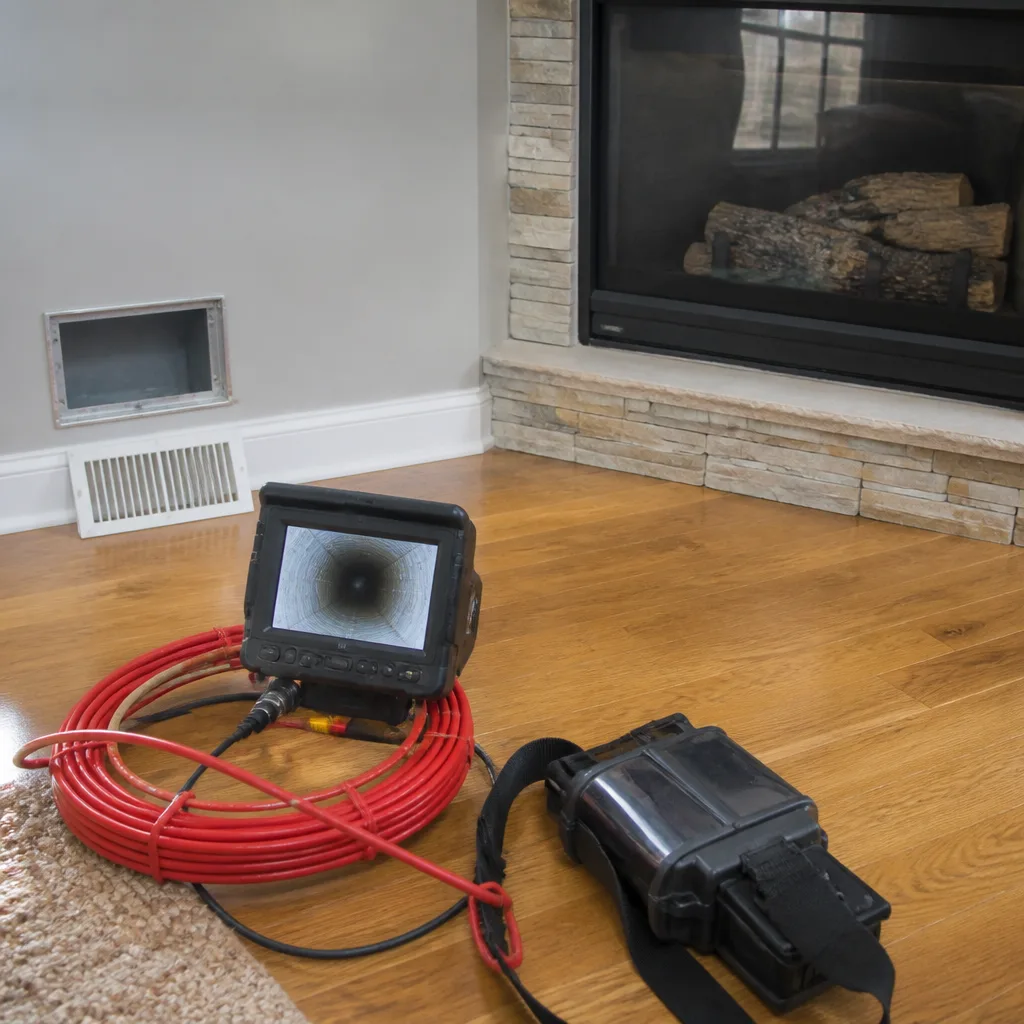
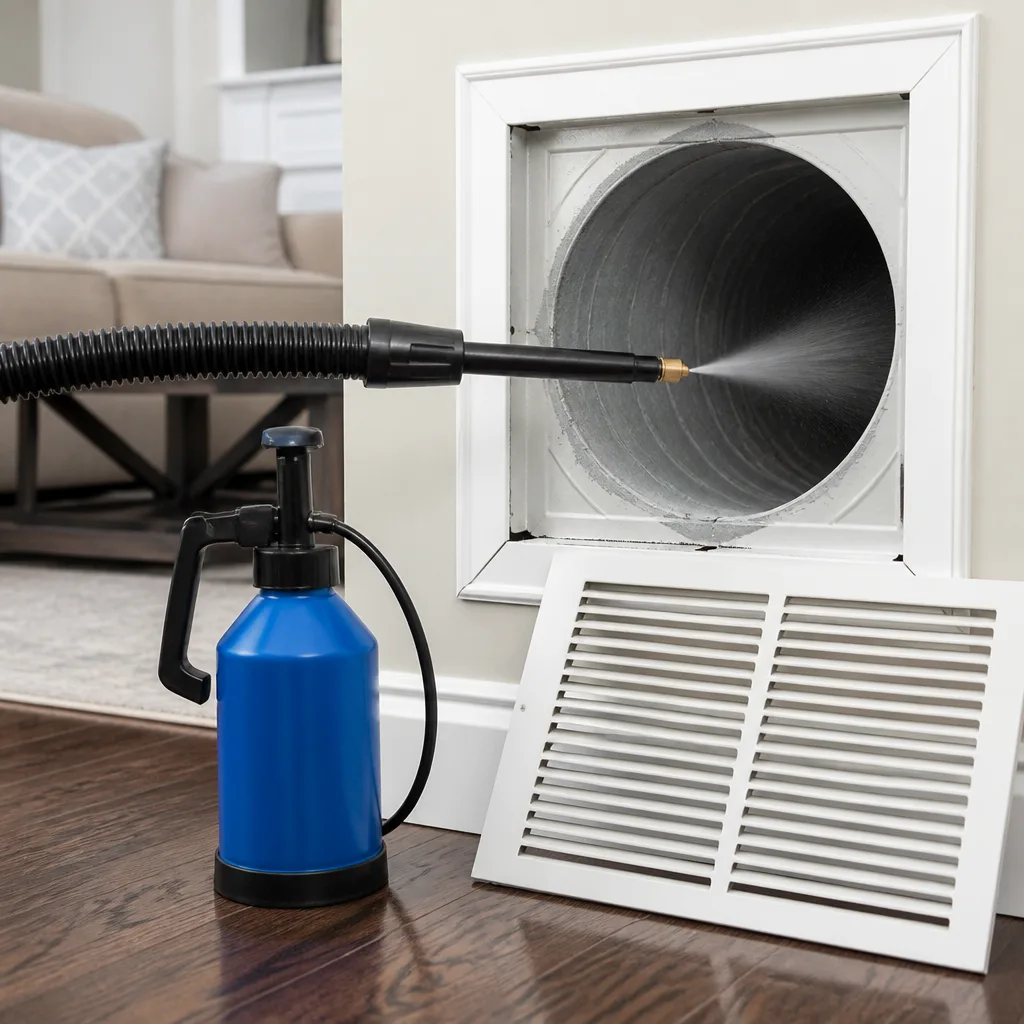
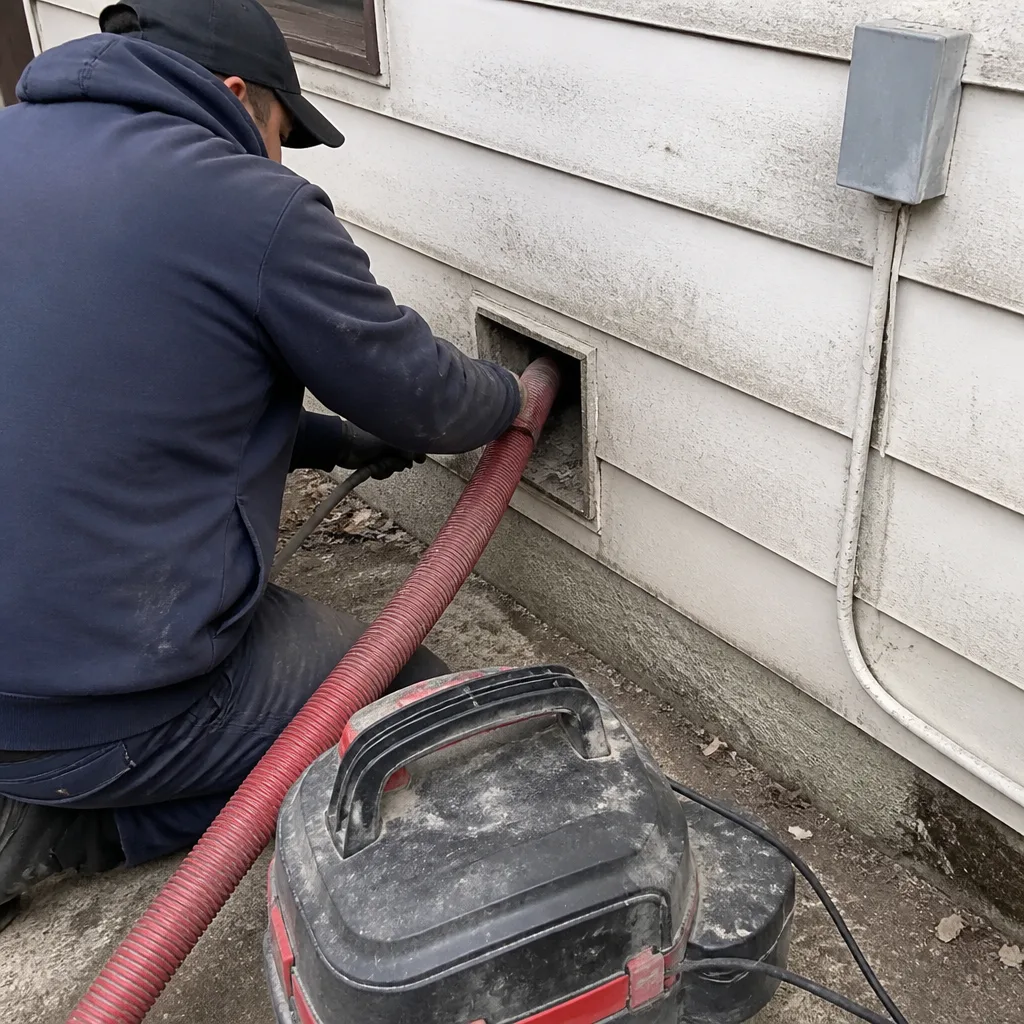 Before
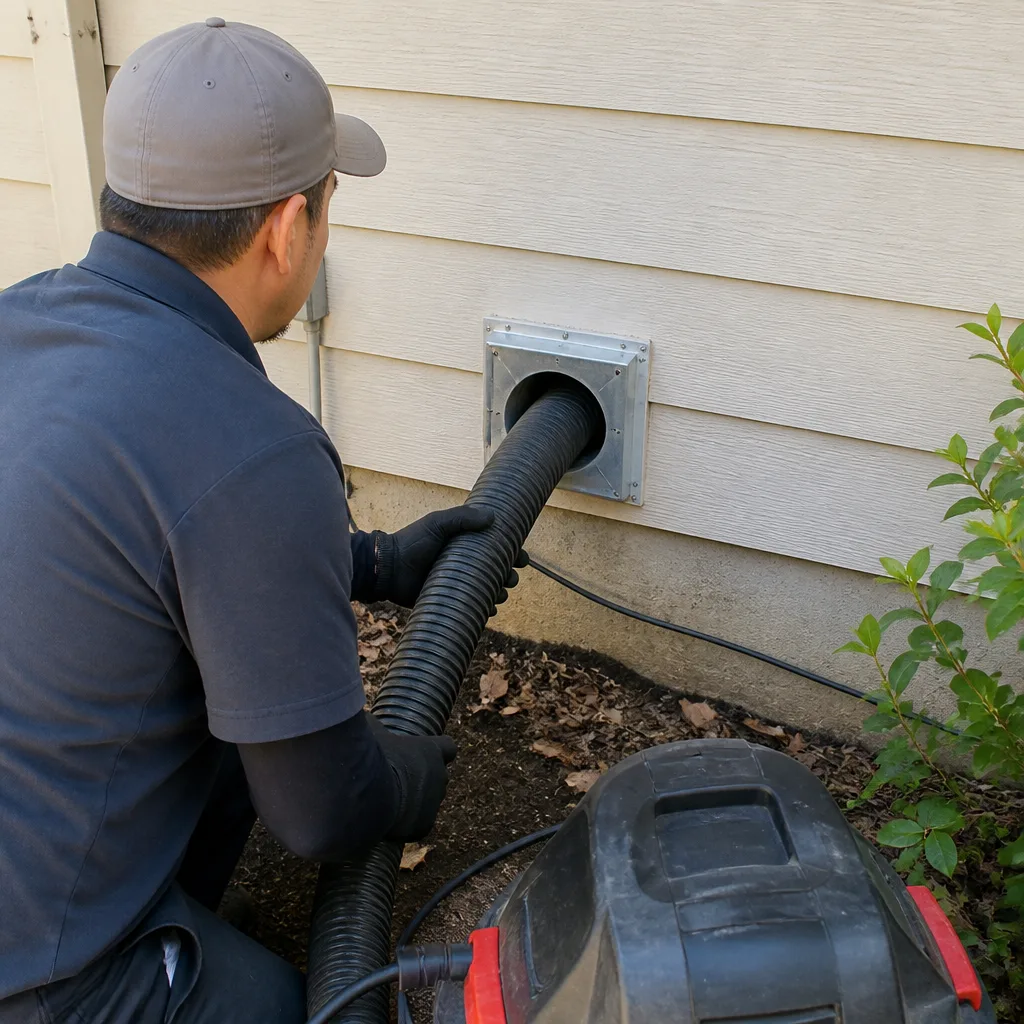 After
After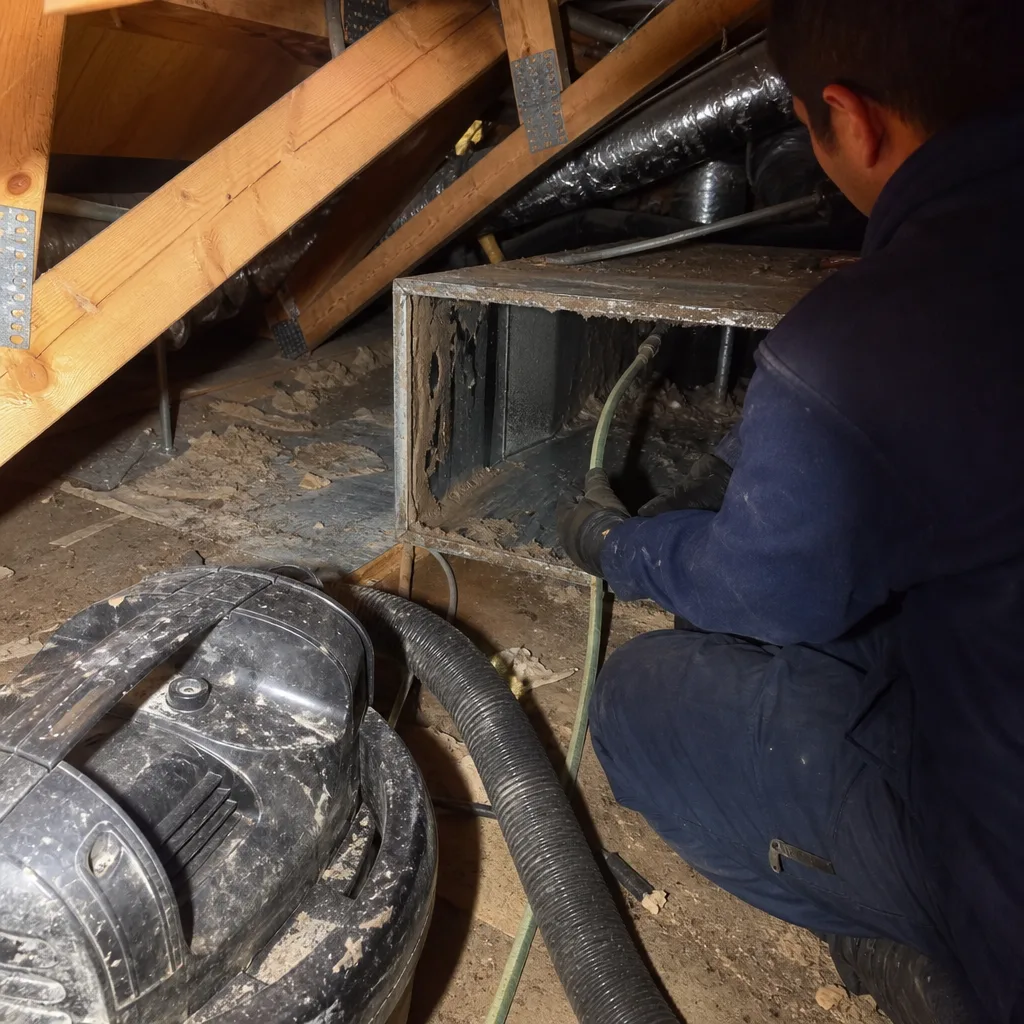 Before
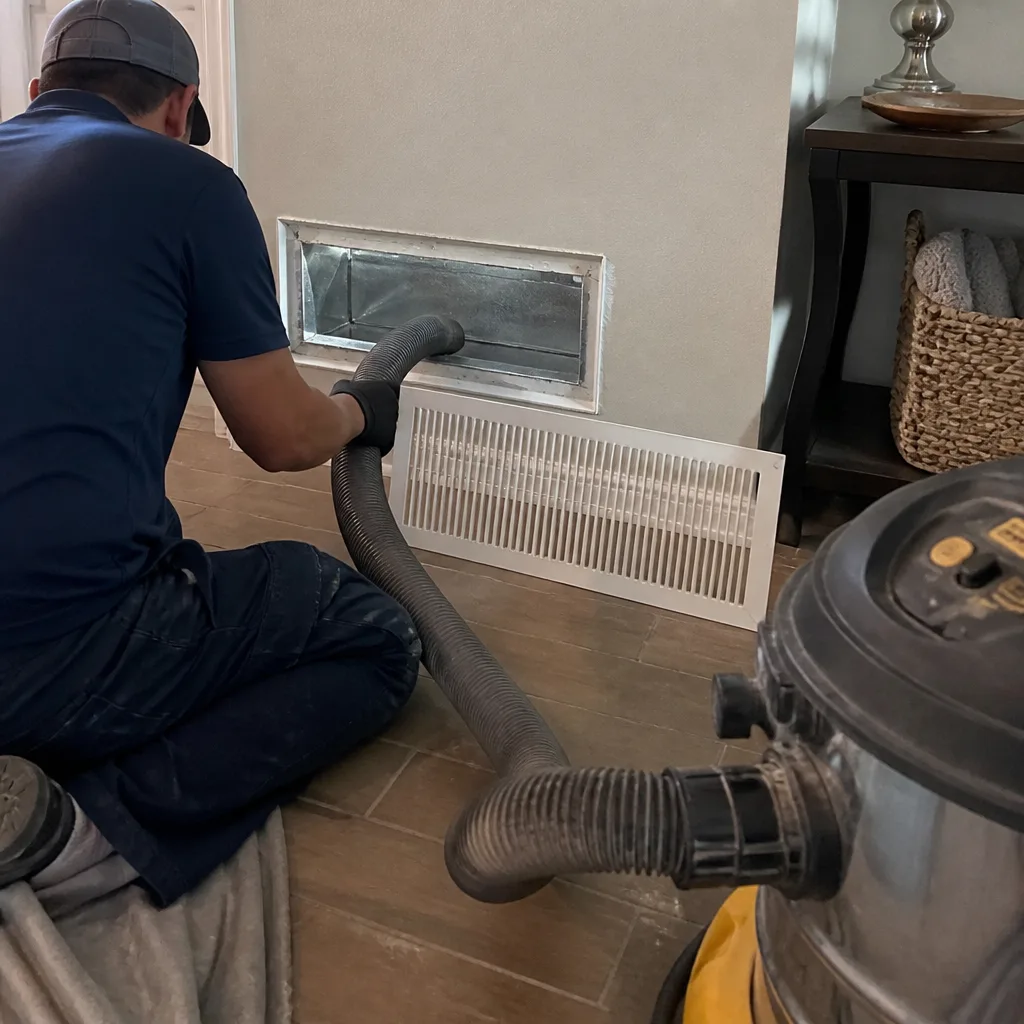 After
After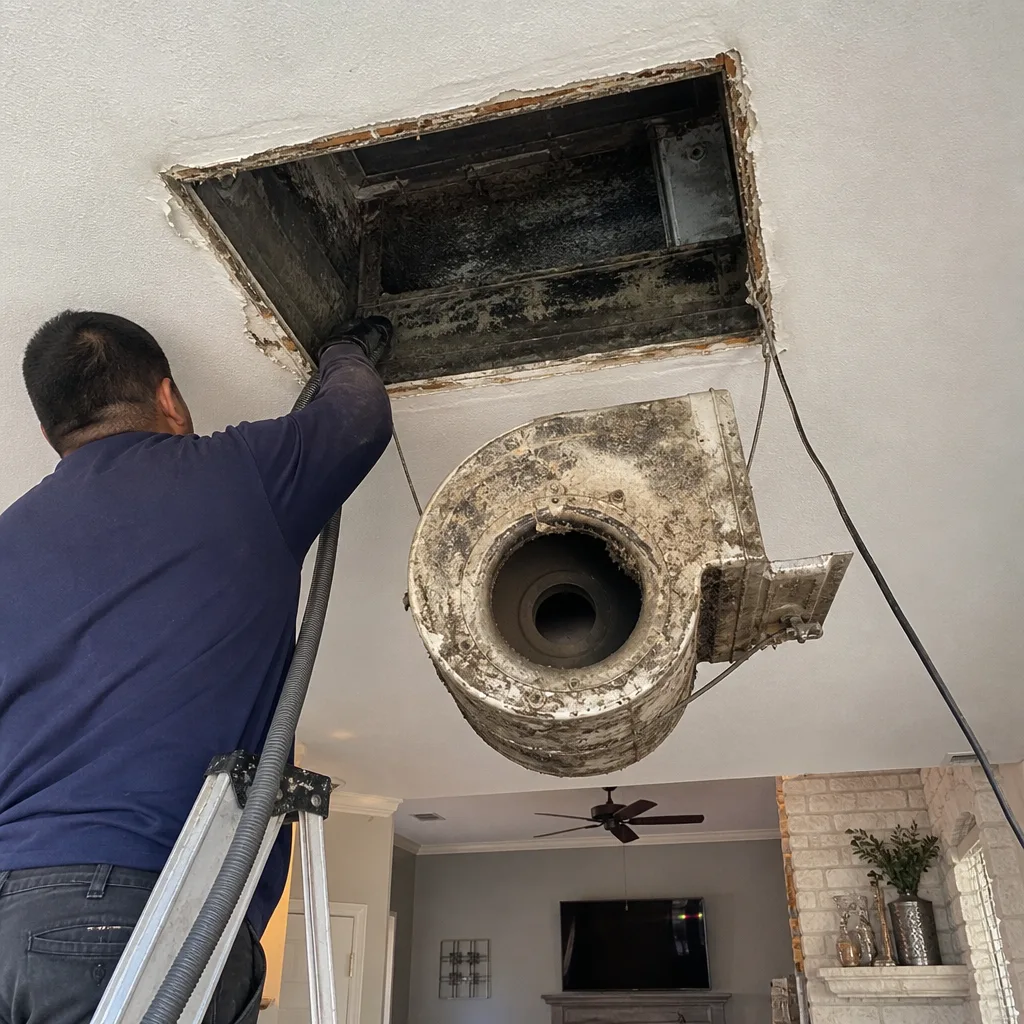 Before
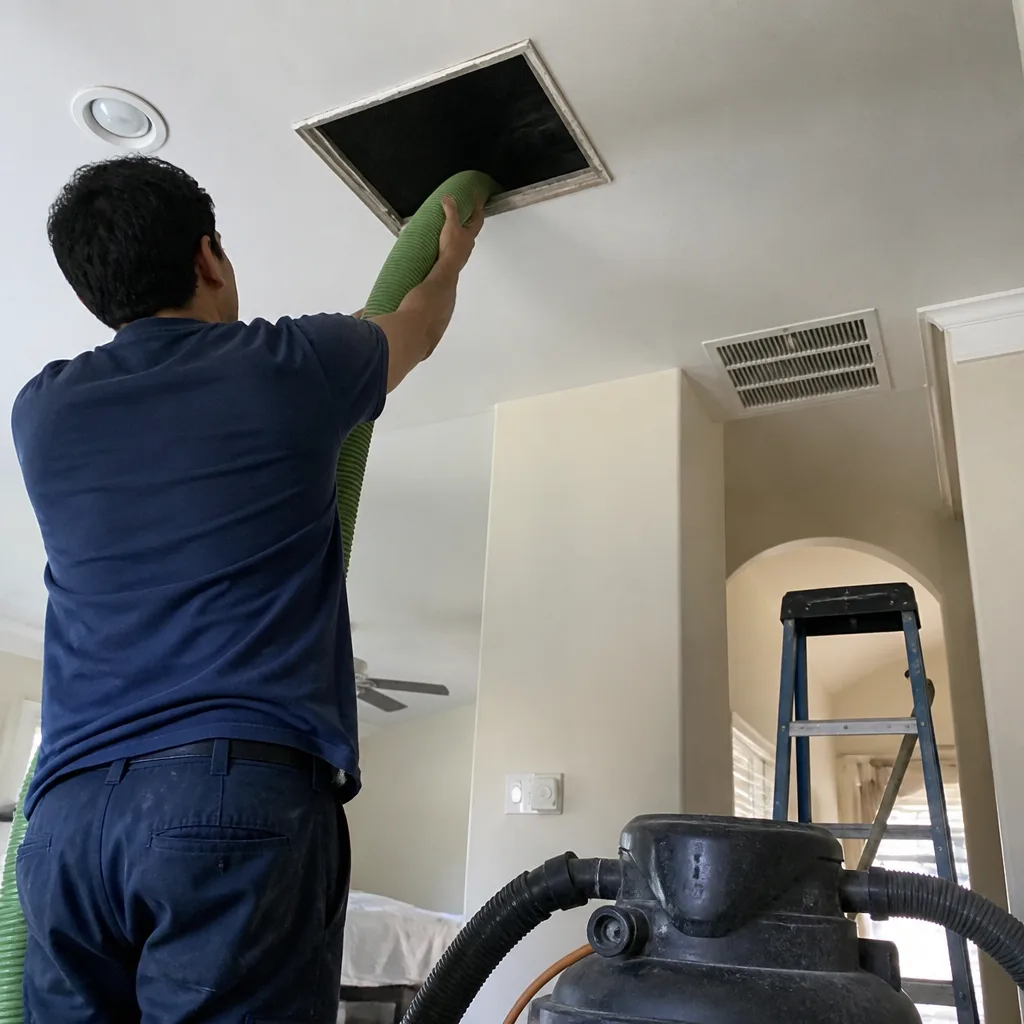 After
AfterAir Duct Cleaning Permits, Codes & Inspections in TX: What You Need to Know
Here’s a scenario we’ve encountered more than once in Leander: a homeowner hires a company for a routine air duct cleaning, the technician finds a disconnected duct run in the attic, seals it on the spot, and the homeowner thinks nothing of it. Three years later, during a pre-sale inspection, that repair surfaces with no permit on file. The closing stalls, and the seller learns that what started as a $300 cleaning job now requires a retroactive mechanical permit, inspection fees, and possible rework. In Texas, the line between duct cleaning and duct repair is sharper than most contractors admit, and crossing it without paperwork can become your liability.
This guide-along with The Complete Guide to Air Duct Cleaning in Leander-explains exactly where Texas law draws that line, what Leander and Williamson County require, and how to protect yourself when a cleaning visit turns into something more.
Quick Answer
Air duct cleaning alone does not require a permit in Texas, but any repair, replacement, or modification of ductwork triggers mechanical permit requirements under the International Residential Code and local amendments. In Leander, mechanical permits are issued by the City of Leander Building Department, and unpermitted ductwork repairs can block home sales, void insurance claims, and create liability for the homeowner.
Table of Contents
- Cleaning vs. Repair: Where Texas Draws the Line
- Leander and Williamson County Permit Requirements
- When Mold Remediation Requires a Licensed Contractor
- What Triggers a Mechanical Inspection
- What to Verify in Writing Before Work Starts
- How to Check Permit History on Your Address
- Why Permits Matter When You’re Planning to Sell
- Common Mistakes to Avoid
- When to Call a Professional
- Frequently Asked Questions
BeforeAfterCleaning vs. Repair: Where Texas Draws the Line
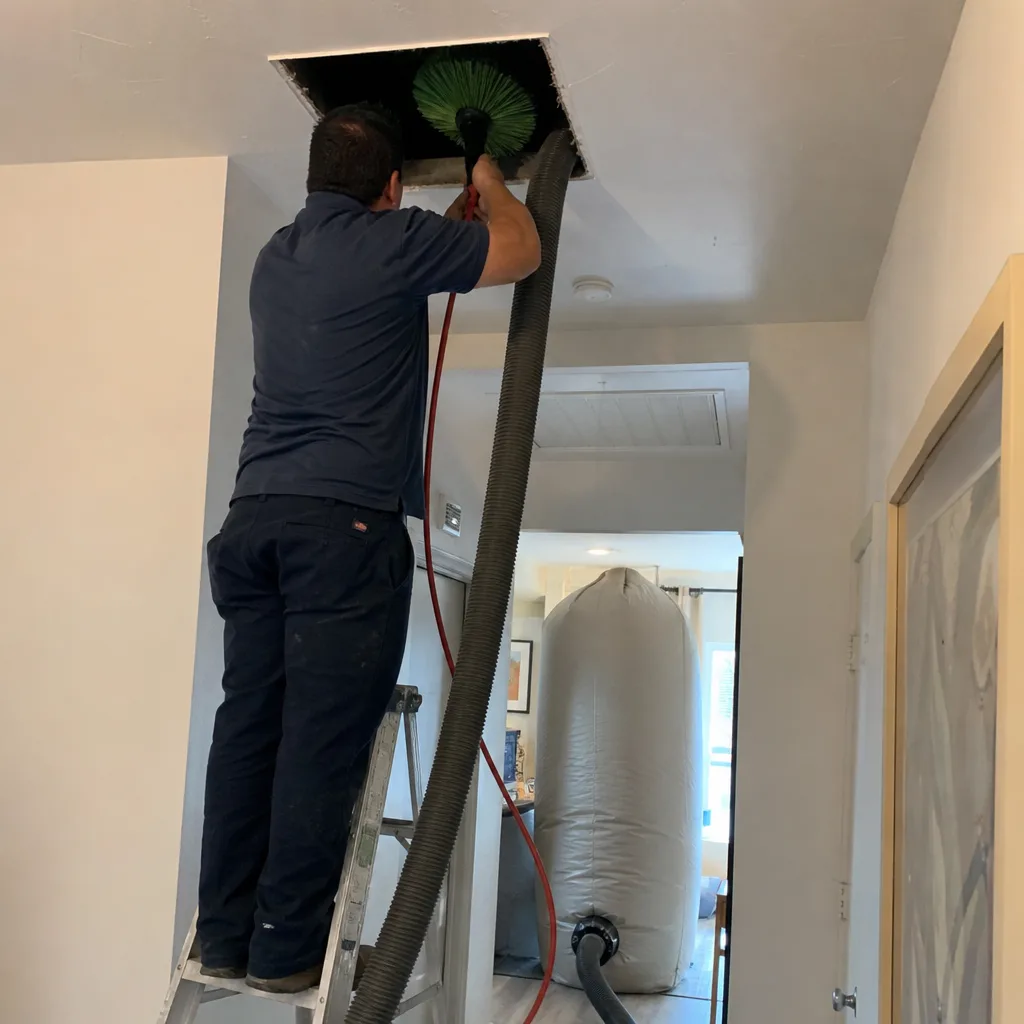
Texas does not regulate air duct cleaning as a licensed trade. The Texas Department of Licensing and Regulation (TDLR) does not issue permits for cleaning work, and no state license is required to operate negative-pressure extraction equipment or rotary brush systems inside residential ductwork. This is why the market includes everything from established companies with professional-grade equipment to individuals with a shop vacuum and a business card.
The regulatory gap closes the moment work moves beyond cleaning into the physical alteration of the HVAC system. Here is the distinction that matters:
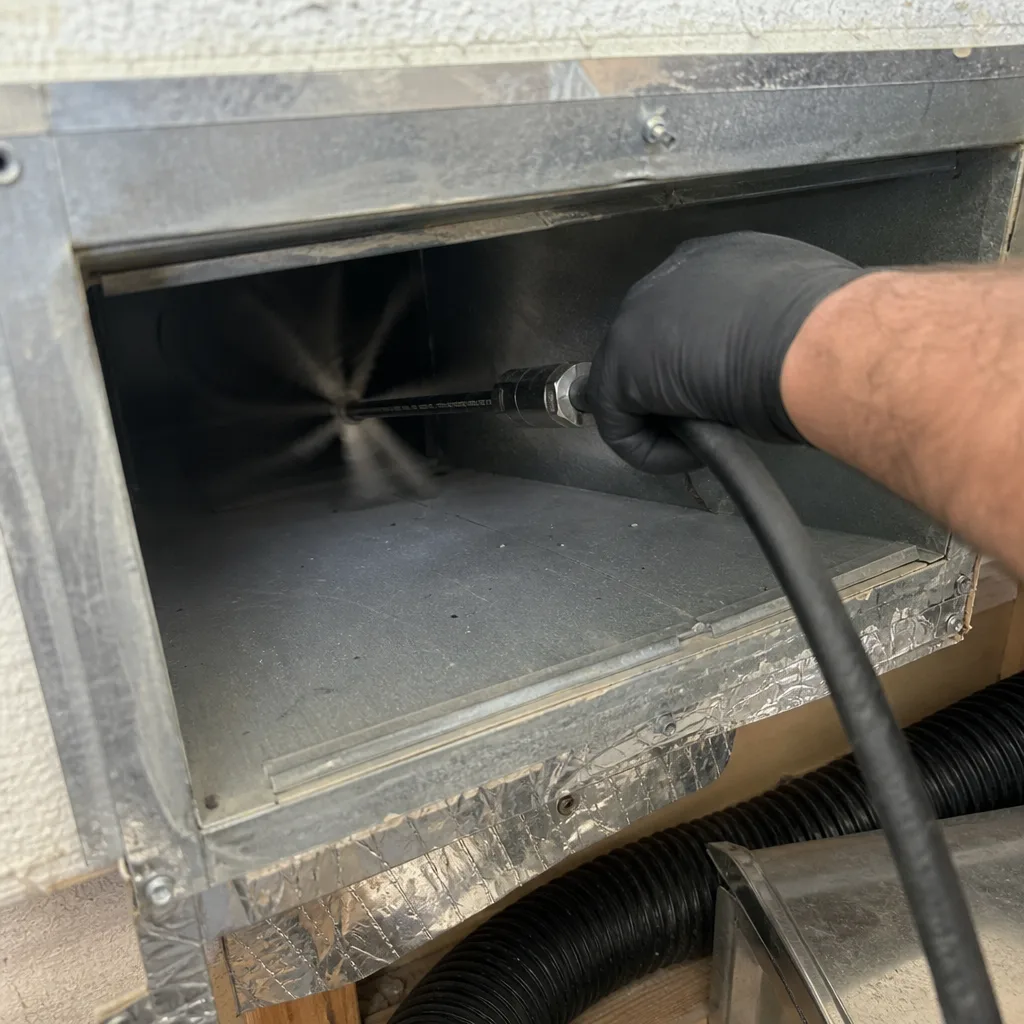
- Cleaning (no permit required): Removing debris, dust, and contaminants from existing duct runs using brushes, compressed air, or negative-pressure extraction (a vacuum system that pulls loosened material out of the ductwork while containing it). This includes cleaning registers (the visible vent covers), grilles, and the accessible portions of the plenum (the central distribution box where conditioned air splits into multiple duct runs).
- Repair or modification (permit required): Sealing disconnected joints, replacing damaged sections of ductwork, altering the routing of duct runs, installing new plenum connections, or modifying the connection between ducts and the air handler. Any work that changes the physical configuration or structural integrity of the distribution system falls under mechanical code.
We’ve seen this line blurred intentionally and accidentally. A technician in a Leander home in the Crystal Falls neighborhood once told a customer he would “fix a small leak” in a duct joint while cleaning. The repair involved mastic sealant and mechanical fastening, which constituted duct sealing under IRC Section M1601.4.1. No permit was pulled. When that homeowner listed the property two years later, the buyer’s inspector flagged the unpermitted modification. The seller had to hire a licensed mechanical contractor to expose the repair, document it to city inspectors, and obtain a retroactive permit. The total cost exceeded $800, not counting the delayed closing.
The International Residential Code, adopted by reference in Texas through the Texas Administrative Code, governs mechanical systems in residential construction. Local jurisdictions like Leander amend the IRC with specific provisions. Leander’s amendments to the 2021 IRC include additional requirements for duct sealing in unconditioned attics, which describes most homes built in Leander’s 78641 and 78645 zip codes before 2020. The combination of hot attic temperatures, which regularly exceed 130°F in July and August, and the IRC’s emphasis on sealed ductwork in thermal envelopes, means that what seems like a minor repair can carry significant code weight.
Homeowners should understand that the absence of a state license for duct cleaning does not mean the work is unregulated. It means the regulation happens at the point where cleaning becomes construction.
Leander and Williamson County Permit Requirements
Leander operates its own building department under the City of Leander Development Services Division. Williamson County does not issue mechanical permits for properties within Leander city limits; the city retains jurisdiction. For addresses in unincorporated Williamson County, such as some properties along RM 1431 west of the city boundary, permits are issued through Williamson County Development Services.
The permit structure in Leander works as follows:
- Mechanical Permit: Required for any repair, replacement, or modification of HVAC ductwork. This includes duct sealing that involves disassembly and reassembly of joints, replacement of flex duct sections, or installation of new duct runs. The permit application requires a licensed mechanical contractor’s signature and a scope of work description.
- Building Permit (if applicable): If ductwork modification requires structural changes, such as cutting new chases through framing members or modifying ceiling assemblies, a separate building permit may be required.
- Inspection Sequence: Mechanical permits trigger at least one inspection, typically a rough-in inspection if new ductwork is being installed, and a final inspection before the system is closed up and concealed. For repairs to existing systems, a single final inspection may suffice.
Leander’s permit fees for mechanical work are based on the valuation of the work. As of 2024, residential mechanical permits start at approximately $85 for minor repairs and scale with project value. The city accepts online applications through its CleanRun Air Duct Cleaning Leander home portal, though licensed contractors typically handle submission.
Here’s what many homeowners in Leander’s newer developments, such as Travisso or Bryson, do not realize: their homes were built under the 2015 or 2018 IRC, which included specific duct sealing requirements for energy compliance. When a contractor modifies that ductwork without a permit, the home’s energy compliance documentation becomes technically inaccurate. This rarely surfaces in day-to-day life, but it can complicate insurance claims after fire or water damage, when insurers review whether modifications contributed to the loss.
Leander’s climate adds another layer. The city’s location at the edge of the Texas Hill Country means higher elevation than Austin, with slightly greater temperature swings and lower humidity than areas east of I-35. Ductwork in Leander attics experiences more thermal stress than in coastal Texas, which is why the IRC’s duct sealing provisions are particularly relevant here. A repair that would be minor in Houston, where ambient humidity reduces thermal cycling, may be more consequential in Leander’s drier, more extreme attic environment.
When Mold Remediation Requires a Licensed Contractor
Mold inside ductwork occupies a separate regulatory category from either cleaning or mechanical repair. Texas requires a Mold Assessment Consultant license for anyone who identifies mold growth and writes a remediation protocol, and a Mold Remediation Contractor license for anyone who performs mold remediation. These licenses are issued by TDLR under the Mold Assessment and Remediation Rules, 16 Texas Administrative Code Chapter 78.
The threshold question is whether what is found in the ducts constitutes mold that requires licensed remediation, or whether it is ordinary dust and debris that a cleaning contractor can address. This distinction matters because:
- Visible mold growth on duct surfaces: If a contractor identifies what they believe is mold, Texas law requires that a licensed Mold Assessment Consultant evaluate it before remediation begins. The consultant must collect samples, identify the species if necessary, and write a remediation protocol. A cleaning contractor cannot legally perform mold remediation without this protocol.
- Staining that may or may not be mold: Many duct surfaces show dark staining from dust, smoke particulate, or oxidation. Without laboratory analysis, this cannot be definitively identified as mold. A cleaning contractor can remove the staining through standard cleaning methods, but if they represent it as mold remediation, they cross into licensed activity.
- Post-remediation verification: After licensed mold remediation, a consultant must perform clearance testing. Cleaning contractors cannot issue mold clearance documentation.
We’ve photographed duct interiors in Leander homes where previous contractors told homeowners they had “mold” and sold expensive remediation. The photo record showed ordinary dust accumulation on fiberglass duct board, darkened by years of airflow. Without microscopic analysis, no one could legally call it mold. Haven Standard Clause 1, our written pricing requirement, applies here: we quote cleaning based on what we can document, not on alarm language about biological hazards we cannot verify.
Homeowners should be wary of any duct cleaning contractor who identifies “mold” without laboratory confirmation, offers to remediate it without a TDLR-licensed consultant’s protocol, or claims that chemical fogging constitutes mold remediation. Fogging with products from manufacturers like Air Duct Cleaning in Leander or Guardsman may sanitize surfaces, but sanitization is not remediation under Texas law, and no fogging product eliminates the legal requirement for licensed assessment when mold is present.
What Triggers a Mechanical Inspection
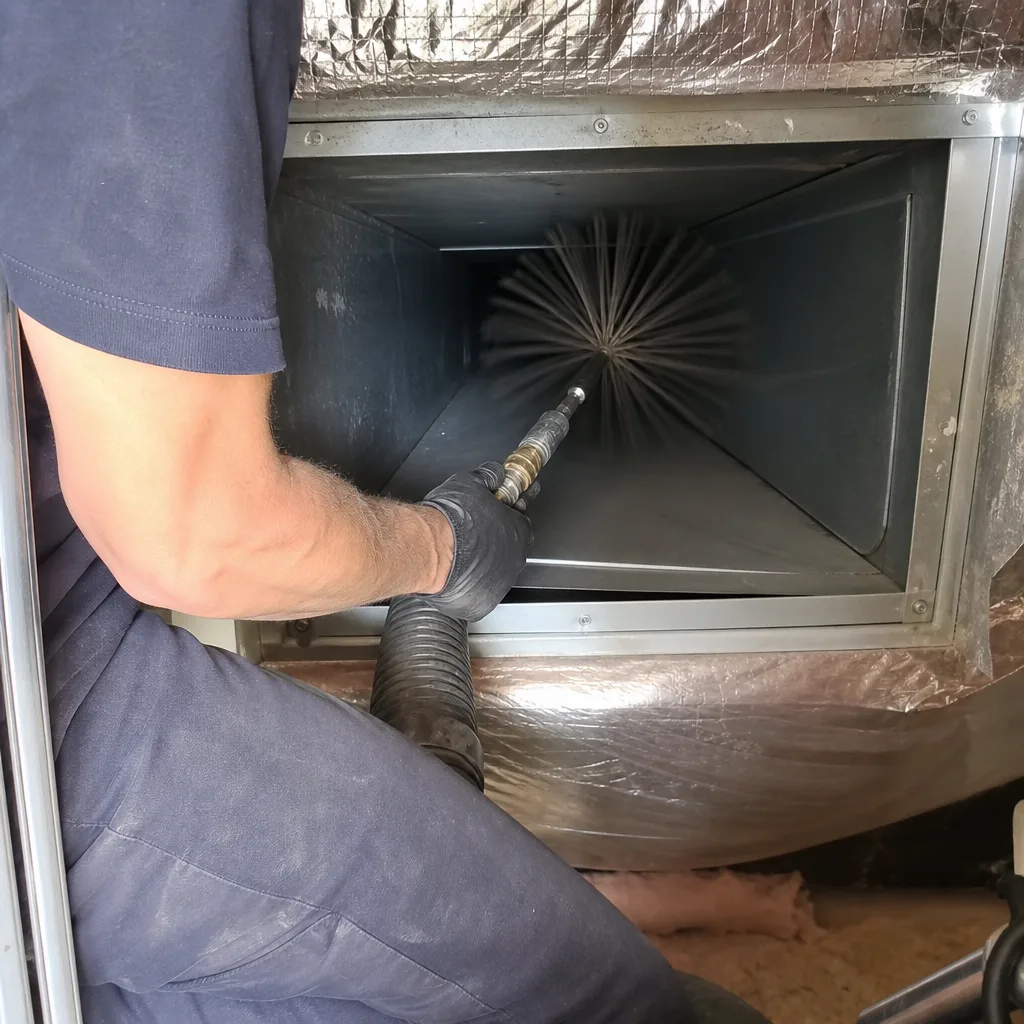
Not every mechanical permit triggers a physical inspection, but most ductwork modifications do. Understanding the inspection triggers helps homeowners anticipate what a legitimate repair process looks like.
In Leander, the following typically trigger inspection:
- New duct run installation: Any new ductwork extending from the plenum to a new register location requires rough-in and final inspections. The rough-in inspection verifies proper support, sealing, and clearance from combustibles before insulation or concealment.
- Duct replacement exceeding 50% of system: When more than half of the ductwork in a system is replaced, Leander treats this as a system replacement rather than a repair, triggering additional energy compliance verification.
- Modification of return air pathways: Changes to return duct sizing or routing affect system airflow calculations. Inspectors verify that the modified system meets the original design airflow or that new calculations are provided.
- Repair in flood or fire damage recovery: When ductwork repair follows an insurance claim for water or fire damage, inspectors verify that damaged materials are fully removed and that new materials meet current code, not the code in effect at original construction.
Inspections are scheduled through the city’s online system, with typical availability within 2-3 business days. The homeowner or contractor must provide access to all work areas, including attics and crawl spaces. In Leander’s summer months, attic inspections occur early in the day for inspector safety, given attic temperatures.
One detail homeowners often miss: if a repair is performed without permit and later discovered, the city can require that finished surfaces be opened for inspector access. This means drywall repairs, ceiling texture matching, and repainting become part of the cost of retroactive compliance. The Crystal Falls homeowner I mentioned earlier faced exactly this, though in that case the repair was accessible in an open attic.
What to Verify in Writing Before Work Starts
The moment a cleaning visit expands to include repair, the homeowner’s risk profile changes. Here is what should be documented in writing before any work beyond cleaning begins:
- Scope distinction: The contractor should specify in writing which work is cleaning and which is repair or modification. Vague language like “we’ll take care of that while we’re up there” is insufficient. The written scope should state: “Clean all supply and return duct runs using negative-pressure extraction” separately from “Repair disconnected 8-inch flex duct at plenum connection using code-compliant fastening and mastic sealant.”
- Permit responsibility: The written agreement should state who will obtain the mechanical permit if repair work is included. If the contractor claims no permit is needed, ask for the specific code section supporting that claim, and verify it independently with the City of Leander Building Department at (737) 252-1285.
- License verification: For any repair work, verify that the contractor holds a Texas Air Conditioning and Refrigeration Contractor license (TDLR) or employs someone who does. The license number should be provided in writing. CleanRun publishes its license number on every proposal; homeowners should expect this from any contractor performing regulated work.
- Insurance documentation: Request a certificate of insurance showing general liability coverage and workers’ compensation. Verify that coverage is current and that the policy includes HVAC work, not just cleaning.
- Photo documentation commitment: The agreement should specify what visual documentation will be provided. CleanRun’s Documented Photo Record, included on every visit, photographs the interior of every duct run before and after work. For repair work, this should extend to show the condition of the repair area before modification and the completed repair.
Haven Standard Clause 1, our written pricing requirement, exists precisely because verbal scope descriptions lead to disputes. When a contractor cannot or will not put the full scope and price in writing before work starts, this indicates either poor business practice or intentional ambiguity about regulatory obligations.
We’ve reviewed competitor proposals brought in for our Free Second Opinion service where the scope included “duct repair as needed” with no permit mention and no license number. These proposals typically come from cleaning companies that lack mechanical contractor licenses and hope the homeowner will not ask questions. The $79 coupon model often depends on upselling unpermitted repair work at inflated prices once the technician is in the home.
How to Check Permit History on Your Address
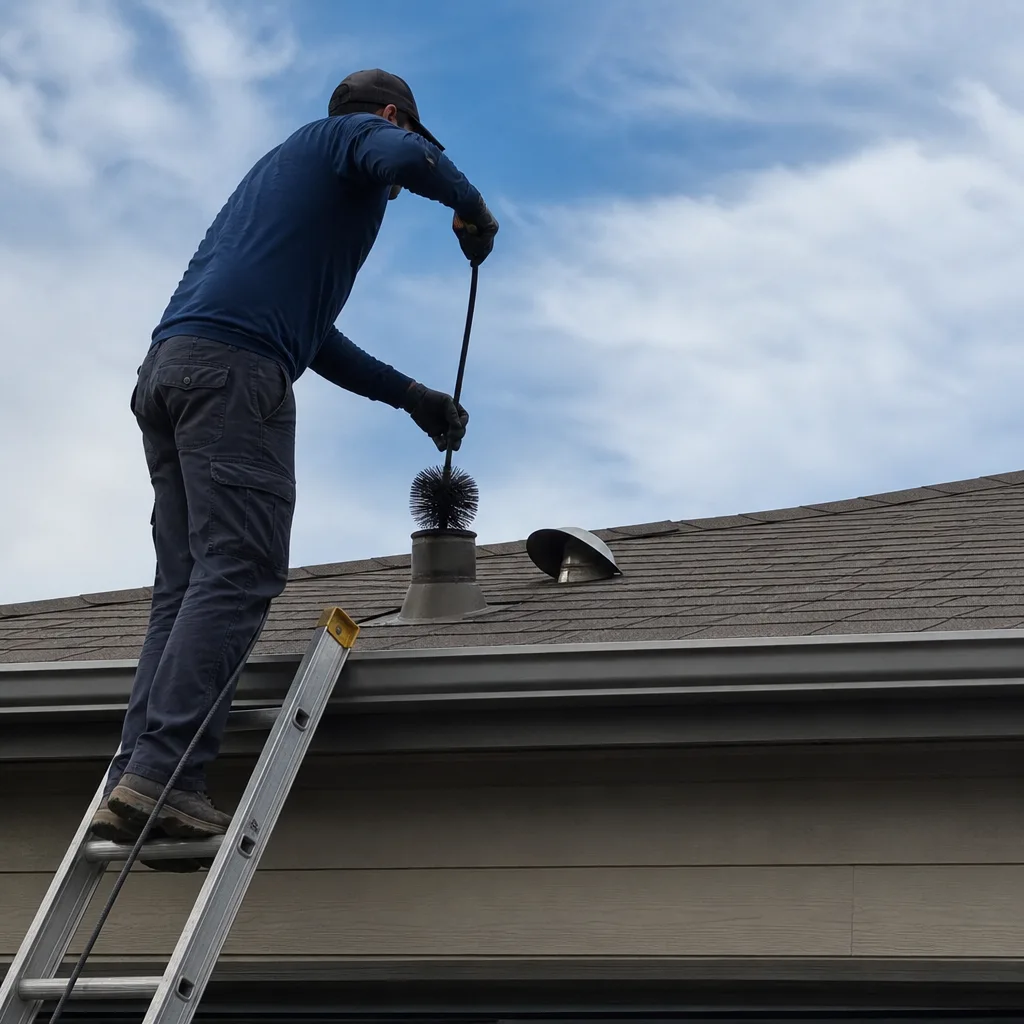
Permit history is public record in Texas, and homeowners should review it before hiring any contractor for work that might require permitting. This is especially important for homes purchased between 2015 and 2025, when rapid construction in Leander sometimes outpaced inspection capacity.
- City of Leander Permit Search: Visit the city’s Development Services portal and search by property address. The system returns permits by type, date, contractor, and status. Look for mechanical permits (prefix “MECH” or similar), building permits, and final inspection results.
- Williamson County Records (unincorporated areas): For properties outside city limits, use the Williamson County Development Services permit search. County permits use different numbering but include the same detail.
- Request a Permit History Letter: For a fee, Leander will provide a formal permit history letter, useful for pre-sale documentation. This letter confirms all permits on record and their final status.
- Verify Contractor Permits: Cross-reference permit contractor names with the company you’re considering. If previous permits were pulled by a different contractor, ask why the current company is not pulling its own permits.
We’ve found permit gaps in Leander homes that explain mysterious ductwork conditions. A home in the Mason Hills area showed duct routing that did not match the original construction plans. Permit history revealed an unpermitted addition from 2019 where the homeowner’s contractor had extended ductwork without mechanical permit or inspection. The current owner, who purchased in 2022, inherited this liability unknowingly. Our photo record documented the condition for their disclosure file, and we referred them to a licensed mechanical contractor for permit resolution before sale.
Checking permit history before work begins also protects against double-permitting. If a previous owner obtained a permit for duct modification that the current contractor is unaware of, redundant permitting creates confusion in city records and potential inspection conflicts.
Why Permits Matter When You’re Planning to Sell
The Texas Real Estate Commission’s Seller’s Disclosure Notice specifically asks about structural and mechanical modifications, including HVAC alterations. Sellers must disclose work performed without required permits, and failure to disclose can lead to post-sale liability.
In Leander’s active resale market, where homes in neighborhoods like Deer Creek Ranch and Bar W Ranch frequently sell within 30 days of listing, buyers are increasingly thorough about permit verification. Title companies in Williamson County routinely flag permit discrepancies, and buyer’s agents in Leander’s competitive market use permit history as a negotiation tool.
Unpermitted ductwork affects saleability in specific ways:
- Appraisal issues: FHA and VA appraisers may require permit verification for mechanical modifications. Unpermitted work can trigger appraisal conditions that delay or derail financing.
- Insurance transfer: Some insurers review permit history when writing new policies. Unpermitted modifications can affect coverage terms or premiums.
- Buyer’s inspection findings: Home inspectors in Leander increasingly use thermal imaging and airflow measurement. Ductwork that performs poorly due to unpermitted modification shows up as temperature differential or airflow imbalance, prompting further investigation.
- Retroactive compliance cost: When unpermitted work is discovered during sale, the seller typically bears the cost of bringing it into compliance, including permit fees, inspection fees, and any required rework. This cost often exceeds the original repair price several times over.
For homeowners not planning immediate sale, permit compliance still matters for insurance claims. After the 2021 winter storm, several Leander homeowners faced denied claims when insurers determined that duct damage resulted from unpermitted modifications that altered system airflow and contributed to freeze damage. The permit history became evidence in coverage disputes.
CleanRun’s 365-Day Done Right Promise includes documentation support for permit-related questions. If our work or our photo record reveals conditions that suggest previous unpermitted work, we provide that documentation to the homeowner for their records. This is not legal advice, but it is factual documentation that the homeowner can use with attorneys, insurers, or the city as needed.
Common Mistakes to Avoid
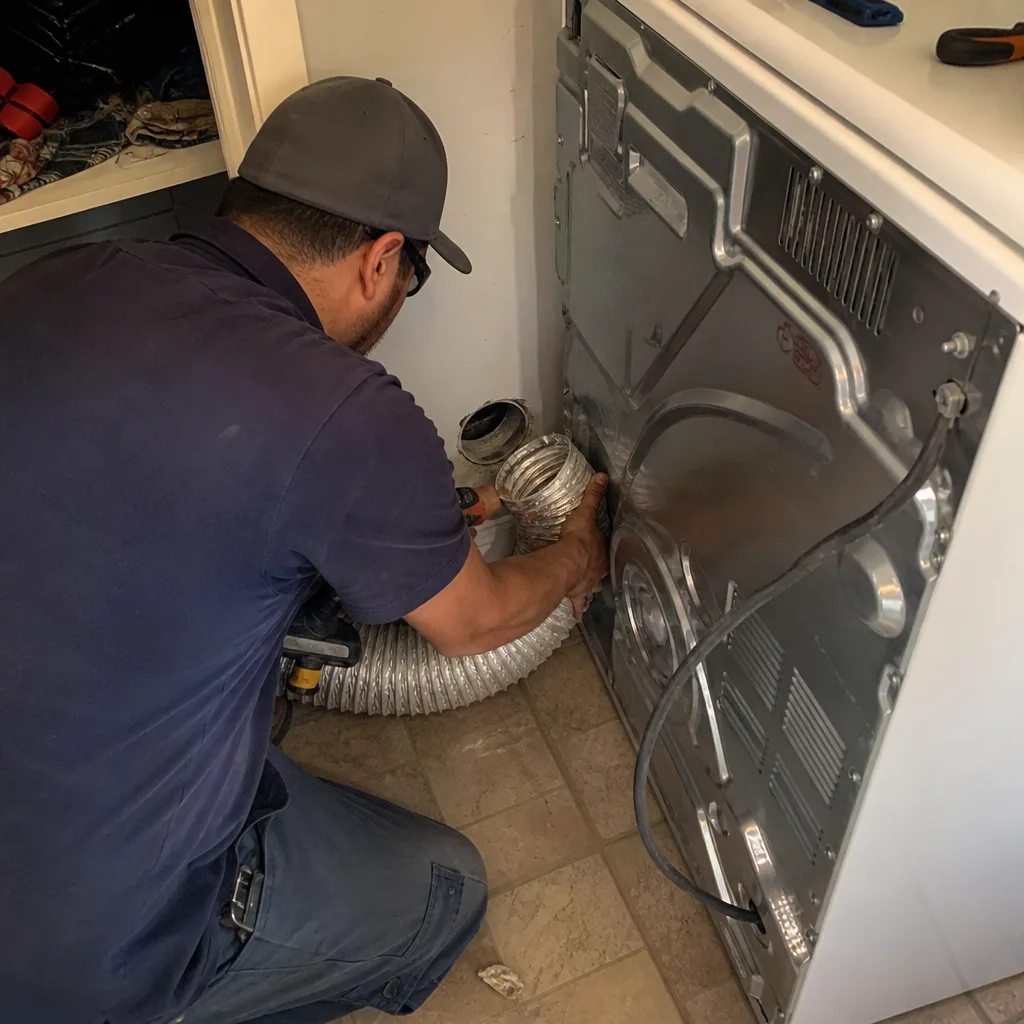
- Assuming cleaning includes permit-free repair: Many homeowners believe that since no permit is needed for cleaning, any work performed during a cleaning visit is similarly exempt. This is incorrect. The moment work alters duct structure, permitting rules apply regardless of what else is being done.
- Accepting verbal assurance that a permit “isn’t needed for something this small”: Size is not the determining factor; the nature of the work is. A small repair to a plenum connection requires the same permit as a full duct replacement if both involve regulated modification.
- Not verifying that a cleaning company employs licensed mechanical contractors: Many duct cleaning companies do not. They may subcontract repair work or perform it illegally. Ask for the specific license number and verify it on TDLR’s license lookup before authorizing repair work.
- Paying for “mold remediation” from an unlicensed contractor: Texas mold rules are strict, and violations can result in administrative penalties against both the contractor and, in some cases, the property owner who knowingly hired an unlicensed remediator.
- Failing to document the pre-existing condition: Before any work begins, photograph or have photographed the area to be repaired. If a dispute arises about whether work was performed or performed correctly, this documentation is essential. CleanRun’s before-and-after photo record provides this automatically.
- Ignoring permit history when buying a home: In Leander’s fast-moving market, buyers sometimes waive inspection contingencies. Checking permit history independently takes 15 minutes and can reveal issues that even thorough physical inspections miss.
When to Call a Professional
Call a licensed mechanical contractor when ductwork needs repair, replacement, or modification, not a cleaning company that offers to “take care of it.” Call a TDLR-licensed Mold Assessment Consultant when mold is suspected in ductwork, before any remediation begins. Call the City of Leander Building Department when you’re uncertain whether proposed work requires a permit; they will answer specific questions about scope and requirements.
For duct cleaning itself, where no permit is required, the professional to call is one who documents everything in writing, shows you what they found before proposing work, and can explain their equipment and methods without resorting to scare tactics or vague biological warnings.
CleanRun Air Duct Cleaning Leander offers our Air Duct Cleaning services with free estimates in Leander. Every estimate includes a written price before any work starts, a Documented Photo Record of every duct run, and full disclosure of whether any observed conditions require licensed repair beyond our scope. Call (737) 252-1285 to schedule. If you have a written estimate from another company, we provide a Free Second Opinion with our written number next to theirs.
Frequently Asked Questions
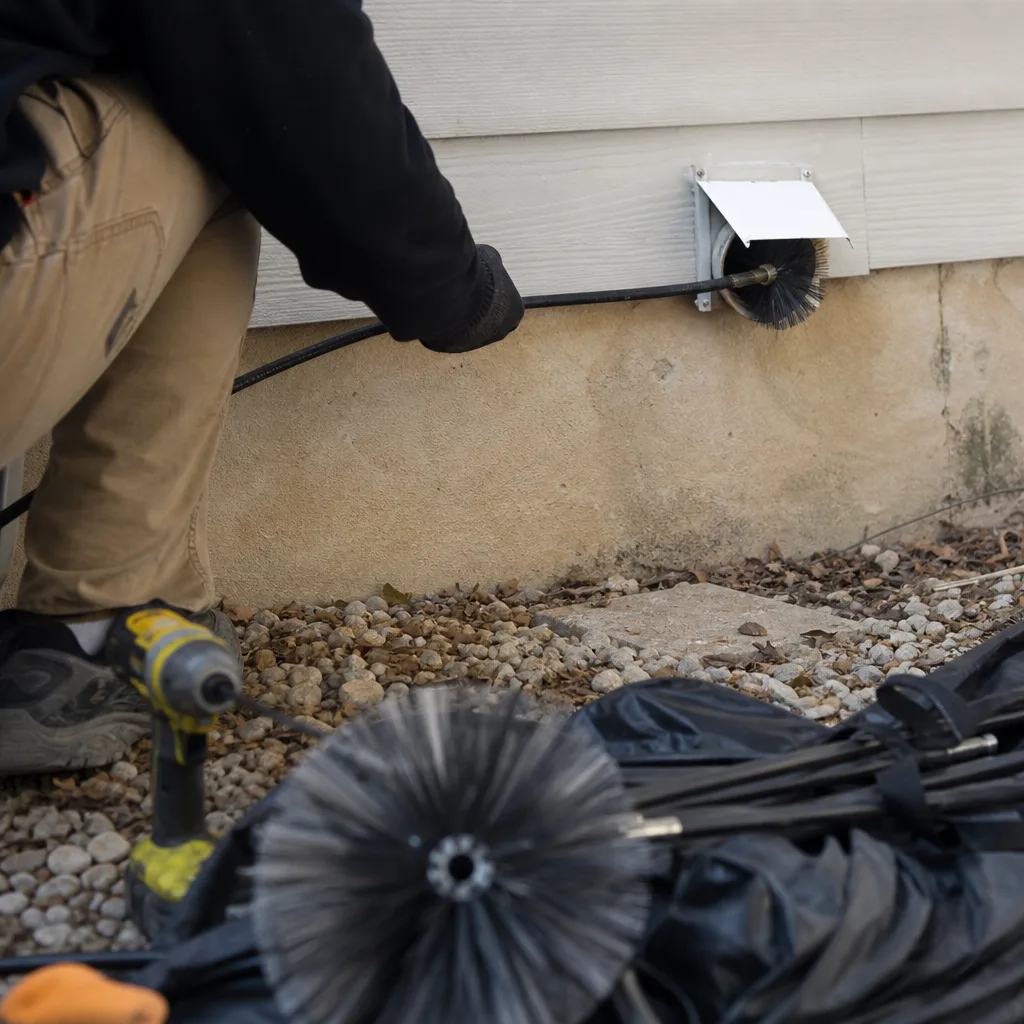
No. Air duct cleaning, defined as the removal of debris and contaminants from existing ductwork without structural modification, does not require a permit in Leander or anywhere in Texas. If a contractor claims a permit is needed for cleaning alone, verify this with the City of Leander Building Department, as this may indicate unnecessary charges or confusion about the scope of work.
Whole-system air duct cleaning in Leander typically ranges from $400 to $800 for a standard single-system home, depending on system size, accessibility, and contamination level. CleanRun provides a written price before any work starts under Haven Standard Clause 1, with no per-vent add-ons or post-arrival upsells. Call (737) 252-1285 for an exact quote; estimates are free.
Low quotes, particularly the $79-$99 coupon offers common in Texas metro areas, typically cover only basic surface cleaning of visible registers with consumer-grade equipment. The business model depends on upselling additional services once inside the home. Reputable companies quote whole-system cleaning upfront using professional equipment like Rotobrush or Nikro systems, with documented results. The final invoice from a low-quote company often exceeds the upfront price from a transparent provider.
Request before-and-after photographs of the interior of every duct run, not just the registers. CleanRun includes a Documented Photo Record on every visit, showing each duct run’s condition before and after cleaning, delivered as part of the standard job record. If a company cannot or will not provide this documentation, the work’s quality cannot be verified.
Only if the company employs or contracts a TDLR-licensed Air Conditioning and Refrigeration Contractor, and only if the required mechanical permit is obtained. Many duct cleaning companies lack this license. Always ask for the license number in writing and verify it on TDLR’s website before authorizing repair work. Unlicensed repair is illegal and can void your homeowner’s insurance coverage for related losses.
For most Leander homes, every 3 to 5 years is adequate under normal conditions. Homes with pets, recent construction, or occupants with respiratory conditions may benefit from more frequent cleaning. The “every year” recommendation some companies promote is not supported by EPA guidance or by what we observe in Leander’s climate. Excessive cleaning frequency suggests a revenue model rather than customer need. Call (737) 252-1285 if you’re unsure whether your system needs attention; we’ll show you what the camera sees and let you decide.
The Bottom Line
Air duct cleaning in Texas operates in a regulatory gray zone by design: cleaning is unregulated, but the repairs often sold alongside it are not. The homeowner’s protection lies in understanding where that line falls, demanding written documentation of scope and price, verifying licenses and permits independently, and maintaining records that protect against future liability. For more guides & resources on navigating this process, see our blog. In Leander’s growing market, where homes change hands frequently and inspections are increasingly thorough, permit compliance is not bureaucratic excess. It is financial protection. CleanRun’s approach, established since 2013 and applied to over 52,000 homes, is to document everything in writing, photograph everything we touch, and refer repair work to appropriately licensed professionals when code requires it. No exceptions, no ambiguity, no vacuum noise in place of verifiable work.
Written by Tomas Reyes, Owner at CleanRun Air Duct Cleaning Leander, serving Leander since 2013.