
Last updated September 23, 2026
Whole-system duct and dryer vent check with before-and-after photos - you see exactly what came out of your vents
That "$99 whole-house special" is a bait ad - the real number appears once they are in your hallway, or the "clean" is a shop-vac at the register. We photograph the inside of your ducts before and after instead.
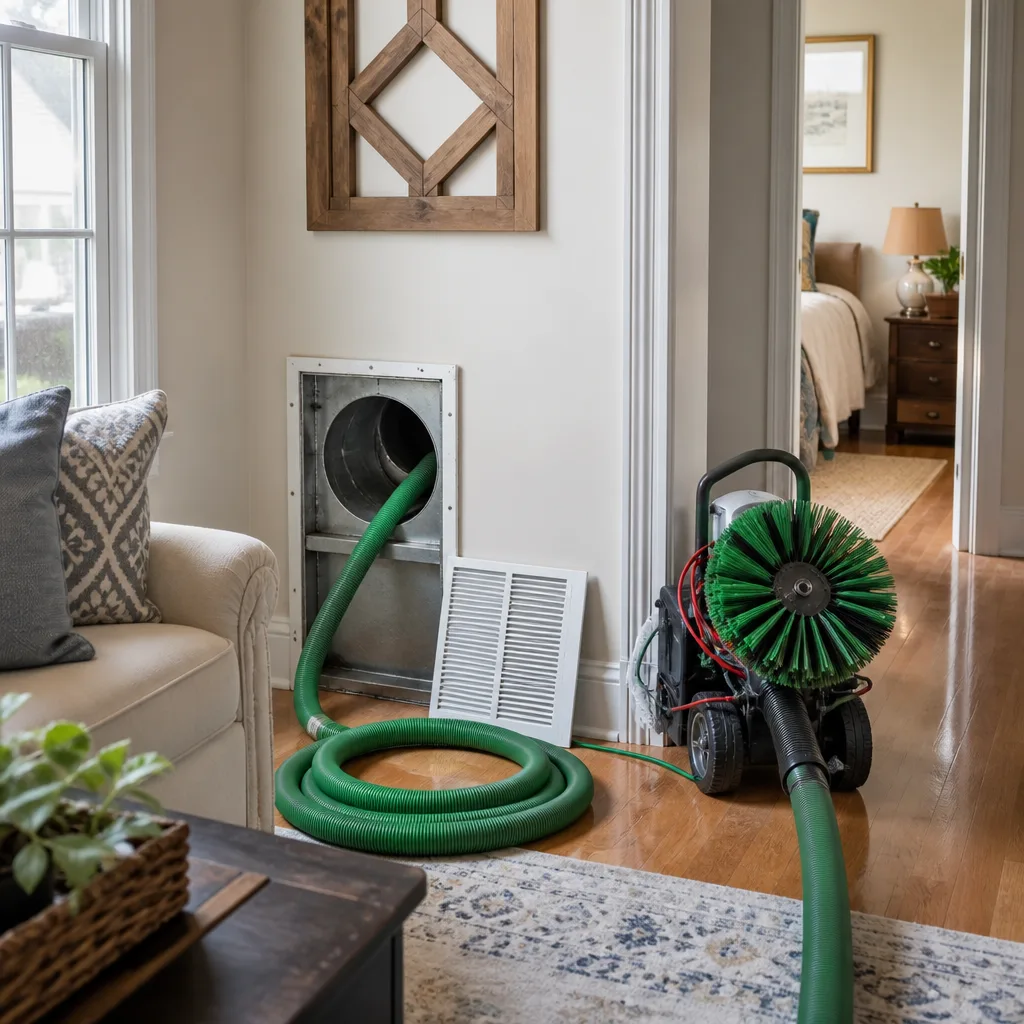
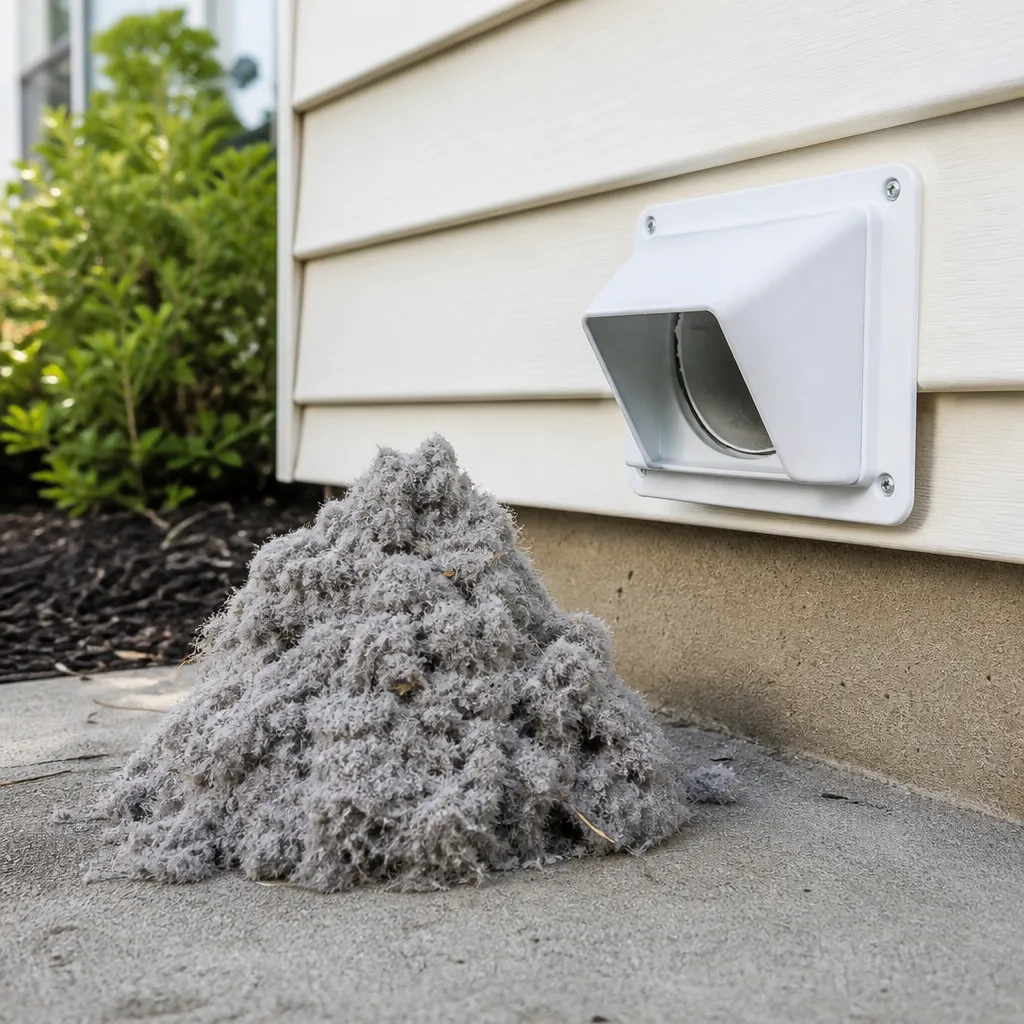
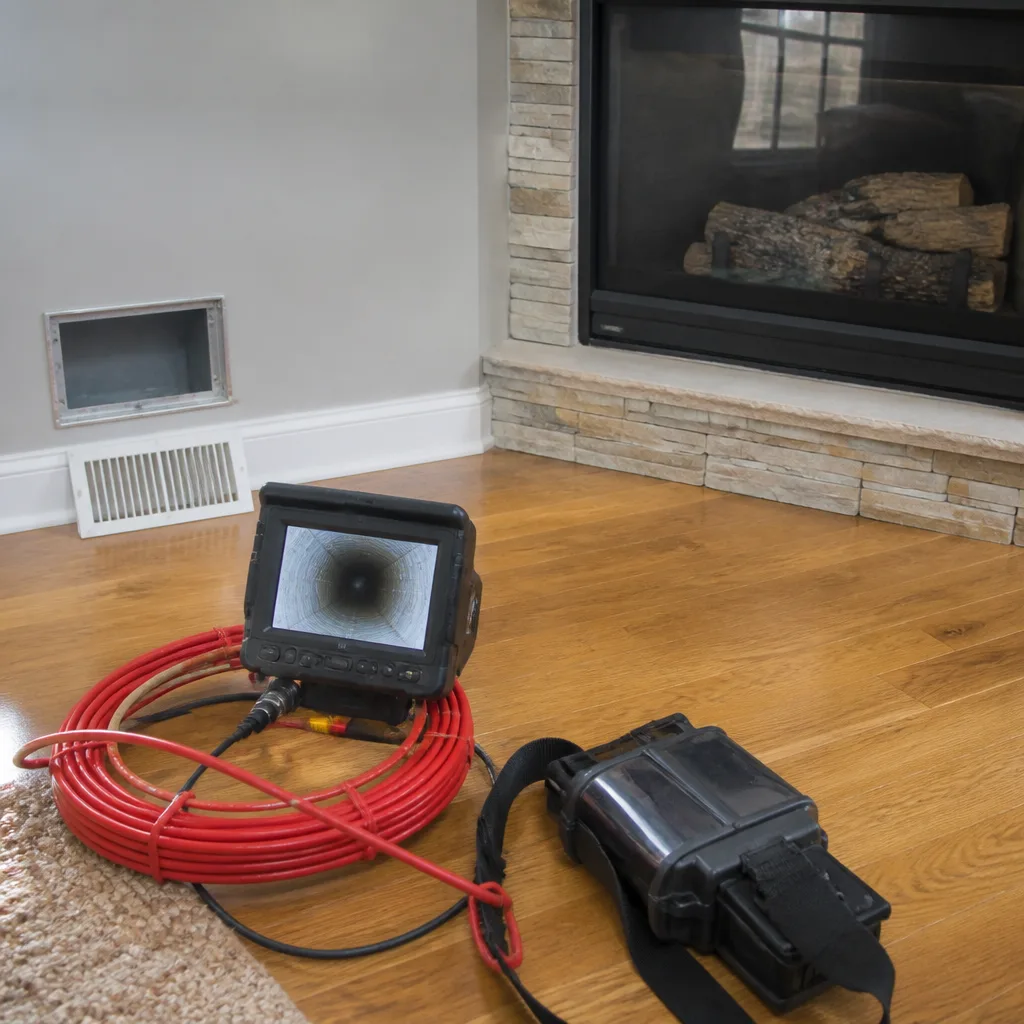
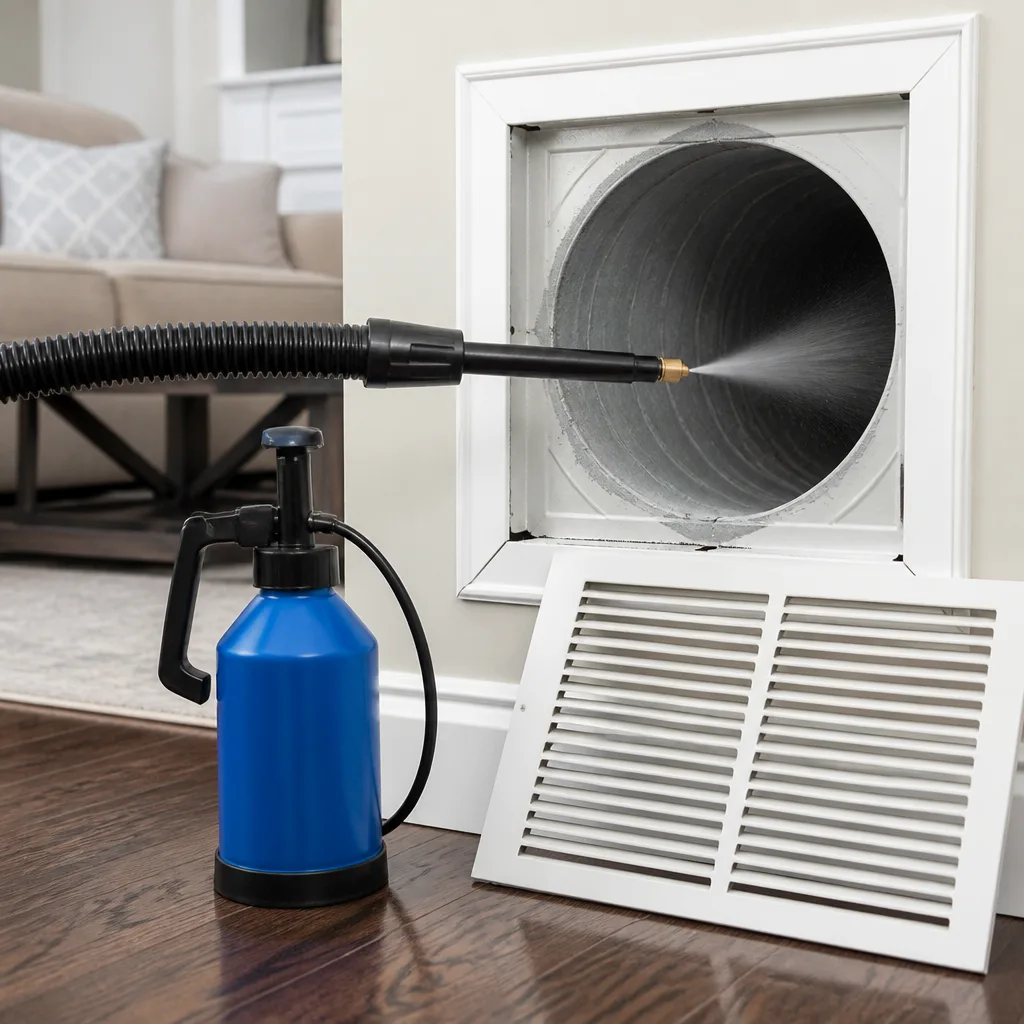
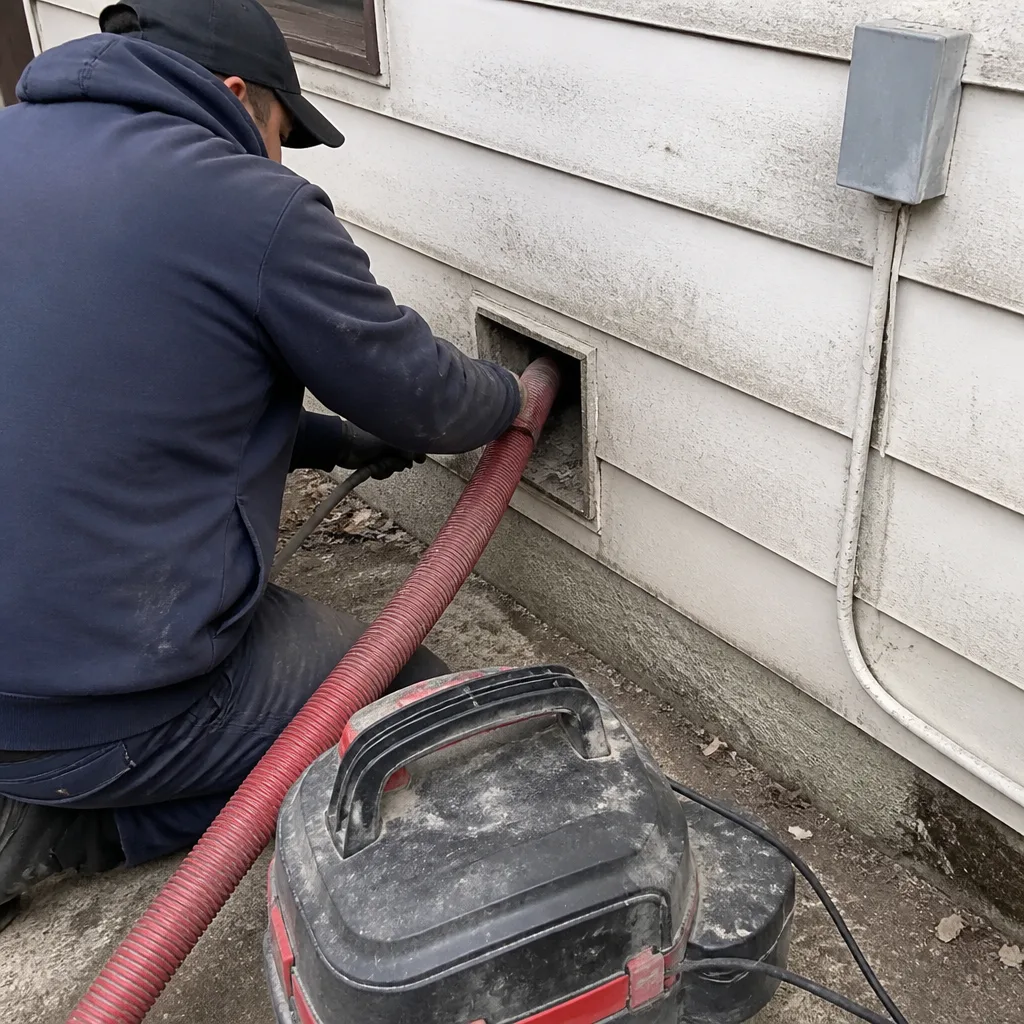 Before
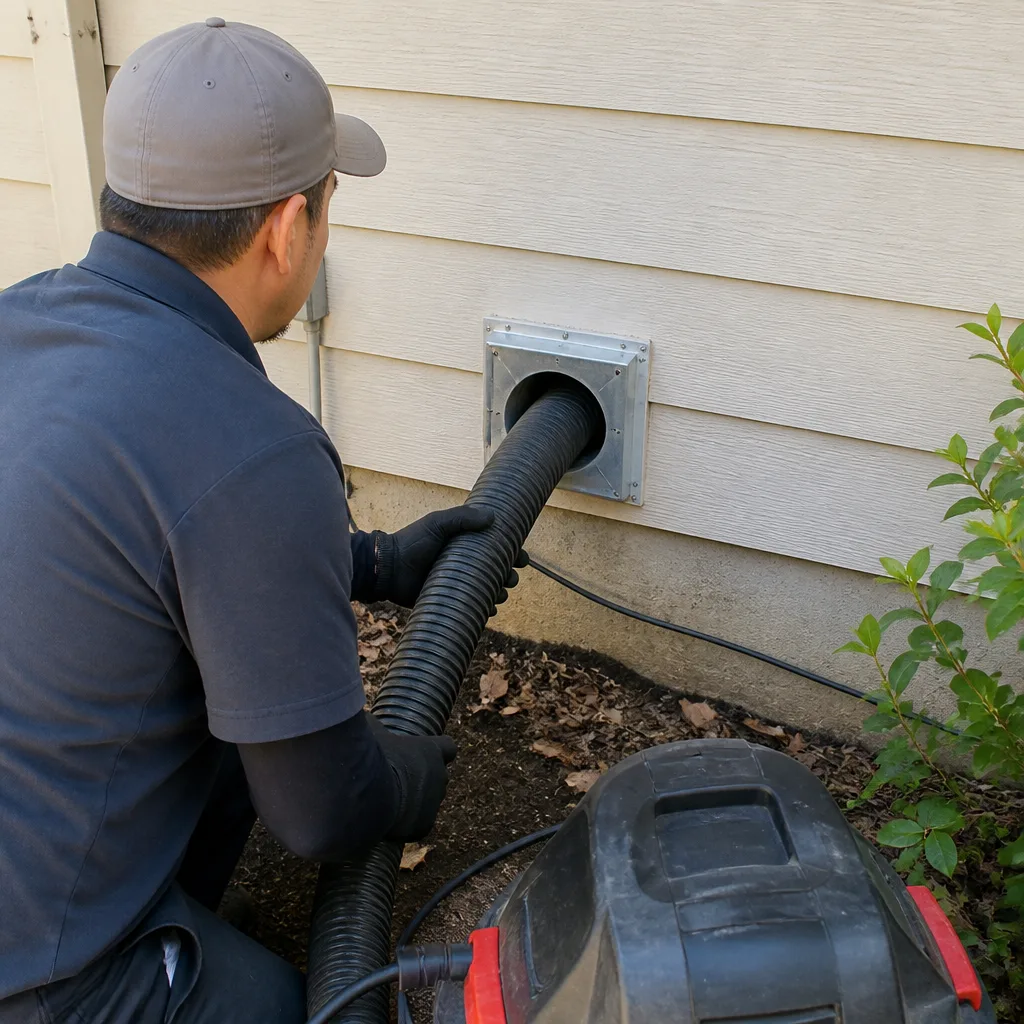 After
After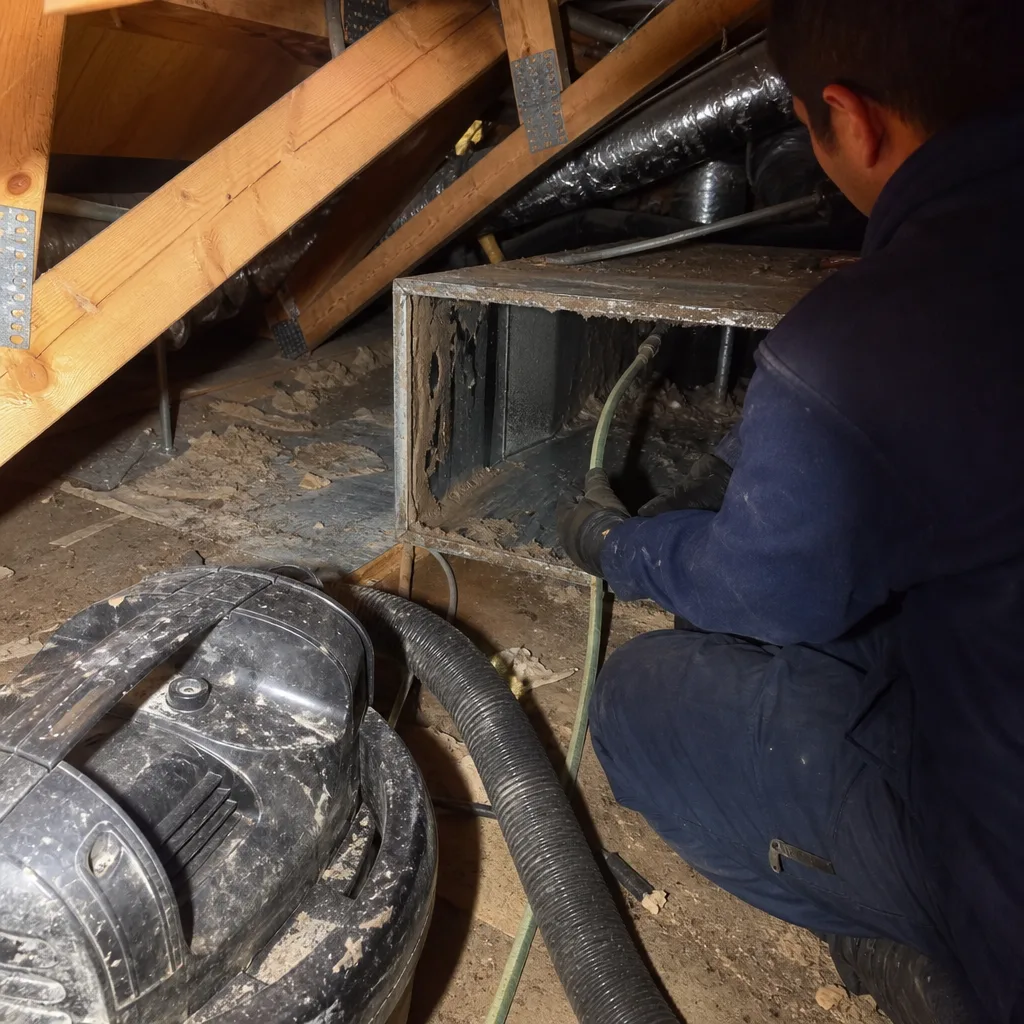 Before
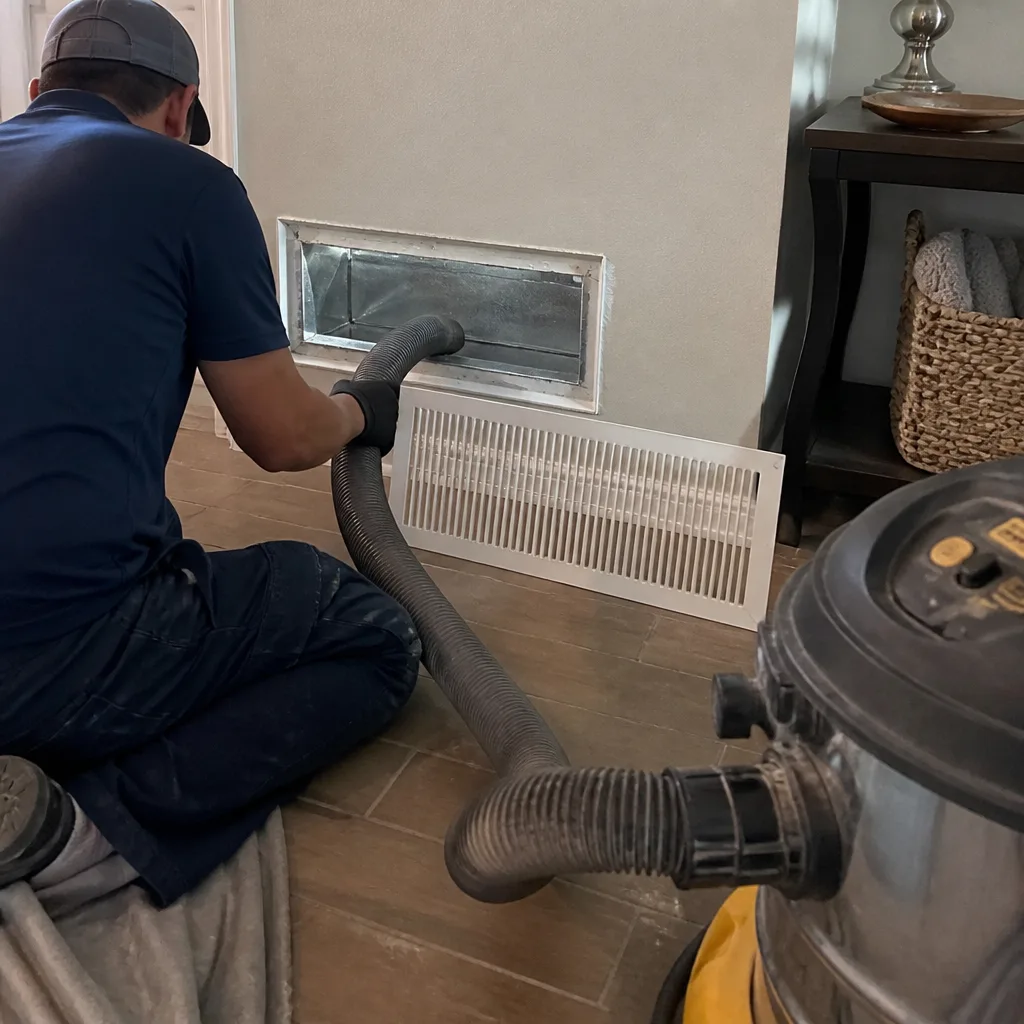 After
After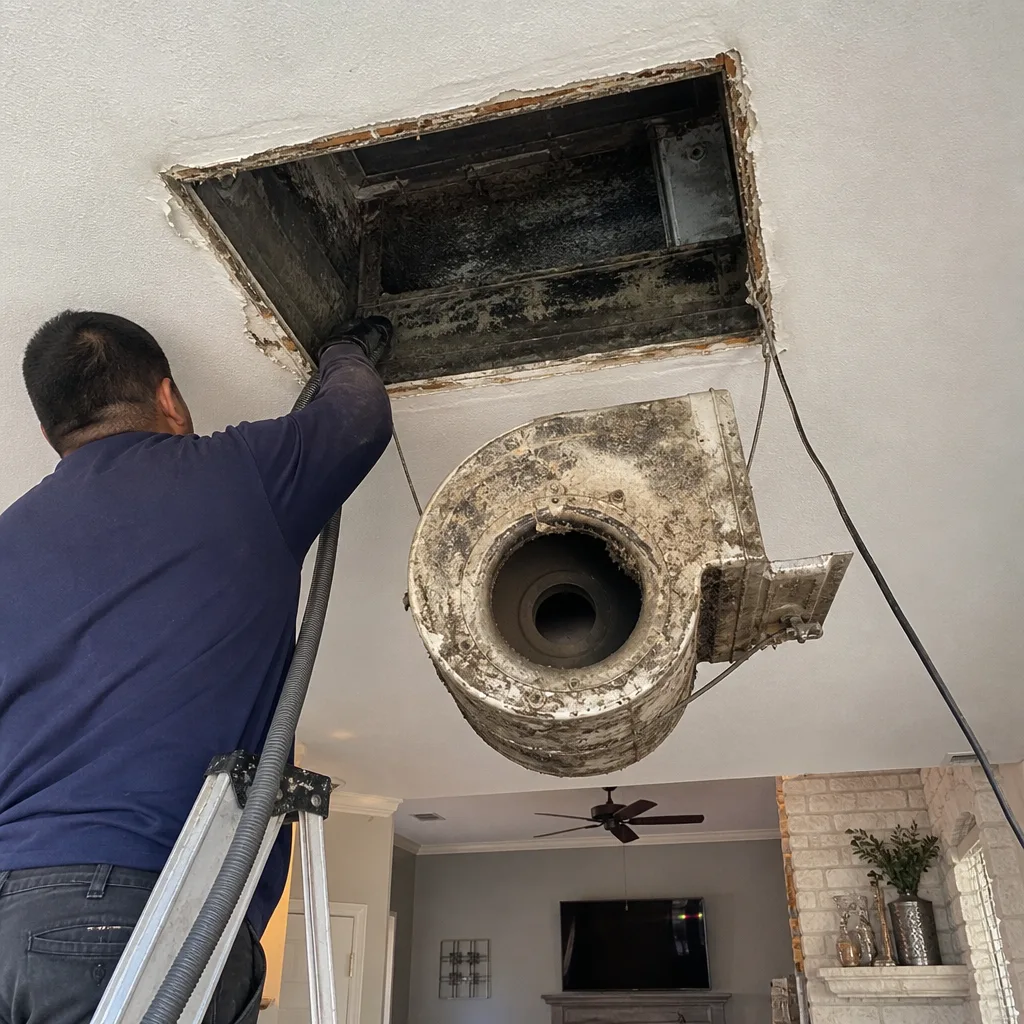 Before
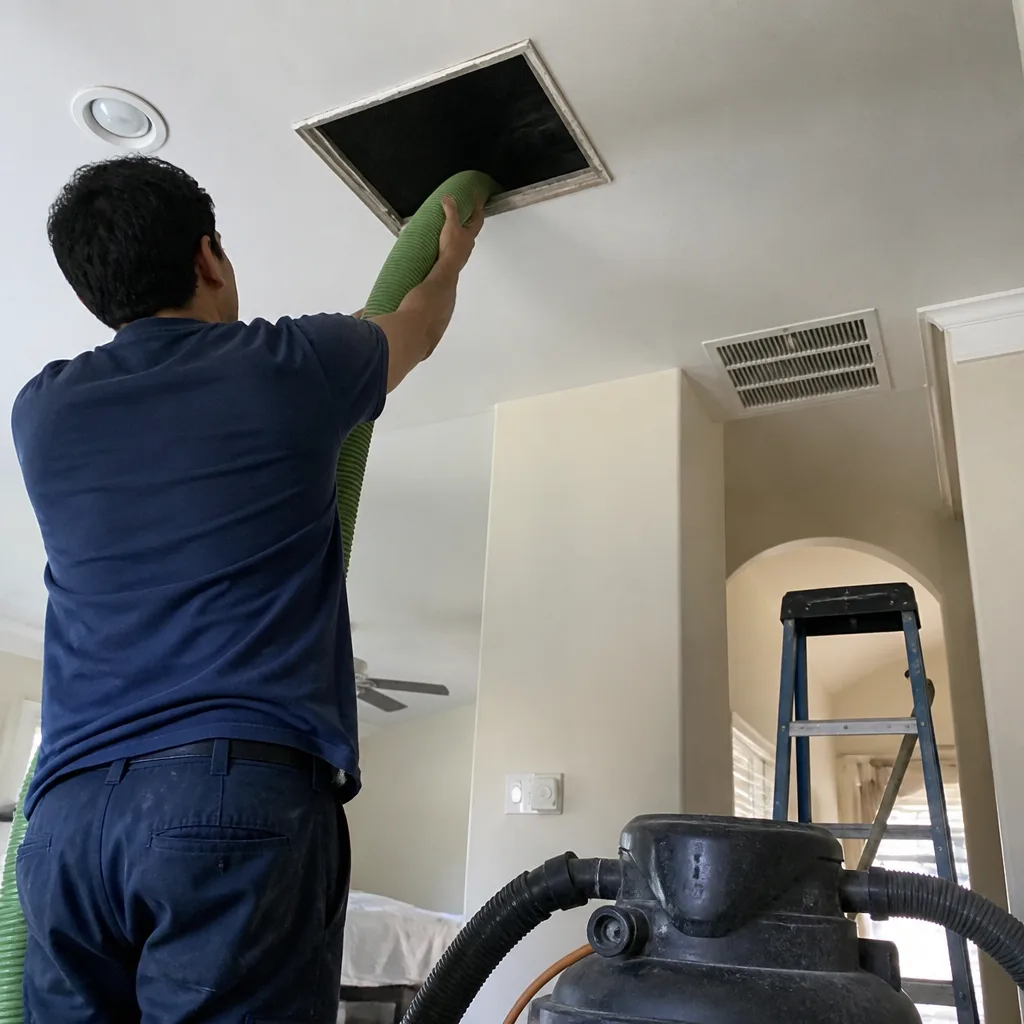 After
AfterDIY vs Professional Air Duct Cleaning: The Leander Homeowner’s Decision Guide
Here’s what no DIY tutorial will show you: the return plenum, the sheet-metal chamber directly upstream of your air handler, accumulates more debris than any other single point in a Leander home’s duct system. It’s also the component that requires disconnecting metalwork or cutting access panels to reach, which explains its complete absence from every consumer-friendly video and more guides & resources. We’ve photographed the inside of 52,000+ systems since 2013, and the pattern holds across every Leander neighborhood from Crystal Falls to Travisso to the older ranch homes near Bagdad Road. The debris is real, the access problem is real, and the documentation gap between what a homeowner can verify and what a professional can deliver is what this guide actually measures.
You’ll learn exactly which duct sections consumer equipment can reach, what professional negative-pressure source removal covers that shop vacuums cannot, how to use a DIY inspection to make any professional quote more accurate, and when doing it yourself is genuinely the smarter choice.
Quick Answer
A homeowner with a shop vacuum and brush kit can effectively clean register faces and the first 3-4 feet of visible ductwork, but cannot reach, photograph, or extract debris from the return plenum, air handler cabinet, or interior of long flex duct runs that make up 60-70% of total system debris in a typical Leander home. Professional air duct cleaning in Leander runs $350-$650 for a whole-system job using negative-pressure extraction, and includes documented before-and-after photography of every duct run. DIY makes sense for register maintenance, post-renovation surface cleaning, and dryer vent upkeep; whole-system cleaning requires equipment that generates sufficient negative pressure to dislodge and capture debris without releasing it into the living space.
Table of Contents
- What DIY Air Duct Cleaning Actually Reaches
- What Professional Cleaning Covers That DIY Cannot
- Honest Cost Comparison: DIY vs Professional in Leander
- What “Cleaning” Means for Each Approach
- When DIY Is Genuinely Sufficient
- How to Use DIY Inspection to Improve Professional Quotes
- Equipment Differences: Shop Vac vs Negative-Pressure Systems
- Leander-Specific Factors: Climate, Code, and Construction
BeforeAfterWhat DIY Air Duct Cleaning Actually Reaches
Let’s map this precisely. A determined homeowner with a standard shop vacuum, extension hoses, and a rotary brush kit purchased online can physically access and clean the following components:
- Register and grille faces - the visible metal or plastic covers at each supply and return point. These pop off with a screwdriver or by hand, and debris here is almost entirely surface dust and hair.
- The boot - the short, angled metal transition piece directly behind the register, typically 6-12 inches deep. A brush on a flexible rod can reach most of this section.
- The first 3-4 feet of straight duct run - whether flex duct, sheet metal, or fiberglass duct board, this is the accessible portion before the first elbow, junction, or reduction in diameter.
- The return air grille cavity - the space behind the large return grille, usually in a hallway or central living area, which collects visible debris but is not the return plenum itself.
What this access pattern means in practice: in a typical 2,000 square foot Leander home built between 2015 and 2020, you’re reaching roughly 15-20% of total duct surface area. The remaining 80-85% includes every section behind drywall, above insulation, inside soffits, and - most critically - the return plenum and air handler cabinet where the heaviest debris accumulation occurs.
We’ve documented this repeatedly in Leander’s newer construction. In a 2019 build near Bryson, the camera showed a 3-inch debris build-up at the first elbow of the main return trunk, 8 feet upstream from the nearest access point. The homeowner had cleaned every register thoroughly the week before. The debris was invisible and unreachable without cutting an access panel.
The DIY access problem is geometric, not motivational. Duct systems are designed to be installed, not serviced. Every turn, reducer, and long horizontal run adds friction that defeats consumer-grade brush rods. Flex duct, common in Leander’s suburban builds, presents a particular challenge: the ribbed interior surface catches brush bristles, and aggressive scrubbing can tear the liner or disconnect the inner core from the insulation jacket.
What Professional Cleaning Covers That DIY Cannot
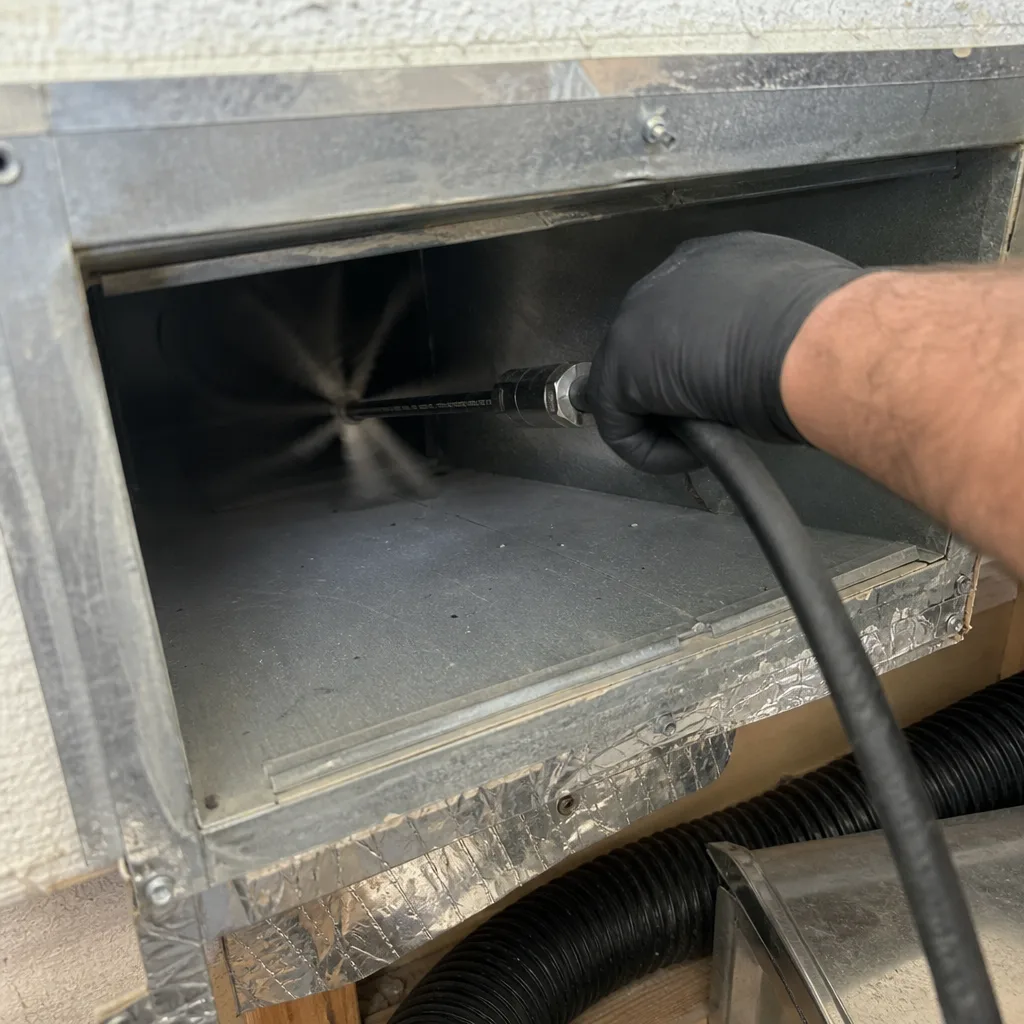
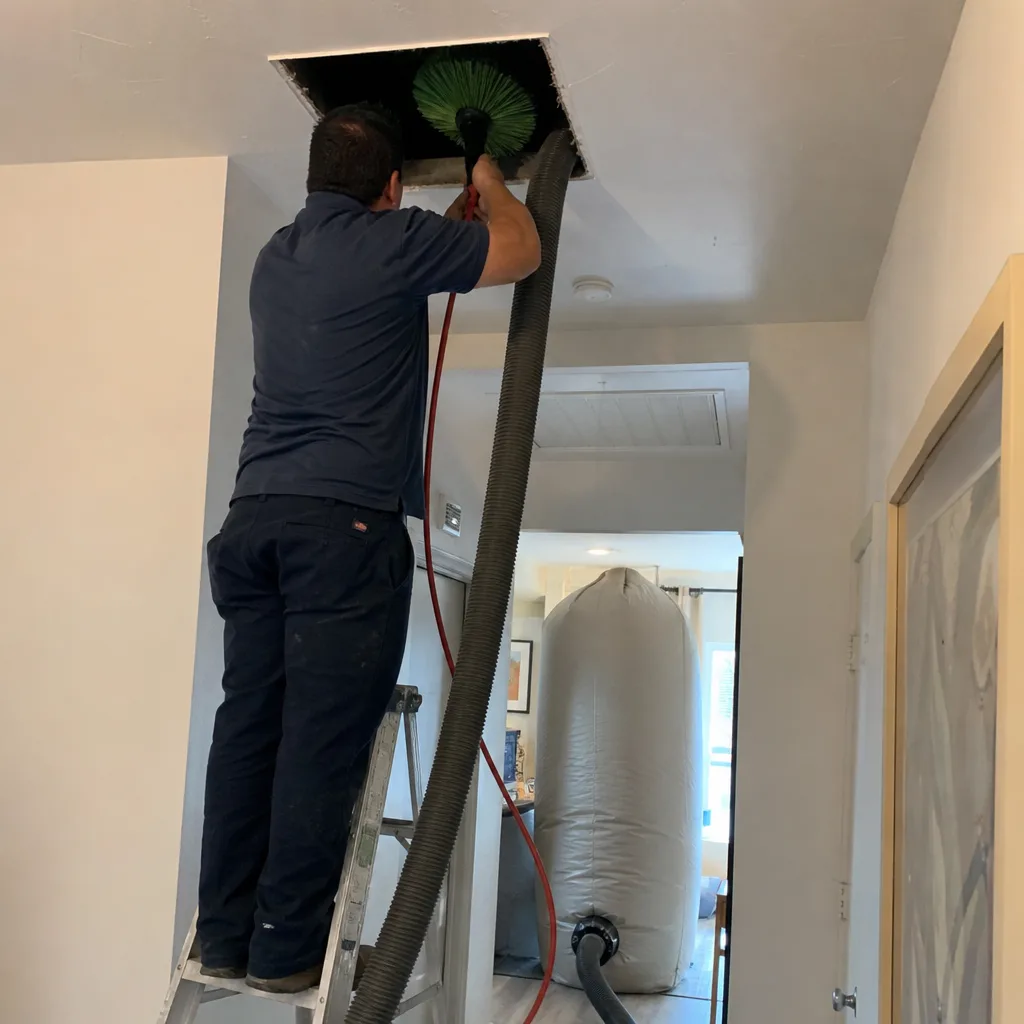
Professional air duct cleaning, as defined by the National Air Duct Cleaners Association (NADCA) and practiced under the H.A.V.E.N. Standard, is built around negative-pressure source removal - using a powerful vacuum to create suction throughout the system while mechanical agitation dislodges debris at the source.
Here’s what that process reaches in a Leander home:
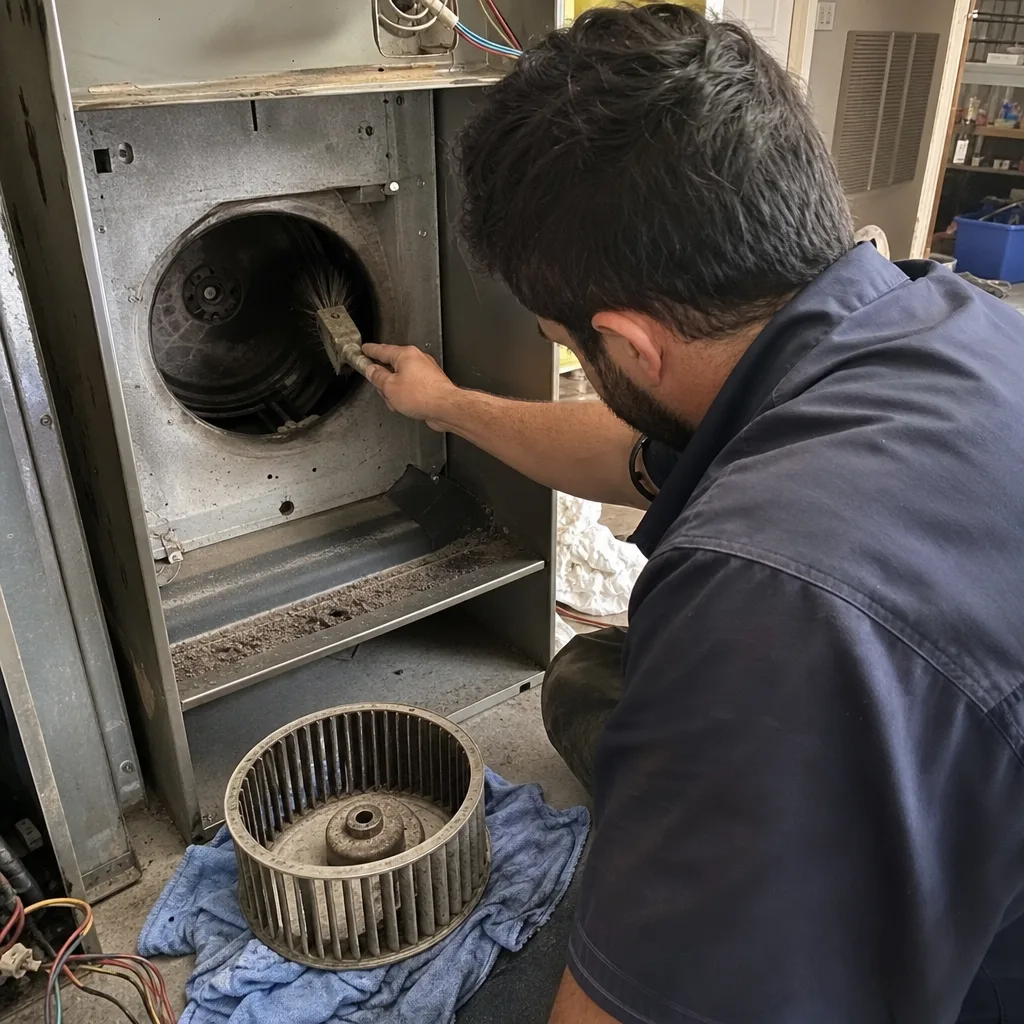
- The return plenum - the sheet-metal chamber between the return grille and the air handler. This is where the highest concentration of debris accumulates because all return air passes through it, and it’s the slowest-moving air in the system. Access requires removing panels or cutting temporary access points, then sealing them afterward.
- The air handler cabinet - the indoor unit containing the blower, evaporator coil, and heat exchanger. Debris bypasses filters and coats these components, reducing airflow and providing a substrate for microbial growth in Leander’s humid spring and fall seasons.
- The full length of every duct run - supply and return, including sections above insulation, behind drywall, and through unconditioned attic spaces. Professional equipment generates 5,000-10,000 CFM of negative pressure, enough to pull dislodged debris back to the collection point rather than releasing it into the home.
- The evaporator coil and blower assembly - components that DIY cannot access without voiding warranties and risking refrigerant line damage.
The documentation difference matters as much as the reach difference. At CleanRun Air Duct Cleaning in Leander, every job concludes with a Documented Photo Record: the inside of every duct run, photographed before and after, delivered to the customer as part of the standard job record. This practice has been in place since our first job in 2013. A homeowner doing DIY work has no comparable verification - no image of what was missed, no record of what the system looked like before intervention.
The H.A.V.E.N. Standard requires this documentation specifically because the duct interior is otherwise unobservable. Haven Standard Clause 2, Documented Outcomes, states that any claim about duct condition must be supported by evidence the customer can review independently. A shop vacuum offers no such evidence.
Honest Cost Comparison: DIY vs Professional in Leander
Here’s the math done without the industry’s usual distortion.
DIY Costs
| Item | Cost Range |
|---|---|
| Rotary brush kit with flexible rods (20-30 ft reach) | $80-$150 |
| Shop vacuum with HEPA filtration | $100-$300 (if not owned) |
| Extension hoses and adapters | $30-$60 |
| Register cleaning brushes and microfiber tools | $15-$40 |
| Replacement register filters (optional) | $20-$50 |
| Total first-time DIY investment | $245-$600 |
| Subsequent attempts (consumables only) | $35-$90 |
Time investment: 4-8 hours for a first attempt on a typical Leander home, including research, setup, execution, and cleanup. Most homeowners underestimate by half.
Professional Costs in Leander
| Service Scope | Price Range |
|---|---|
| Whole-system air duct cleaning (single HVAC system, up to 2,500 sq ft) | $350-$550 |
| Larger homes or dual-zone systems (2,500-4,000 sq ft) | $500-$650 |
| Air handler cabinet and evaporator coil cleaning (add-on) | $150-$250 |
| Dryer vent cleaning (standalone service) | $120-$180 |
The professional price includes: negative-pressure extraction equipment (Rotobrush, Nikro, or comparable systems), HEPA-filtered collection, mechanical agitation tools, access panel cutting and sealing, full-system inspection photography, and the Documented Photo Record delivered to the customer.
The cost crossover point: if you DIY once, you’ve spent roughly half to two-thirds of a professional job. If you DIY twice - which many homeowners do after discovering the first attempt insufficient - you’ve exceeded professional cost while still lacking documentation or full-system reach. The $79 coupon operations that flood Leander mailboxes are a separate category; their pricing model relies on upselling once inside the home, which is precisely why CleanRun operates under Haven Standard Clause 1: written price delivered before any work starts, every time, with no exceptions.
What “Cleaning” Means for Each Approach
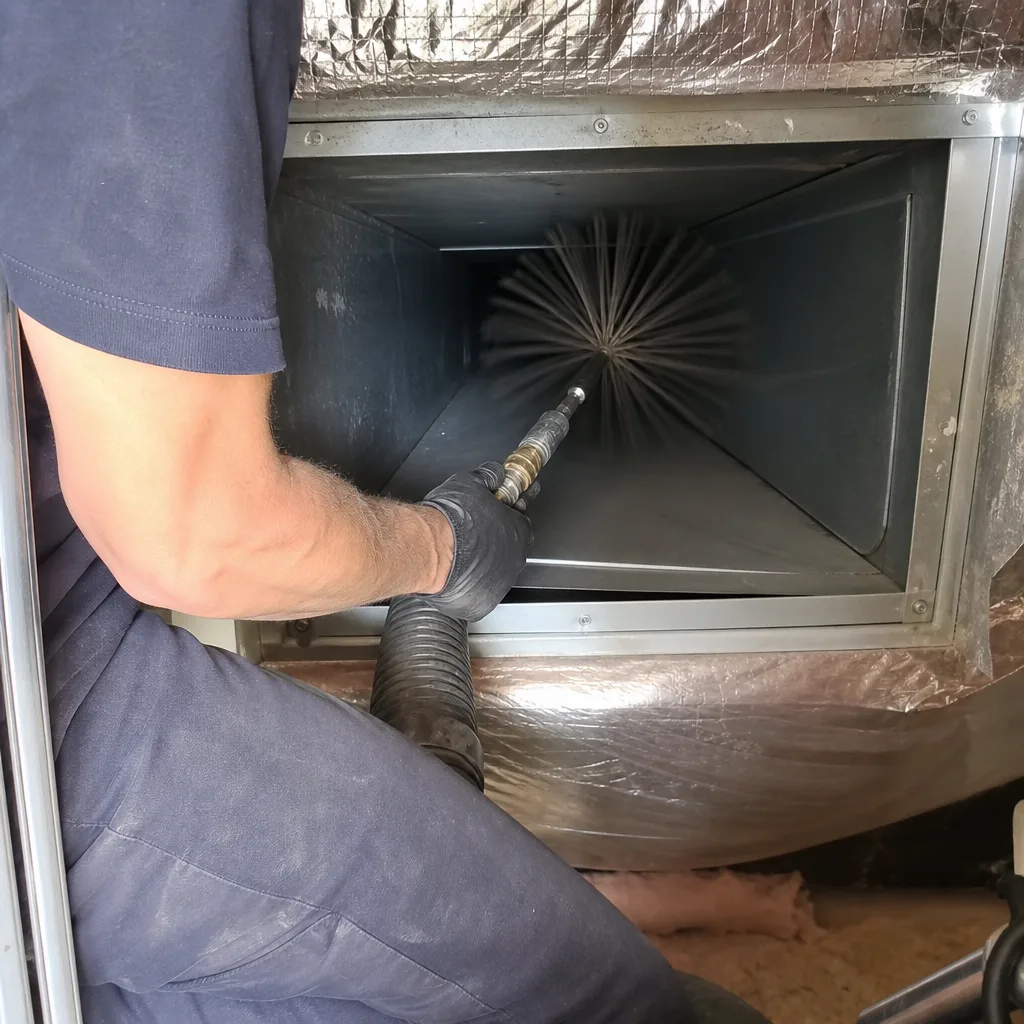
This is where terminology obscures real differences. Both DIY and professional approaches get called “cleaning,” but the processes share almost no technical similarity.
DIY cleaning is surface debris removal. You’re brushing and vacuuming what you can touch and see. The mechanism is contact-based: bristles dislodge material, vacuum suction captures it at the point of disturbance. This works well for loose dust, hair, and construction debris on accessible surfaces. It does not work for:
- Adhered grime - the greasy, electrostatically-bound film that develops on duct interiors over years of HVAC operation
- Debris beyond the first elbow - where brush rods bind and vacuum hoses lose effective suction
- Microbial contamination - mold or bacterial growth requires more than mechanical removal, and disturbing it without containment can release spores into living spaces
Professional negative-pressure source removal operates on a different principle. The system is placed under continuous suction - typically 5,000+ CFM - while mechanical agitation tools (whips, brushes, compressed air nozzles) dislodge debris throughout the duct interior. The negative pressure ensures dislodged material is captured at the collection point, not pushed into rooms. This is the NADCA-standard method, and it’s the only approach that addresses the full duct interior including the return plenum and air handler cabinet.
In Leander’s climate, this distinction has practical consequences. Our hot, humid springs (April through June) and mild, moist winters create conditions where microbial growth can establish in duct systems, particularly in homes with oversized AC units that short-cycle and fail to dehumidify effectively. Surface cleaning doesn’t address this; negative-pressure source removal with appropriate antimicrobial treatment does, when conditions warrant it.
We’ve photographed the difference repeatedly. In a Crystal Falls home built in 2017, DIY register cleaning produced visibly cleaner grilles. Our camera, inserted at a temporary access panel 12 feet upstream, showed undisturbed debris accumulation and early-stage microbial staining on the flex duct liner. The homeowner’s effort was real and effective for what it reached; it simply didn’t reach where the problem was concentrated.
When DIY Is Genuinely Sufficient
Despite everything above, there are specific situations where DIY is the appropriate choice. We encounter them regularly and will say so directly.
- Newer homes with short duct runs and minimal accumulation. A Leander home built in 2022 with a compact duct layout, properly filtered from move-in, may have so little interior debris that professional cleaning offers marginal return. DIY register and boot maintenance every 12-18 months is adequate.
- Post-renovation surface debris. Construction dust on registers and in immediately accessible boots is loose, recent, and easily removed. This is not the adhered grime of years of HVAC operation. Clean it yourself, then assess whether deeper cleaning is warranted.
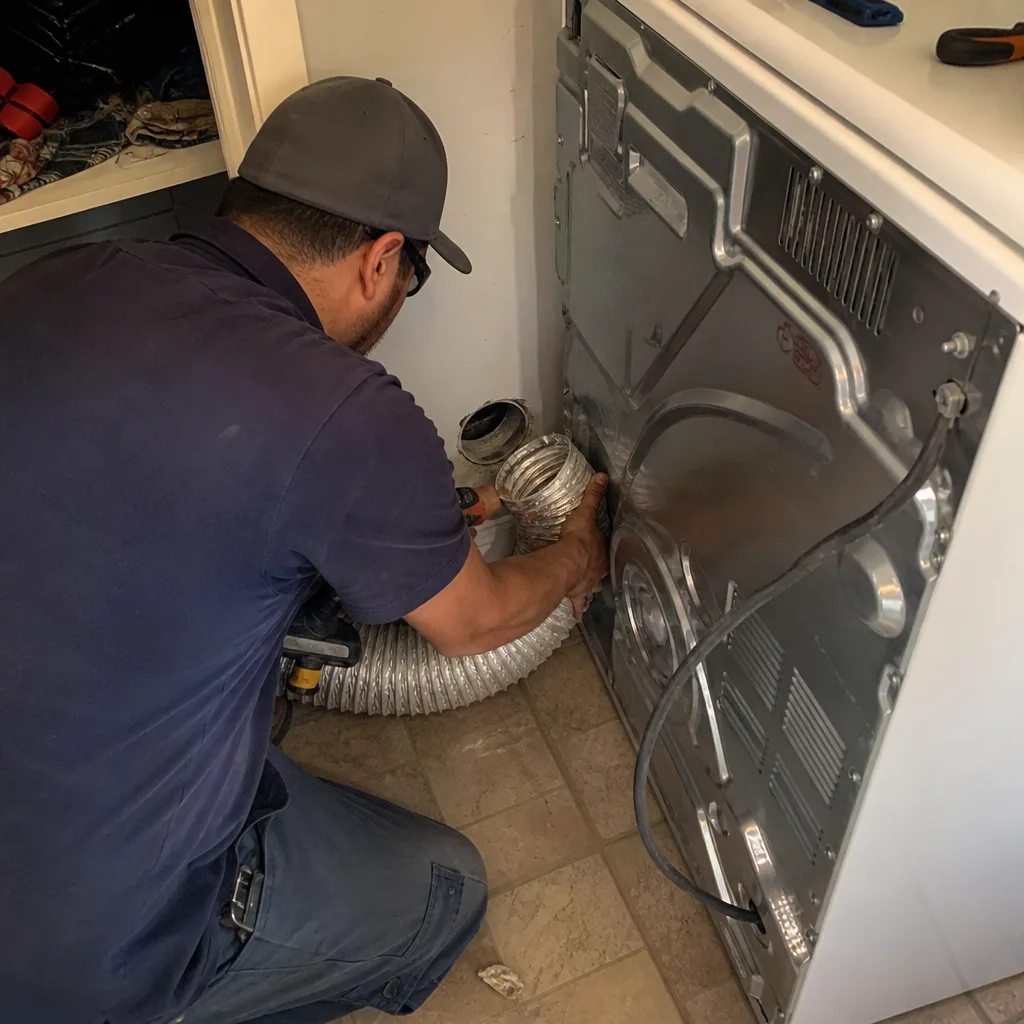
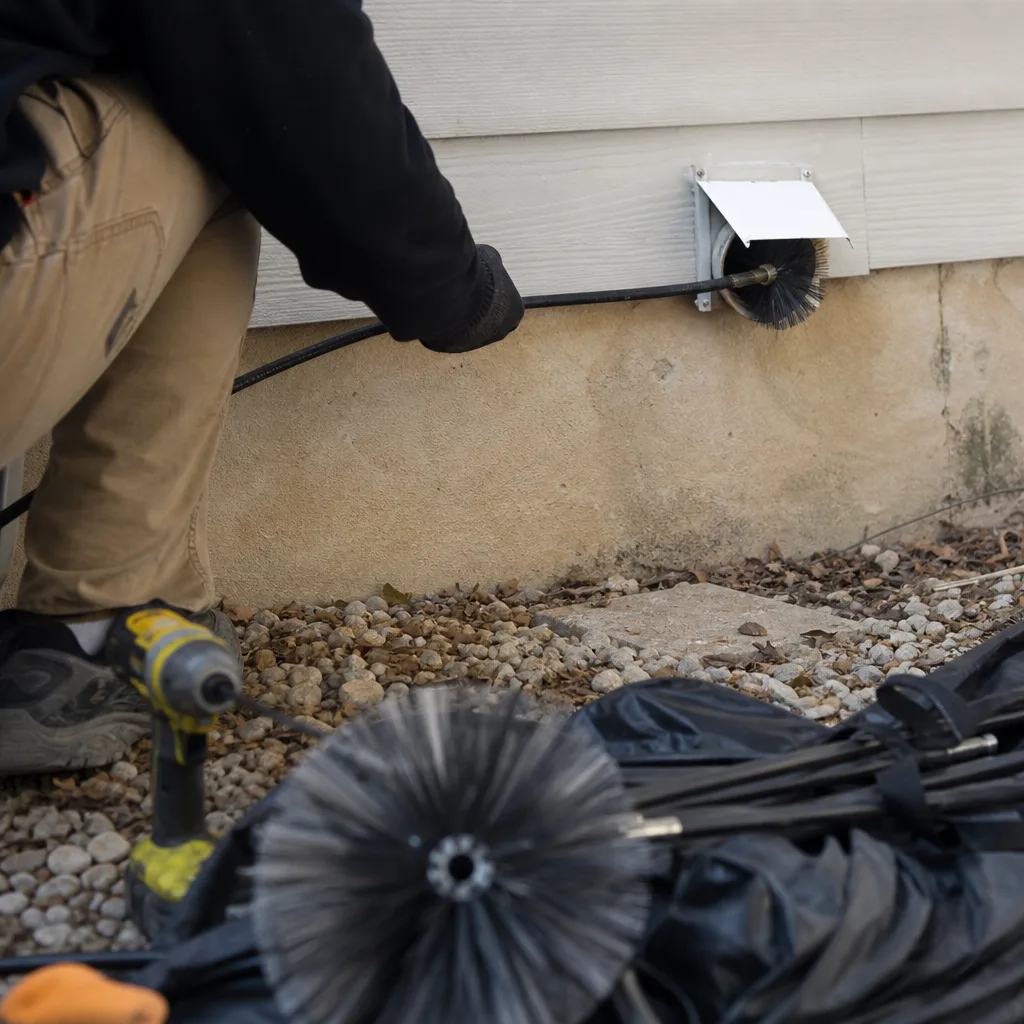
- Dryer vent maintenance as a standalone task. The exterior dryer vent termination, the transition duct from dryer to wall, and the first few feet of the wall duct are often accessible and cleanable by a homeowner with appropriate tools. This is distinct from whole-system air duct cleaning. For comprehensive Dryer Vent Cleaning in Leander, professional service addresses the full run to exterior termination, including lint accumulation in wall cavities and roof terminations that DIY cannot safely reach.
- Register-only cleaning between professional services. Maintaining clean register faces and filters extends the effective interval between whole-system cleanings. This is maintenance, not replacement for professional service.
- Generating inspection evidence. A DIY attempt that reveals the limits of your access - brush rod binding at the first elbow, visible debris beyond reach - becomes useful documentation for a professional quote. More on this below.
The key discriminator is accumulation depth and location. If you can see it, reach it, and verify you’ve removed it, DIY is appropriate. If you cannot see or reach it, you’re guessing about system condition, and the guess is usually wrong in the direction of underestimation.
How to Use DIY Inspection to Improve Professional Quotes
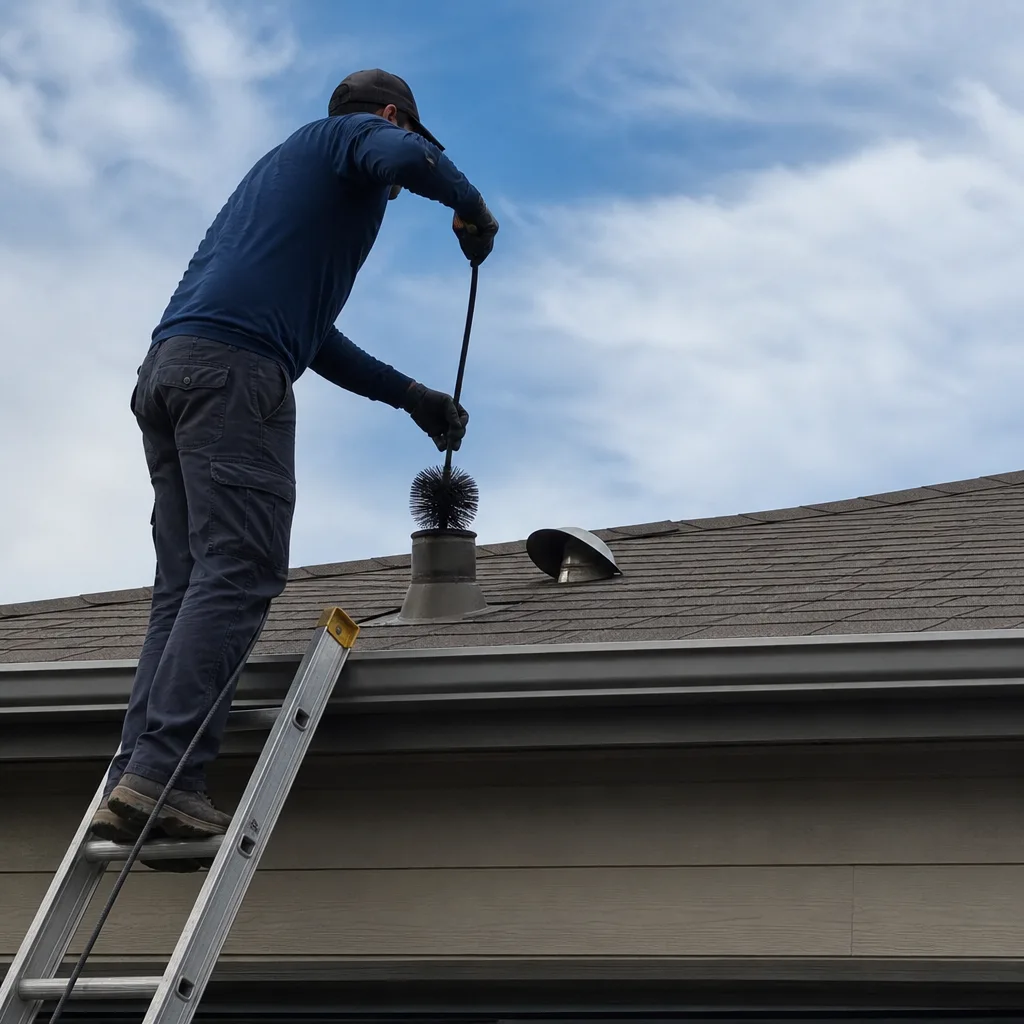
This is the approach we wish more Leander homeowners would take: treat DIY effort as evidence gathering, not as cleaning completion.
Here’s how to make your DIY attempt maximally useful for getting an accurate professional quote:
- Photograph before you touch anything. Remove one register and photograph the boot interior with your phone’s flash. Note the date, room location, and any visible debris depth or staining.
- Attempt your maximum reach. Insert your brush or vacuum hose as far as it will go without forcing. Note where it stops - first elbow, reduction, junction - and photograph what the brush or hose tip looks like when withdrawn. Debris on the tip proves there’s more beyond your reach.
- Document your equipment. Note the brush kit brand, rod length, and vacuum model. This helps the professional assess whether your reach limit was equipment-limited or geometry-limited.
- Photograph after your attempt. Same access point, same lighting. The difference between before and after shows what you achieved; the similarity to “before” in sections beyond your reach shows what remains.
- Bring this evidence to your estimate. At CleanRun, this documentation makes our quote more precise. We know which access points to plan for, which sections likely need attention, and can validate our findings against your prior attempt. Haven Standard Clause 1 requires a written price before work starts; your evidence helps us make that price accurate the first time.
This transforms DIY from a failed cleaning attempt into a collaborative diagnostic step. The homeowner gains understanding of their system’s actual geometry. The professional gains verified information about conditions beyond standard access points. The quote reflects reality, not assumption.
We offer a Free Second Opinion on any written estimate for this reason. Bring a competitor’s quote and your DIY documentation; we’ll put our own number next to it in writing, with specific reference to what your evidence shows about system condition.
Equipment Differences: Shop Vac vs Negative-Pressure Systems
The equipment gap is where marketing copy often exaggerates. Here’s what actually differs.
A typical consumer shop vacuum generates 50-100 CFM of airflow at the hose end, with static pressure around 50-80 inches of water lift. This is adequate for picking up loose debris at the point of contact. It is not adequate for creating system-wide negative pressure that prevents debris migration during agitation.
Professional negative-pressure systems, such as the Nikro and Rotobrush equipment CleanRun deploys, generate 5,000-10,000 CFM through large-diameter collection hoses connected to the duct system at multiple points. This creates a pressure differential that pulls dislodged debris toward the collection point rather than allowing it to escape into occupied spaces.
The mechanical agitation tools differ similarly. Consumer brush kits use nylon bristles on flexible rods, rotated manually or with a low-torque drill. Professional systems use motorized whips, reverse-blast nozzles, and pneumatic tools that impact duct surfaces without damaging liners. For sheet metal ductwork, this difference is less critical; for flex duct and fiberglass duct board common in Leander’s residential construction, the wrong tool tears or compresses the material.
HEPA filtration on the collection side is non-negotiable for professional work and rare on consumer equipment. Without it, fine particulate - the fraction most likely to cause respiratory irritation - passes through standard filters and is exhausted back into the home. Guardsman and Honeywell both manufacture HEPA filtration systems for professional duct cleaning equipment; these are specified in manufacturer documentation that customers can verify independently.
The equipment names matter because they’re verifiable. When a company specifies Rotobrush, Nikro, or comparable systems, you can look up specifications, read independent reviews, and assess whether the claimed capability matches the manufacturer’s stated performance. Vague claims about “industrial-strength equipment” cannot be verified and should be treated skeptically.
Leander-Specific Factors: Climate, Code, and Construction
Leander’s position at the edge of the Texas Hill Country creates conditions that affect duct system performance and cleaning needs in ways that generic advice misses.
Climate and humidity patterns. Leander experiences extended periods of high humidity in spring (April-June) and fall (September-November), with dew points frequently above 65°F. Oversized air conditioning systems, common in newer construction to meet aggressive cooling load calculations, short-cycle and fail to run long enough to dehumidify effectively. The result: duct interiors, particularly the return plenum and evaporator cabinet, maintain moisture levels that support microbial growth. Surface cleaning doesn’t address this; it requires full-system access and, when indicated, antimicrobial treatment applied with appropriate containment. See our Seasonal Air Duct Cleaning Care for Leander: Year-Round Homeowner’s Guide for timing recommendations.
Construction era and duct materials. Leander’s building boom from 2015-2025 produced homes with varied duct strategies. Early-phase builds in neighborhoods like Mason Hills and Deerbrooke often used flex duct throughout, with the accessibility limitations described above. Later builds in Travisso and Rough Hollow increasingly use sheet metal trunk lines with flex duct branches, improving access to main distribution components but still requiring professional equipment for the full system. Homes near the historic downtown, built 1980-2005, may have original sheet metal ductwork with decades of accumulated debris and no prior cleaning history.
Local code and permit context. Williamson County and the City of Leander do not require permits for routine duct cleaning. However, cutting access panels in sheet metal ductwork, which professional cleaning sometimes requires for plenum access, must be done in compliance with International Mechanical Code provisions for duct sealing and restoration. CleanRun technicians are trained to this standard, and access panel installations are photographed and documented as part of the job record.
Soil and particulate sources. Leander’s caliche-rich soils and ongoing construction activity generate fine particulate that infiltrates homes and accumulates in duct systems. Homes near active development - common across Leander’s growth corridors - experience accelerated register and filter loading. This is surface debris that DIY can address, but the fraction that penetrates filters and deposits in duct interiors requires professional extraction.
CleanRun Air Duct Cleaning Leander home service area covers all Leander neighborhoods with technicians who understand these local construction patterns and can specify appropriate access strategies based on build era and duct type.
Common Mistakes to Avoid
- Assuming clean registers mean clean ducts. The visible 15% of the system tells you nothing about the 85% behind walls and above insulation. We’ve photographed pristine registers with heavily contaminated trunk lines 10 feet upstream.
- Using a shop vacuum without HEPA filtration. Standard vacuum filters pass fine particulate. You’re moving debris from ducts to ambient air, where it resettles on surfaces and is re-entrained into the HVAC system. In Leander’s tight-construction newer homes, this can measurably degrade indoor air quality for days.
- Forcing brush rods through flex duct. The ribbed interior catches bristles; aggressive pushing tears the liner or separates the inner core from the insulation jacket. A torn flex duct section requires repair or replacement, costing far more than professional cleaning would have.
- Ignoring the return side entirely. DIY efforts focus on supply registers because they’re accessible and visibly dirty. The return plenum and trunk typically contain 2-3x the debris mass of supply ducts, and are entirely unreachable without professional access.
- Treating the $79 coupon as comparable service. These operations typically clean only registers and the immediately accessible boot, using portable vacuums with no system-wide negative pressure. The “whole house” claim is technically true by square footage covered, false by system component reached. The upsell to actual service begins once the technician is inside.
- Cleaning without inspecting first. You cannot know whether debris is loose surface accumulation or adhered grime without visual inspection. Attempting to brush adhered grime with inadequate tools wastes time and can damage duct surfaces. Professional inspection with borescope cameras identifies material type and appropriate removal method before work begins.
When to Call a Professional
Call a professional when: your DIY brush stops at the first elbow and debris is visible beyond (How to Hire a Air Duct Cleaning Contractor in Leander: A Step-by-Step Guide);; you haven’t had professional service in 5+ years and the home has continuous HVAC operation; you’re experiencing unexplained respiratory symptoms, excessive dust accumulation, or musty odors when the system runs; you’re preparing to sell and want documented system condition; or you’ve had rodent or insect intrusion in ductwork.
CleanRun Air Duct Cleaning Leander offers free estimates in Leander - call (737) 252-1285. Every estimate includes a written price before any work starts, under Haven Standard Clause 1, and every job concludes with a Documented Photo Record of every duct run. The 365-Day Done Right Promise means if the work is not right, we make it right, backed in writing on every job.
Frequently Asked Questions
Whole-system air duct cleaning in Leander typically costs $350-$650 for a single HVAC system, depending on home size, duct accessibility, and system configuration. This includes negative-pressure extraction, mechanical agitation, and documented before-and-after photography of every duct run. Call (737) 252-1285 for a written estimate specific to your home - estimates are free and delivered before any work is discussed.
The $79-$149 range typically covers register and boot cleaning only, using portable equipment with no system-wide negative pressure. True whole-system cleaning with professional negative-pressure extraction, HEPA collection, and full documentation costs more because it requires more equipment, more time, and trained technicians. The cheaper quote becomes expensive when upselling begins on-site. CleanRun’s written price under Haven Standard Clause 1 includes everything before work starts - no surprises, no upsells.
Demand a documented photo record showing the interior of every duct run before and after cleaning. CleanRun has provided this on every job since 2013 as a standard deliverable, not an add-on. If a company cannot or will not show you photographic evidence of interior duct condition, you have no verification that cleaning occurred beyond the registers you could have cleaned yourself.
For most Leander homes with standard fiberglass pleated filters changed every 2-3 months, professional cleaning every 5-7 years is adequate. Homes with pets, recent renovation, or occupants with respiratory sensitivities may benefit from 3-5 year intervals. Newer homes with proper filtration and no construction activity may extend to 7-10 years. The correct interval is determined by inspection, not calendar - a borescope examination of the return plenum reveals actual accumulation rates for your specific system and habits.
Homeowners can often clean the exterior termination, transition duct, and first few feet of wall duct safely. The full run to exterior termination, particularly through roof jacks or long horizontal runs in Leander’s two-story homes, requires professional equipment and is a leading cause of residential fires when neglected. For comprehensive service, Dryer Vent Cleaning in Leander by CleanRun addresses the complete system with rotary brush and negative-pressure extraction, including lint accumulation in wall cavities that DIY cannot reach.
Consumer-grade cleaning of registers and accessible boots does not affect warranty coverage. However, accessing the air handler cabinet, evaporator coil, or electrical components can void manufacturer warranties and creates safety hazards. Any work involving refrigerant lines, electrical connections, or combustion components should be performed by licensed professionals. CleanRun technicians are background-checked, uniformed, and operate under Haven Standard Clause 3: Verified Crews, with license information published and available on request.
Clear a 3-foot workspace around each register and the air handler location. Remove fragile items from shelves near duct access points. Have your HVAC system’s maintenance history available if you have it. Most importantly, complete any DIY inspection you’re comfortable with and bring photos - they make our assessment more precise and your written quote more accurate. The crew will need 3-5 hours for a typical Leander home, depending on system complexity and accessibility.
The Bottom Line
The DIY vs professional question is not about capability or effort. It’s about access and documentation. A homeowner can clean what they can reach and see; what they cannot reach and see is where the majority of debris accumulates, and where professional negative-pressure source removal with verified photography makes the difference. In Leander’s climate and construction context, DIY maintenance between professional services is smart stewardship; treating DIY as equivalent service is a category error that leaves most of the system unaddressed. The useful approach is sequential: DIY what you can, document what you find, and use that evidence to get a precise professional quote for what remains. CleanRun’s written pricing, documented outcomes, and 365-Day Done Right Promise exist to close that gap with evidence you can review long after the truck leaves.
Written by Tomas Reyes, Owner at CleanRun Air Duct Cleaning Leander, serving Leander since 2013.