
Last updated September 23, 2026
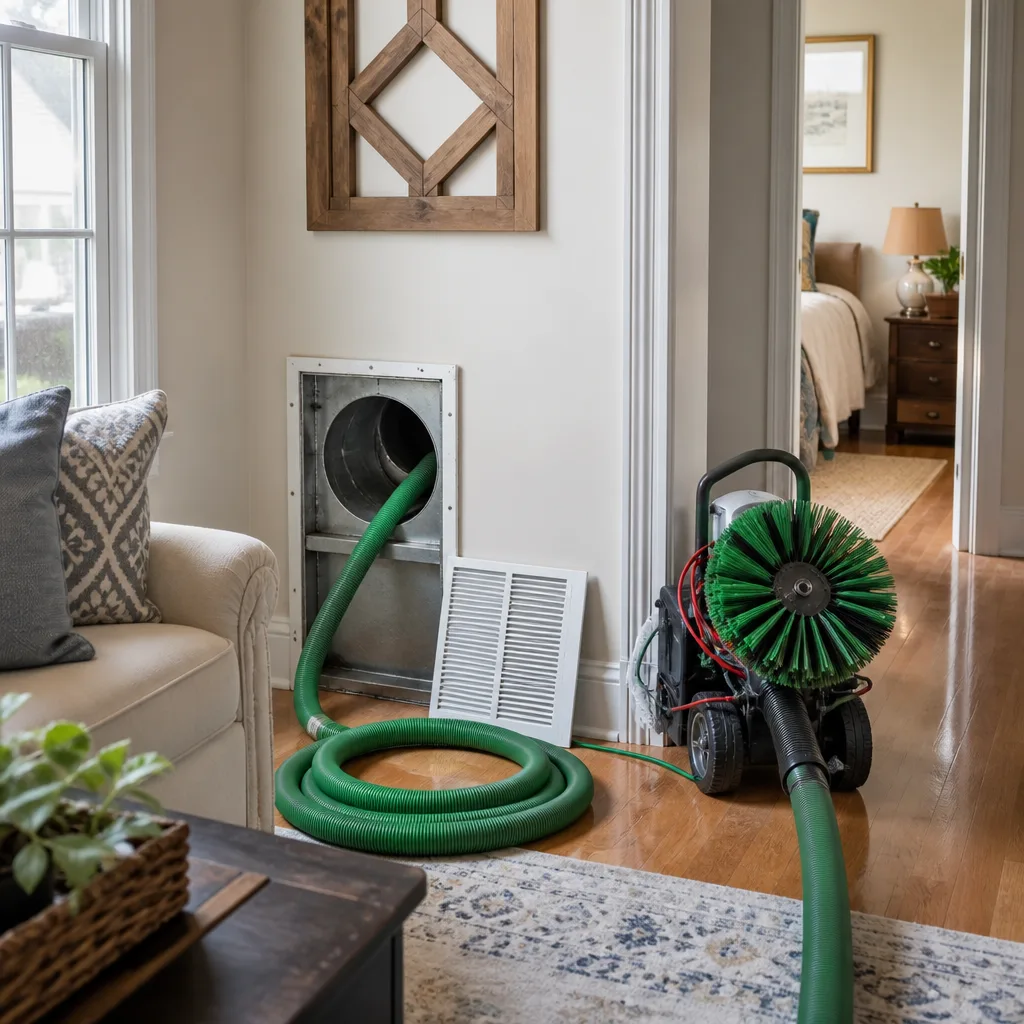
Whole-system duct and dryer vent check with before-and-after photos - you see exactly what came out of your vents
That "$99 whole-house special" is a bait ad - the real number appears once they are in your hallway, or the "clean" is a shop-vac at the register. We photograph the inside of your ducts before and after instead.
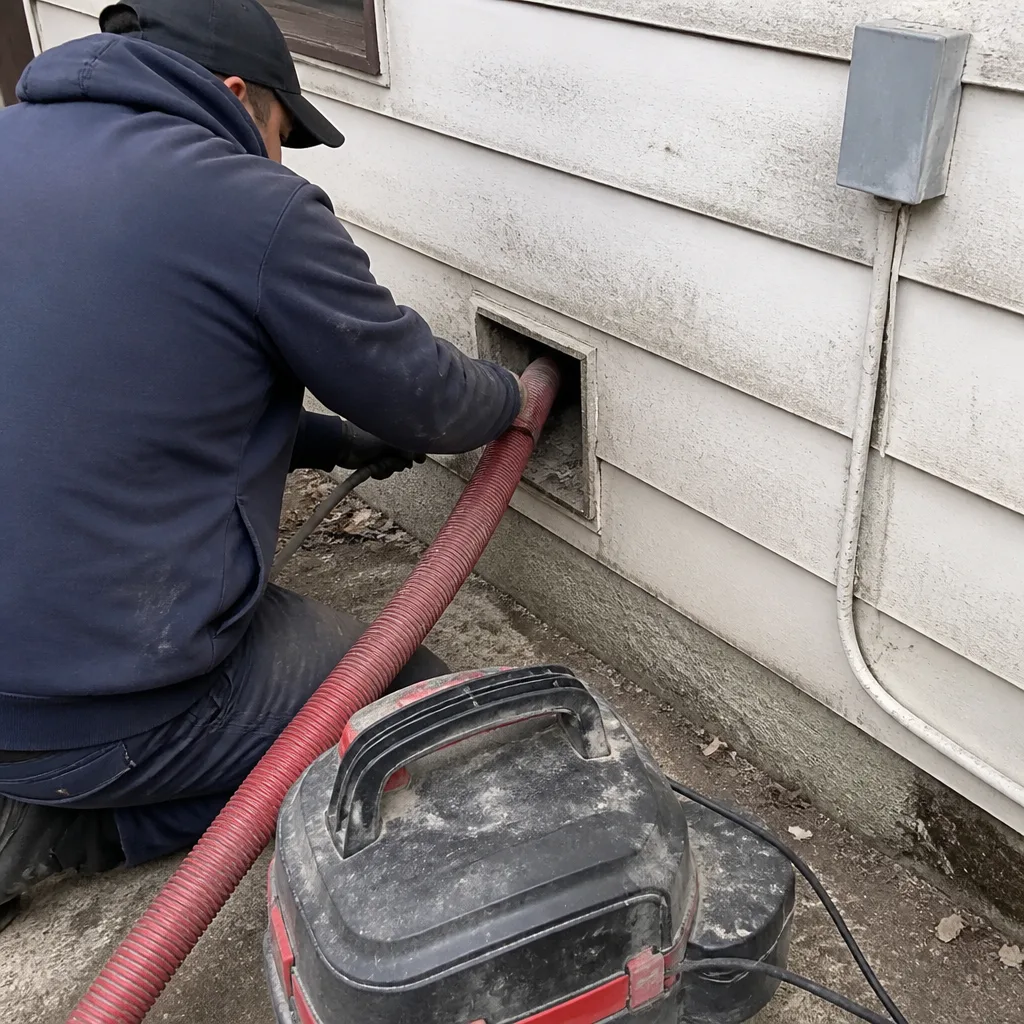 Before
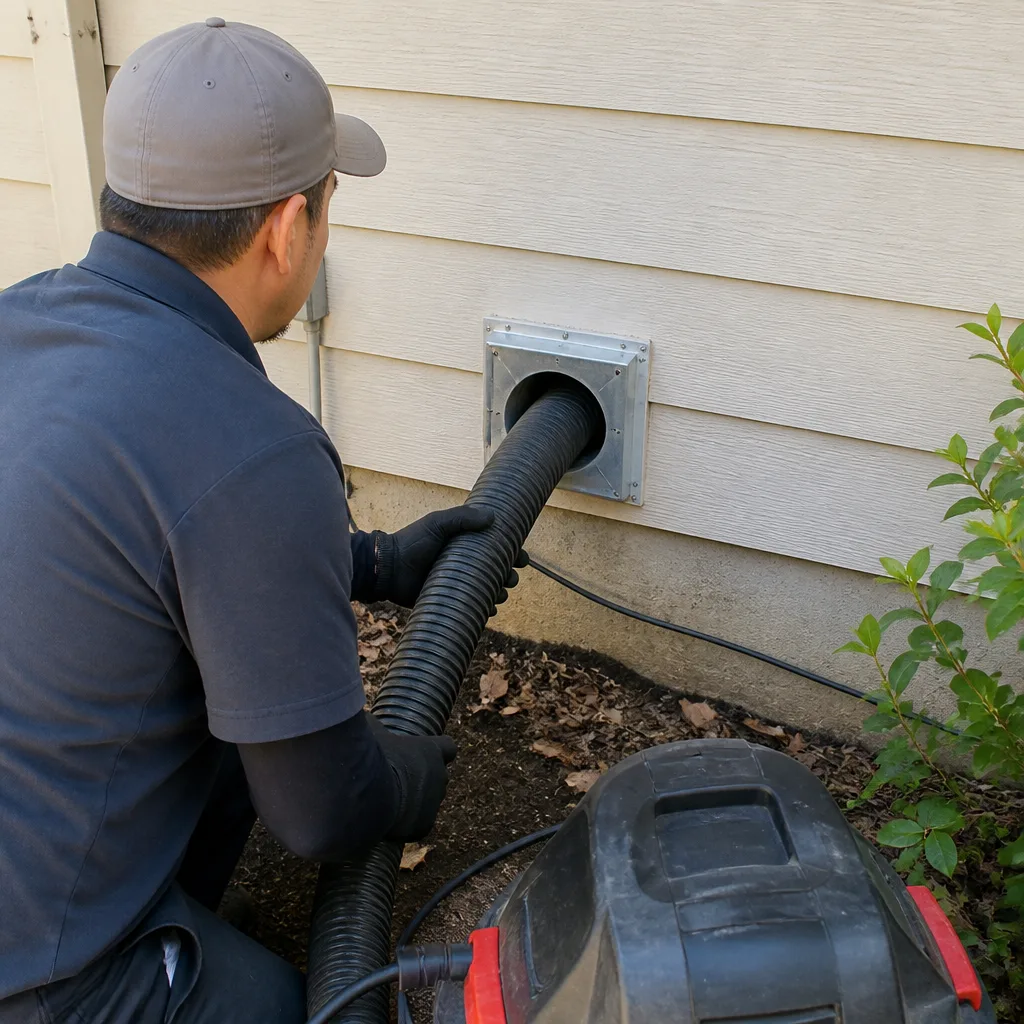 After
After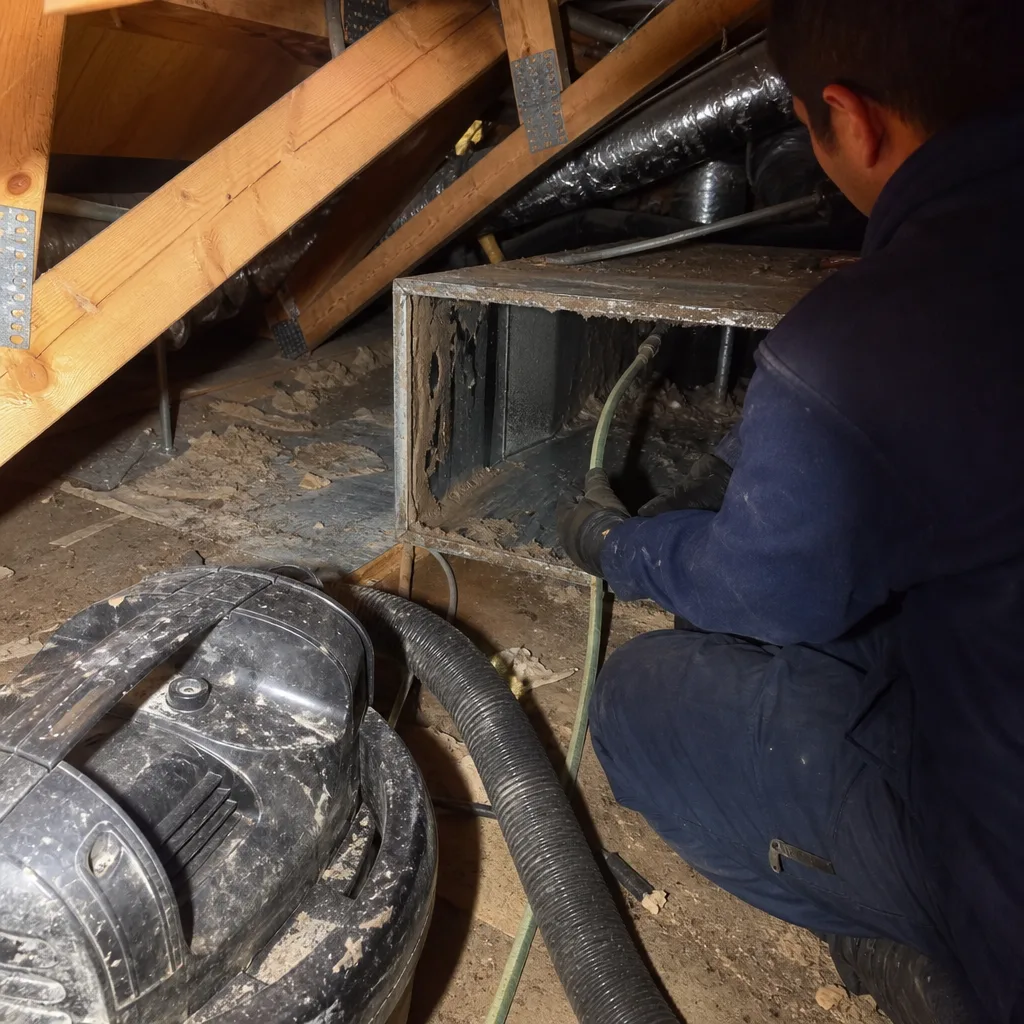 Before
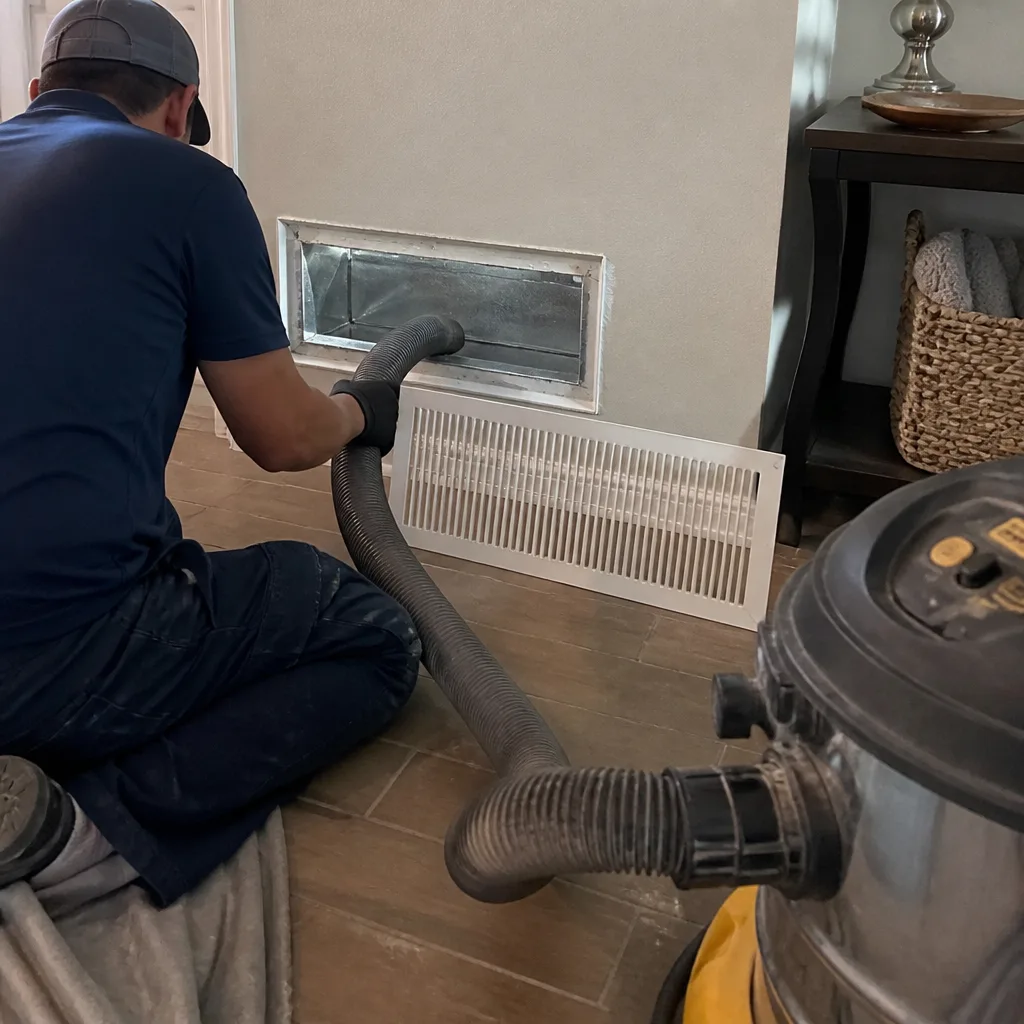 After
After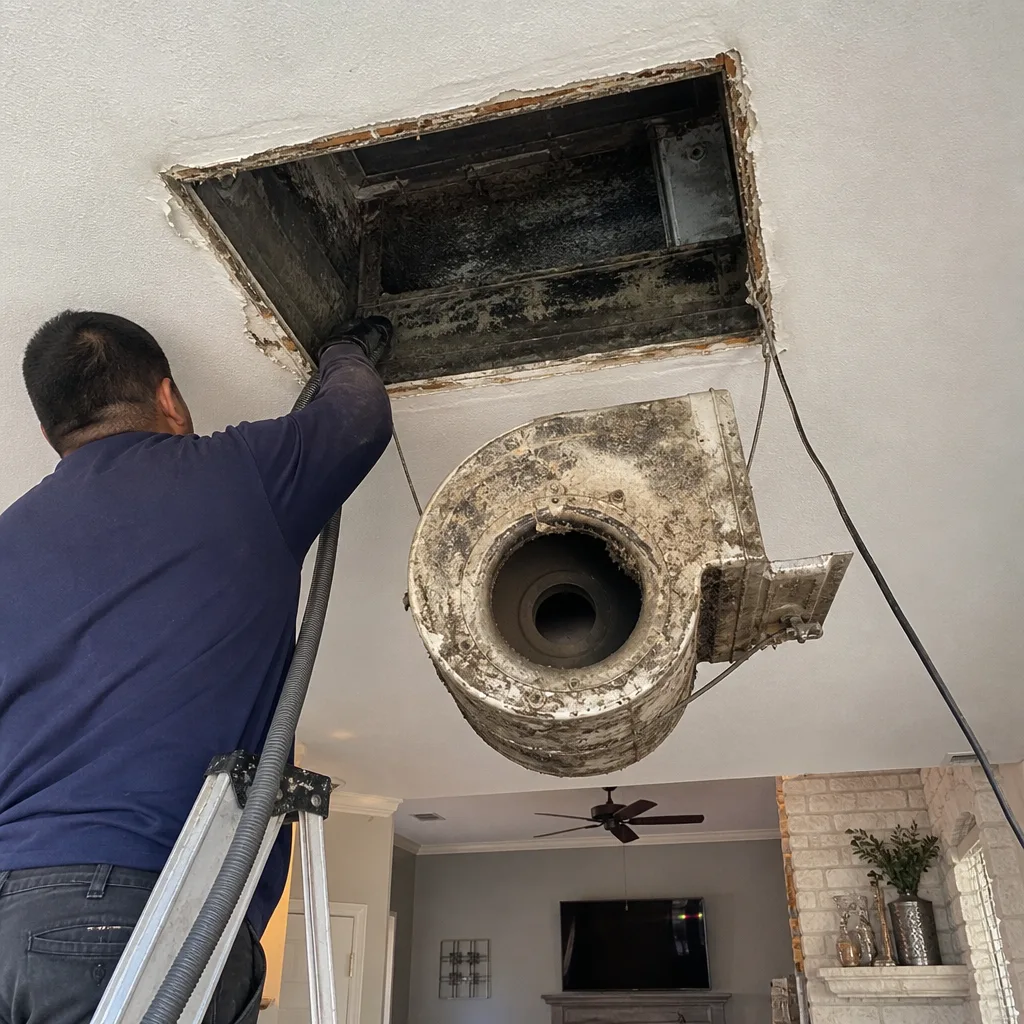 Before
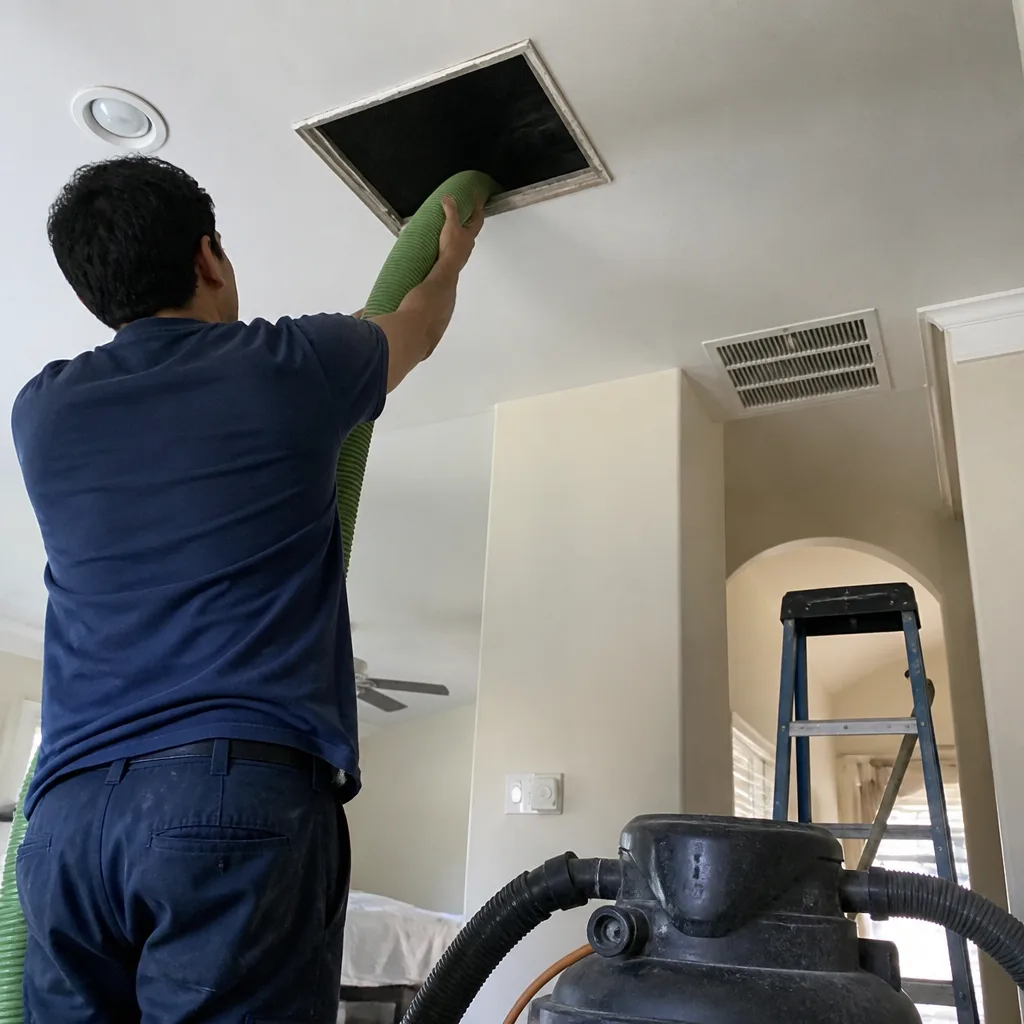 After
AfterThe Complete Guide to Air Duct Cleaning in Leander
The EPA has stated that duct cleaning has never been proven to prevent health problems. That single sentence is why most Leander homeowners either ignore their ductwork entirely or grab the cheapest coupon they can find. Both are mistakes. What actually matters is knowing when documented contamination exists, what legitimate removal requires, and what the job should cost in writing before a technician touches your system. In Leander, where cedar pollen drifts for months and new construction in neighborhoods like Travisso and Crystal Falls keeps fine dust circulating year-round, the question isn’t whether ducts get dirty. It’s whether the air duct cleaning you’re paying for actually removes what’s inside, or just makes noise at the register.
This guide covers what we’ve documented in Leander homes since 2013: the difference between flex duct and sheet metal accumulation, what NADCA ACR compliance actually means, how to read a before/after photo with a critical eye, and the specific questions that separate legitimate operators from coupon shops.
Quick Answer
Professional air duct cleaning in Leander typically costs $400-$900 for a whole-home system and should include negative-pressure extraction, agitation of all duct surfaces, and a documented photo record of every run. For help deciding between doing it yourself and hiring a pro, see our DIY vs Professional Air Duct Cleaning: The Leander Homeowner’s Decision Guide. A legitimate job takes 3-5 hours for an average 2,000-square-foot home and follows the NADCA ACR standard, not a shop-vac at the register.
Table of Contents
- What Leander Deposits in Your Ducts
- Flex Duct vs. Sheet Metal: What the Camera Shows
- The NADCA ACR Standard: What Compliance Actually Requires
- What Legitimate Air Duct Cleaning Costs in Leander
- How to Read a Before/After Photo Like a Technician
- Questions That Disqualify a Contractor
- Common Mistakes to Avoid
- When to Call a Professional
- Frequently Asked Questions
- The Bottom Line
BeforeAfterWhat Leander Deposits in Your Ducts
Leander sits at the edge of the Texas Hill Country, where three environmental factors create a specific contamination profile inside residential ductwork. Understanding this profile matters because it determines what equipment a technician needs and how long the job should take.
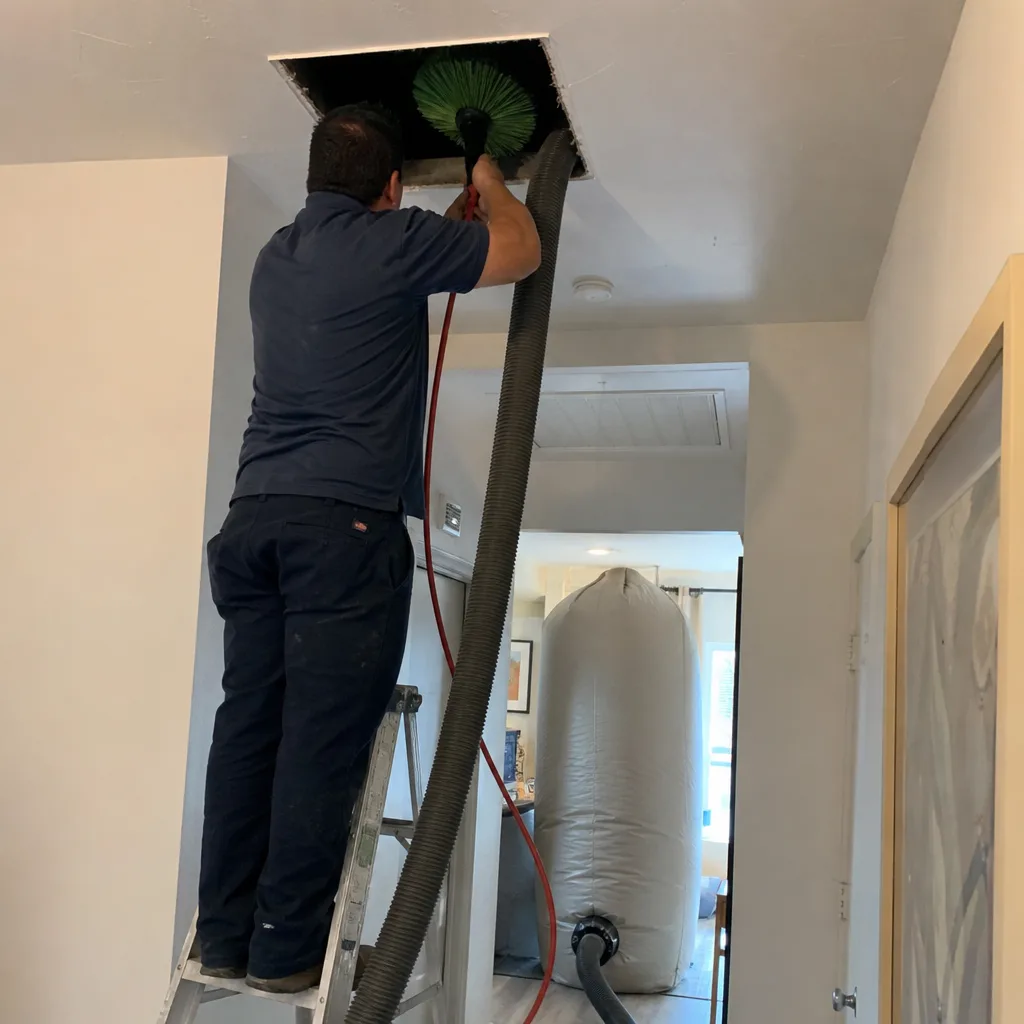
Cedar and oak pollen. From December through March, mountain cedar releases pollen that penetrates even well-sealed homes. In Leander’s older neighborhoods like Mason Creek and Sandy Creek, where original windows and door seals have aged, we regularly see pollen accumulation at 1-2 inches deep in return plenums. The pollen is lightweight and electrostatic, meaning it clings to duct walls rather than settling. A shop vac won’t dislodge it. Negative-pressure extraction with rotary brush agitation will.
Construction dust from ongoing development. Leander has been among the fastest-growing cities in the Austin metro since 2015. New construction in Crystal Falls, Travisso, and the Palmera Ridge area generates silica-based dust that infiltrates existing homes through HVAC systems. This dust is abrasive and heavier than organic debris. In homes built 2015-2022, we’ve documented construction dust layers still present at the 3-4 year mark, particularly in homes where the builder’s initial duct cleaning was a brief vacuum at the registers.
Caliche soil and limestone particulate. Leander’s native soil is high in calcium carbonate. When winds pick up, this fine dust enters homes and settles in ductwork. Unlike organic debris, it doesn’t decompose or compact. It forms a persistent layer that reduces airflow over time. In homes near Ronald Reagan Boulevard or Hero Way, where traffic stirs up road dust, we’ve measured airflow reductions of 15-20% attributable to this mineral buildup alone.
The combination means Leander ductwork typically contains a stratified mix: organic debris on top, mineral particulate bonded to the duct wall beneath, and construction dust packed into elbows and transitions. Each layer requires different agitation. A technician who doesn’t inspect before quoting cannot know which layers exist or what equipment to bring.
Flex Duct vs. Sheet Metal: What the Camera Shows
Leander’s housing stock splits roughly evenly between homes with flex duct (common in builds 2000-2015) and sheet metal trunk lines with flex branches (common in newer construction and retrofits). The contamination patterns look different, and the cleaning methods must adapt.
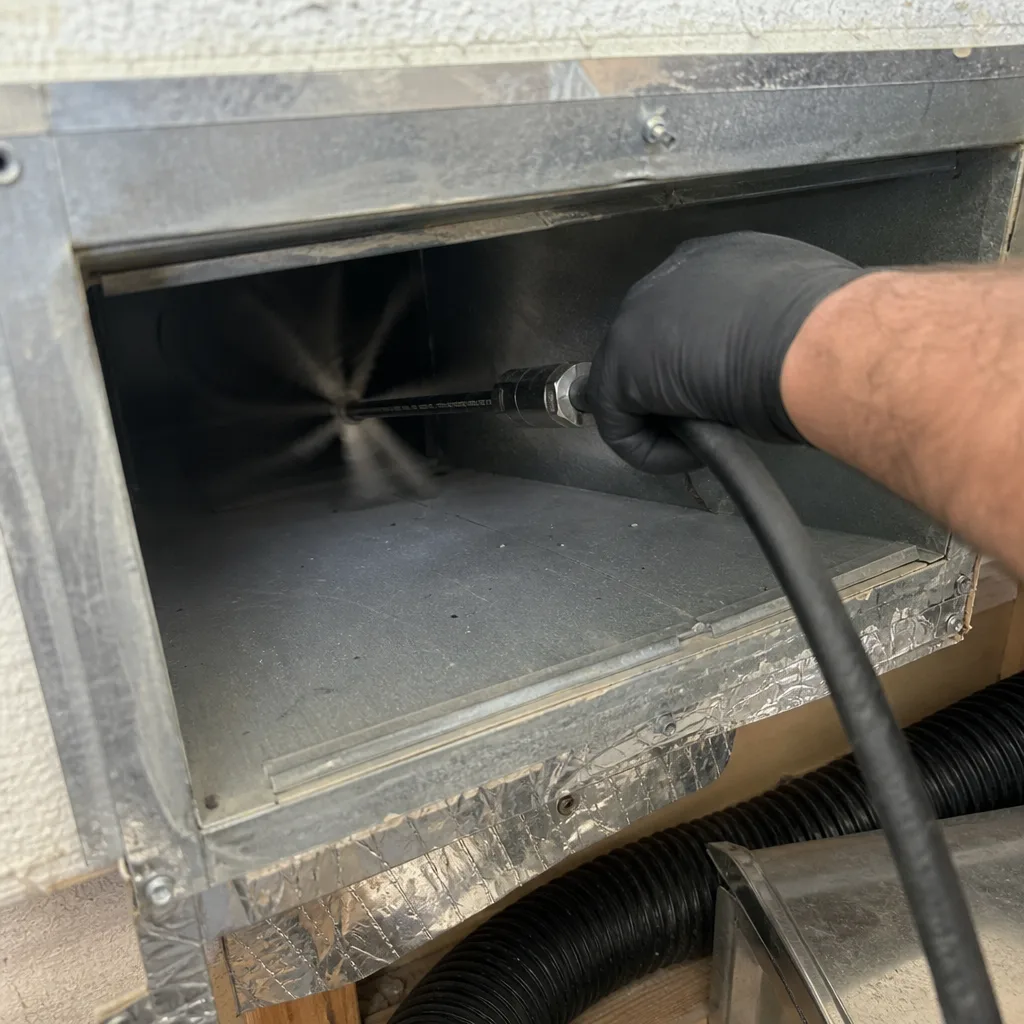
Flex duct: the ribbed interior trap. Flex duct has a corrugated interior surface. Those ribs create turbulence that deposits debris at predictable intervals. In our photo records from Leander homes, we see debris ridges forming perpendicular to airflow, spaced roughly every 8-12 inches. A standard vacuum passes over these ridges. Rotary brush agitation with a soft-bristle head, sized to the duct diameter, is required to lift debris from the rib valleys. We’ve photographed flex duct in Leander’s Parkside at Leander neighborhood where the visible interior appeared “lightly dusty” but the rib valleys contained packed debris to half the rib height. The homeowner’s complaint was uneven cooling upstairs. After proper agitation and extraction, airflow at the furthest register improved from 42 CFM to 78 CFM.
Sheet metal: smooth surfaces, stubborn deposits. Sheet metal duct has no ribs, but it develops a different problem. Over years, a thin film of organic material bonds to the metal surface. New debris adheres to this film. The result is a uniform coating that doesn’t look dramatic in photos but significantly increases surface roughness. In sheet metal trunks in Leander’s Cedar Park-adjacent homes, we’ve measured this coating at 1-3 millimeters thick. It requires aggressive agitation, typically a powered whip system or rotary brush with stiffer bristles, followed by high-volume negative-pressure extraction. A shop vac or compressed-air “blow-out” moves the loose debris but leaves the bonded layer intact.
Critical inspection point: the plenum. The plenum is the large box that connects your air handler to the duct trunk. In Leander, where summer attic temperatures exceed 140°F, plenum insulation can degrade and shed particles into the airstream. We’ve documented this in approximately 15% of Leander homes over 10 years old. A legitimate inspection includes the plenum interior. A $79 coupon visit typically skips it entirely.
The NADCA ACR Standard: What Compliance Actually Requires
NADCA, the National Air Duct Cleaners Association, publishes the ACR standard (Assessment, Cleaning, and Restoration of HVAC Systems). It is the only industry-recognized specification for duct cleaning. Understanding what it requires helps you recognize when a contractor is following a documented protocol versus improvising.
The ACR standard has specific requirements that directly contradict common coupon-shop practices:
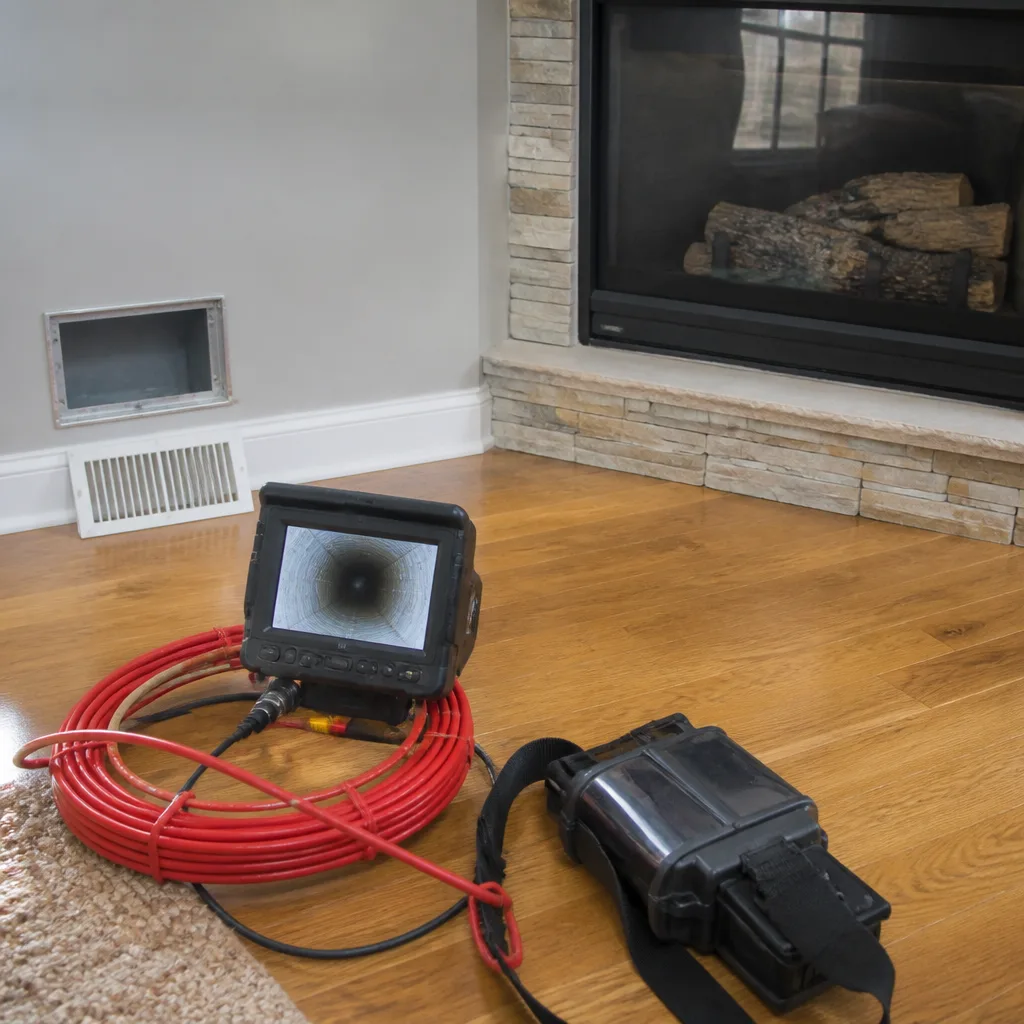
- Pre-cleaning inspection and documentation. The standard requires visual inspection of the entire system before cleaning, with documentation of contamination type and severity. This means access panels opened, cameras or mirrors used, and findings recorded. A verbal “yeah, they’re dirty” does not comply.
- Containment of the work area. The standard requires that registers, returns, and the air handler be sealed or isolated during cleaning to prevent debris redistribution into the home. We’ve arrived at Leander homes where a previous “cleaning” left soot patterns on walls near registers because the contractor operated without containment.
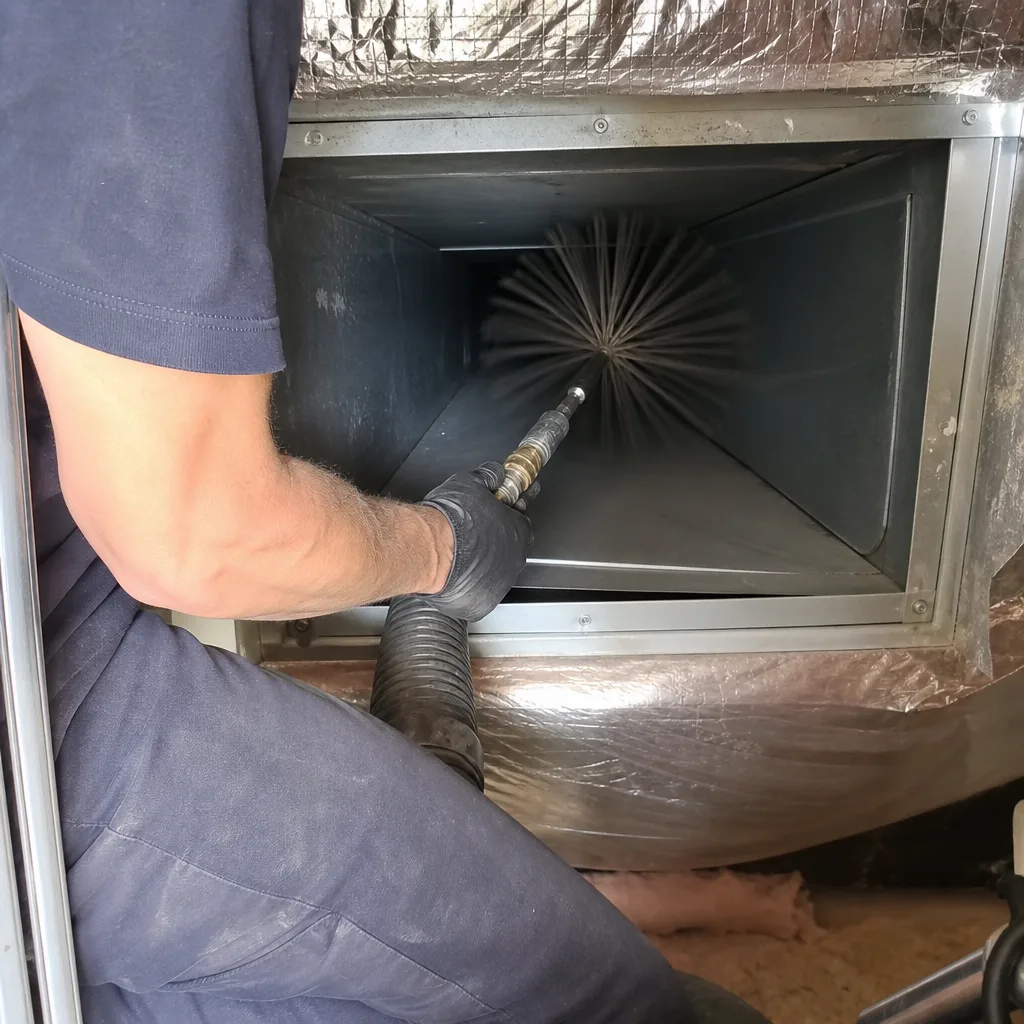
- Mechanical agitation of all surfaces. The standard explicitly states that vacuuming alone is insufficient. All duct surfaces must be agitated to dislodge debris before extraction. This means powered brushes, whips, or compressed air tools contacting the duct wall, not a vacuum hose waved in the general direction.
- Negative-pressure extraction during agitation. The system must be under continuous negative pressure (suction) during agitation to capture dislodged debris. This requires a dedicated collection unit, typically truck-mounted or a portable HEPA-filtered machine with sufficient CFM. A shop vac does not generate adequate airflow for whole-system negative pressure.
- Post-cleaning verification. The standard requires visual verification that cleaning objectives were met. This means post-cleaning inspection, ideally with photo or video documentation, compared against pre-cleaning conditions.
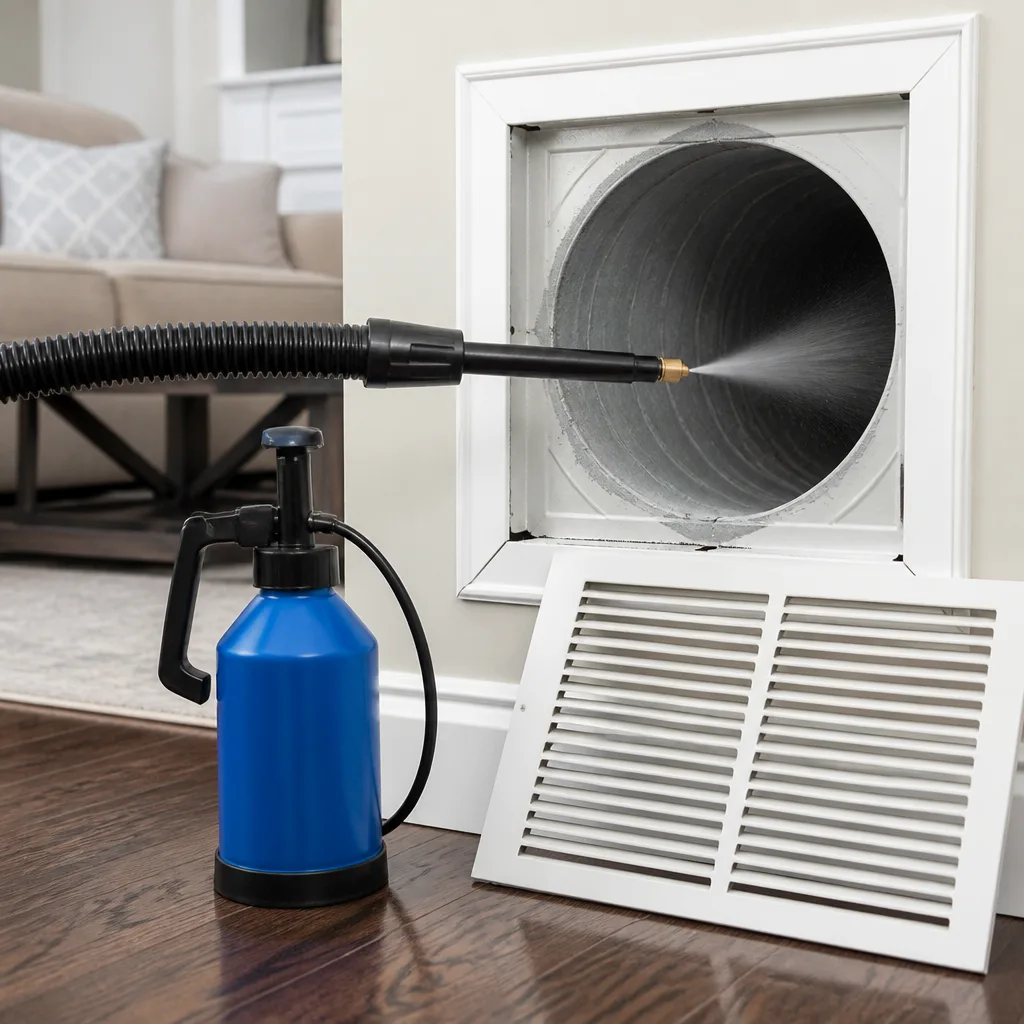
Here’s what the ACR standard does not require: chemical biocides, ozone treatment, or “sanitizing” as a default add-on. These are optional services with specific application protocols. Any contractor who presents sanitizing as mandatory or includes it without explicit discussion is not following ACR guidance.
CleanRun’s equipment roster includes Nikro and Abatement Technologies negative-pressure machines, which meet or exceed ACR airflow specifications. Our technicians operate under Haven Standard Clause 2: Documented Process, which mandates pre- and post-cleaning photo records on every job.
What Legitimate Air Duct Cleaning Costs in Leander
Price is where the duct cleaning industry’s reputation problems concentrate. The $79 coupon is not a loss leader for quality work. It is a business model built on upselling, incomplete service, or both. Understanding what drives legitimate cost helps you evaluate any quote, including ours.
The following table shows typical price ranges for whole-system cleaning in the Leander market. These are whole-system prices, agreed in writing before work begins, not per-vent teaser rates.
| System Characteristic | Typical Range | What Drives the Variation |
|---|---|---|
| Small home, flex duct, straightforward access (under 1,500 sq ft) | $400-$550 | Linear footage, number of registers, contamination level |
| Mid-size home, mixed duct types (1,500-2,500 sq ft) | $550-$750 | Sheet metal trunk requiring whip agitation, multiple attic access points |
| Large home or complex layout (2,500-4,000 sq ft) | $750-$950 | Zone systems, multiple air handlers, extensive flex branch network |
| Post-construction or heavy contamination recovery | Add $200-$400 | Additional agitation time, debris volume, possible pre-cleaning repairs |
| Dryer vent cleaning (add-on or standalone) | $150-$250 | Length, number of bends, roof vs. wall termination |
Factors that legitimately increase price:
- Linear footage and system complexity. A home with 12 registers and a single trunk costs less than a home with 22 registers, multiple trunks, and zone dampers. The technician must access and clean every run.
- Contamination type and severity. Light household dust extracts quickly. Packed construction debris or water-damaged organic material requires extended agitation and may need sectional cleaning with repeated passes.
- Access difficulty. Attic access in Leander’s older homes can be through scuttle holes in closets, requiring protective measures and additional labor. Newer homes with dedicated attic stairs reduce this component.
- System age and condition. Ductwork over 20 years old may have degraded seals, failed insulation, or damage that reveals itself during cleaning. We document these findings and discuss repair options before proceeding, per Haven Standard Clause 1: Written Price Before Work Starts.
Red flags in pricing:
- Per-vent pricing ($X per vent, $Y per return). This structure incentivizes the contractor to maximize the count and minimizes the actual cleaning time per opening.
- “Whole house” quotes given without inspection. A legitimate contractor cannot price accurately without knowing duct type, access points, and contamination level.
- Significant price increases after arrival. If the scope changes due to unexpected conditions, the work stops, the new scope is written, and the customer approves before continuation. Period.
CleanRun’s practice, established in 2013 and maintained across 52,000+ jobs, is a written price delivered after inspection and before any work begins. No exceptions. The price on the page is the price on the invoice.
How to Read a Before/After Photo Like a Technician
Documented photo records are central to CleanRun’s service model, but a photo only has value if you know what to look for. Here’s how to evaluate whether a before/after record shows legitimate cleaning or staged imagery.
What the before photo should show:
- Location identification. The photo should identify which duct run, which segment, and which direction the camera faces. A generic “before” with no location data could be from any system, any time.
- Full circumference view. Duct contamination is rarely uniform. A single centerline shot may show a clean path while debris lines the bottom or sides. Legitimate documentation includes multiple angles or a 360-degree view.
- Scale reference. Debris depth should be measurable against a known reference: the duct diameter, a tool in frame, or a measurement marker. “Dirty” is subjective. “Debris to 2 inches on the duct floor at the third elbow past the north bedroom” is verifiable.
What the after photo should show:
- The same location, same orientation. This seems obvious, but we’ve reviewed competitor “after” photos that were clearly different duct segments. The after photo must match the before photo’s location data.
- Surface condition, not just absence of loose debris. After proper agitation and extraction, the duct surface should show tool contact marks, slight scuffing from brush bristles, or a uniformly clean metal or liner surface. A photo showing smooth, undisturbed debris with a few loose particles removed indicates vacuum-only service.
- No residual moisture or chemical residue. If sanitizing was applied, the photo should show dry, clean surfaces. Wet spots or foam residue indicate improper application.
Specific examples from Leander jobs:
In a 2019-built home near Leander’s Benbrook Ranch, our pre-cleaning photo showed a 3-inch debris build-up at the first elbow of the master bedroom supply run. The debris was stratified: cedar pollen on top, gray construction dust beneath, bonded to the flex duct rib valleys. Post-cleaning, the photo showed clean rib valleys with visible brush contact marks on the duct crown. Airflow at the register increased from 35 CFM to 71 CFM, measured with a calibrated anemometer and recorded in the job file.
In a 2007 home in Leander’s Deerbrooke neighborhood, the before photo showed a uniform gray film on sheet metal trunk surfaces, 1-2 millimeters thick, with no visible loose debris. The homeowner had previously paid for a “cleaning” that produced no documentation. Our after photo showed bare metal with whip-tool scuff patterns. The difference was not dramatic to an untrained eye, but the measured airflow improvement at the furthest register was 22%.
The key point: legitimate documentation is specific, verifiable, and tied to measurable outcomes. Vague “before and after” claims without location data, scale, or airflow verification are marketing, not evidence.
Questions That Disqualify a Contractor
Before scheduling any duct cleaning in Leander, ask these questions-our How to Hire a Air Duct Cleaning Contractor in Leander: A Step-by-Step Guide walks through each one in detail. The answers that follow indicate whether you’re dealing with a legitimate operator or a coupon shop.
1. “Will you provide a written price before any work begins, and does that price cover the entire system?”
Disqualifying answer: “We need to see it first” (without committing to written pricing), or “It’s $79 for the first 10 vents, then $15 each additional.” The first is vague; the second is a per-vent upsell structure. Legitimate answer: “Yes, after inspection we provide a written price for the complete system, and that’s the final price.”
2. “What equipment do you use for agitation and extraction, and can you name the manufacturer?”
Disqualifying answer: “Professional-grade equipment” (no specifics), or “We use compressed air and a powerful vacuum.” Legitimate answer: Specific brand names and models. At CleanRun, we use Nikro and Abatement Technologies negative-pressure machines, Rotobrush rotary systems, and Honeywell and Aprilaire filtration components. Customers can verify these independently.
3. “Will you photograph every duct run before and after, and will I receive those photos?”
Disqualifying answer: “We can take photos if you want” (optional, not standard), or “Our technician will show you on his phone.” Legitimate answer: “Every run is photographed before and after, and you receive the complete photo record as part of the standard job documentation.” At CleanRun, this is Haven Standard Clause 2, not an add-on.
4. “What standard or protocol do your technicians follow?”
Disqualifying answer: “Our own proven method” or “We’ve been doing this for years.” Legitimate answer: Reference to NADCA ACR or an equivalent documented standard, with specific requirements named. Ask which version of ACR they follow (current is 2021).
5. “Are your technicians background-checked, uniformed, and identified by name before arrival?”
Disqualifying answer: “We use subcontractors” or “The technician will call when he’s on the way.” Legitimate answer: “Yes, per our documented crew verification protocol.” CleanRun operates under Haven Standard Clause 3: Verified Crews. The technician’s name, photo, and arrival window are confirmed before dispatch.
6. “What happens if I’m not satisfied with the results?”
Disqualifying answer: “Call the office and we’ll see what we can do” or “We guarantee our work” (no specifics). Legitimate answer: A written guarantee with defined terms and duration. CleanRun’s 365-Day Done Right Promise is backed in writing on every job: if the work is not right, we make it right. Not a policy subject to manager approval. A written obligation.
Any contractor who hesitates on these questions, provides vague answers, or becomes defensive is telling you something valuable. Listen.
Common Mistakes to Avoid
- Booking based on coupon price without verifying scope. The $79 offer covers “10 vents” but your system has 14, or it excludes returns, or it means 10 minutes with a shop vac. In Leander’s competitive market, we’ve seen homeowners pay $79 then $400 in upsells for work that still produced no documentation.
- Assuming new construction means clean ducts. Leander’s building boom has created a class of 2015-2022 homes with substantial construction debris still in ductwork. Builder “cleaning” is often superficial. We’ve documented 2-inch debris layers in 3-year-old homes near Palmera Ridge.
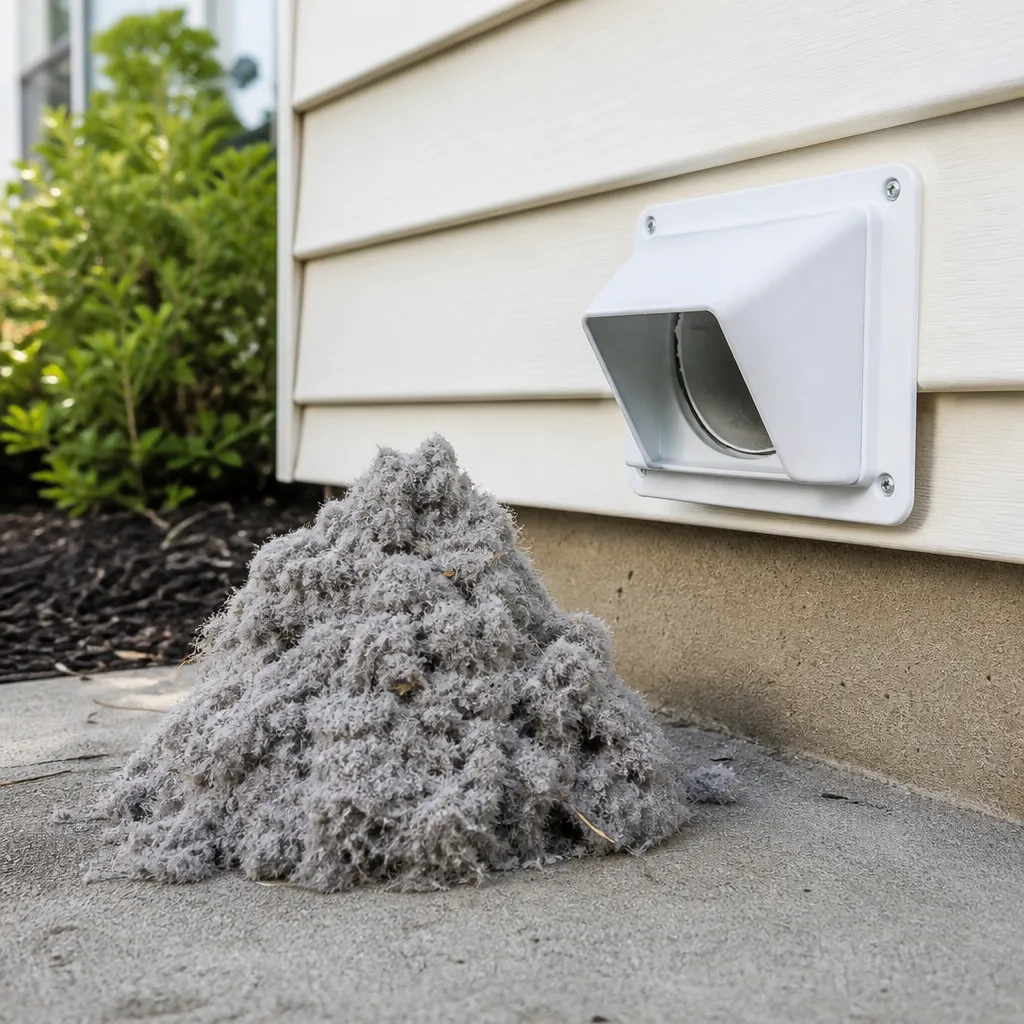
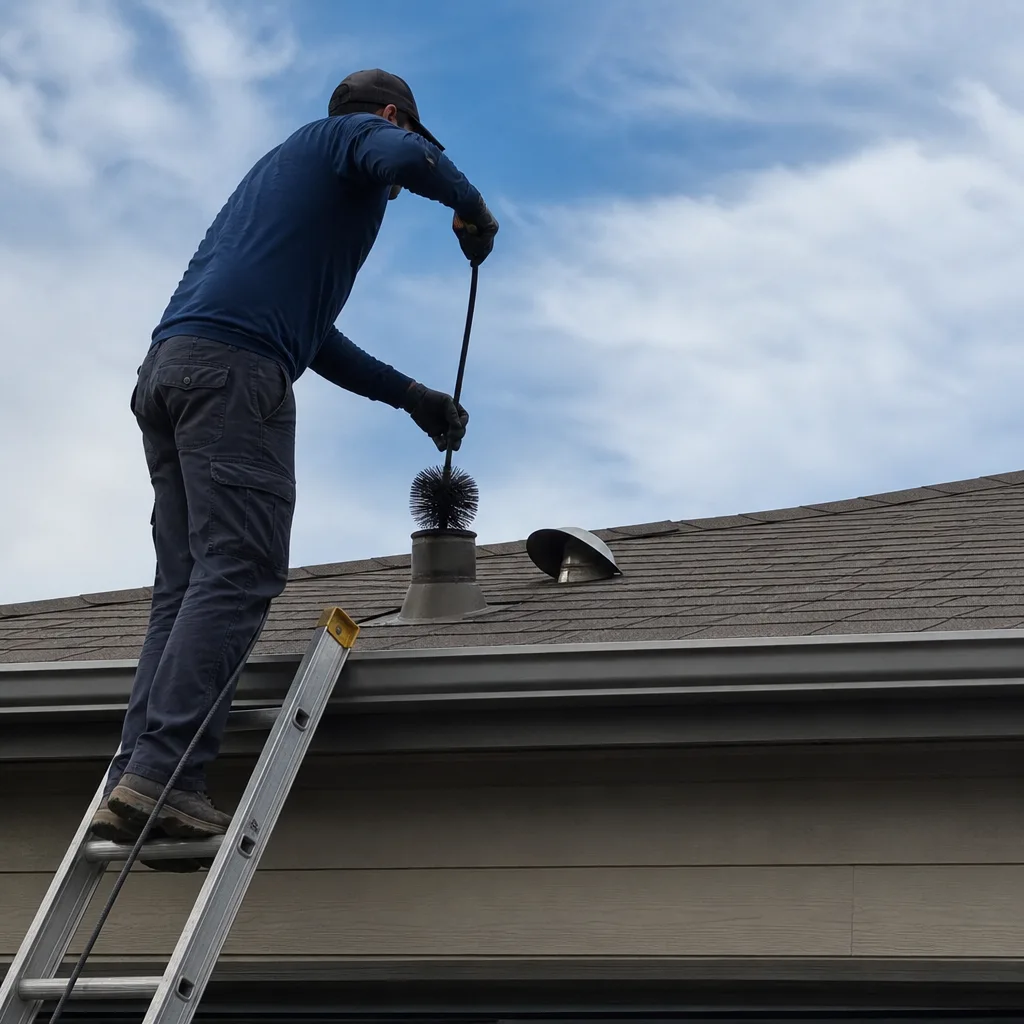
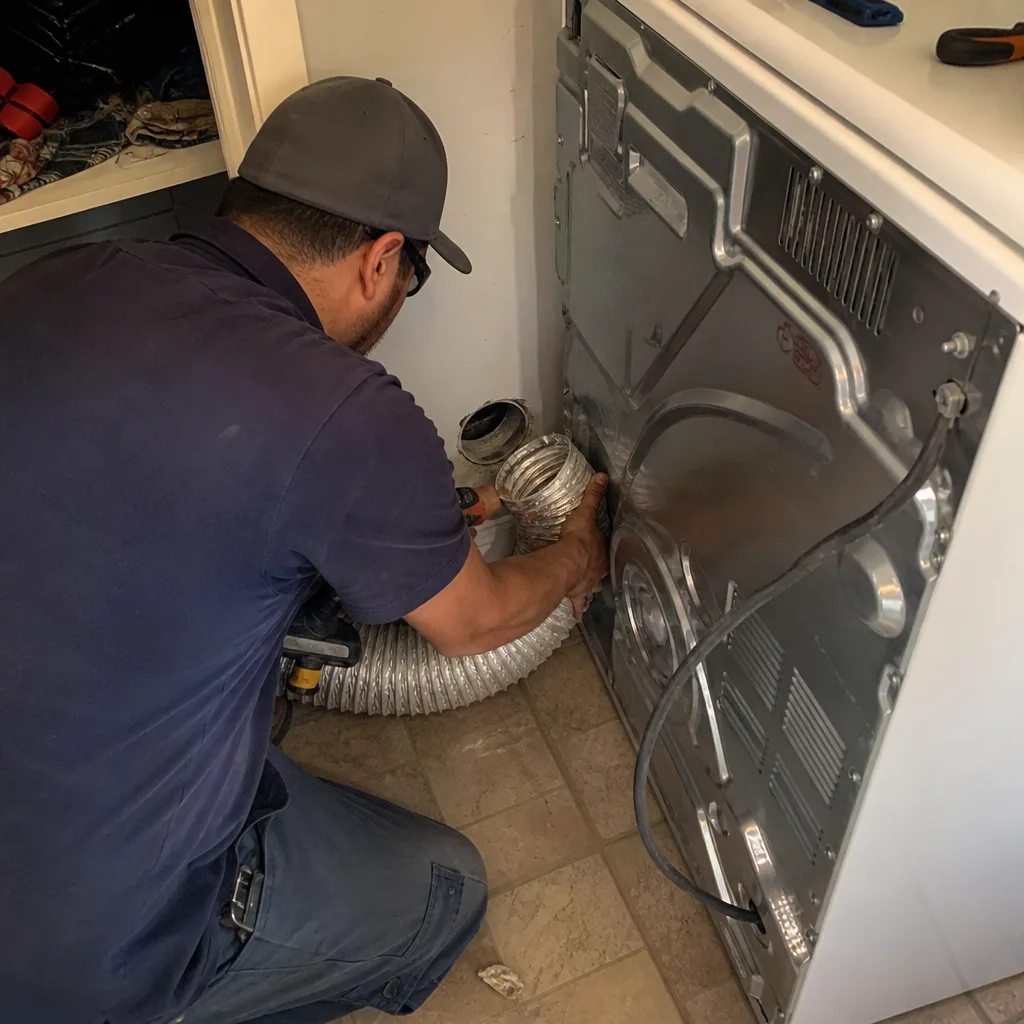
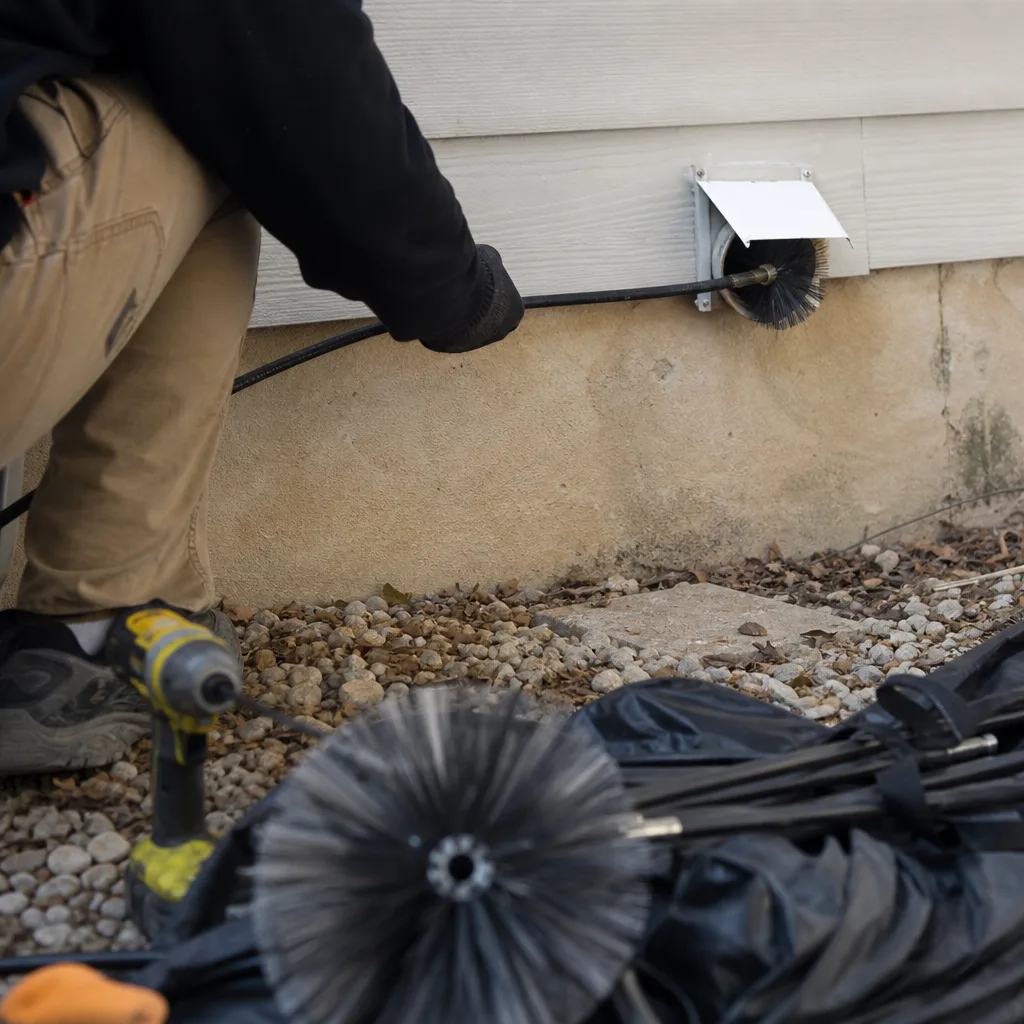
- Ignoring the dryer vent. In Leander’s hard-water, high-dust environment, dryer lint combines with mineral particulate to form dense, fire-risk blockages. Dryer vent cleaning in Leander should be part of any whole-system evaluation, or performed as standalone maintenance every 1-2 years.
- Accepting “sanitizing” as a default add-on. EPA-registered sanitizers have specific application protocols and limited efficacy claims. A contractor who includes sanitizing without discussion, or who claims it “kills all mold,” is misrepresenting the product. Ask for the EPA registration number and the specific claim being made.
- Neglecting post-cleaning system verification. After cleaning, you should receive documentation: photos, airflow measurements if taken, and a written summary of findings. A verbal “all set” and a handshake is not a complete service record.
- Waiting for visible dust at registers. By the time dust exits your registers, the system has been overloaded for months or years. The visible sign is a symptom; the problem is upstream in the ductwork and air handler. In Leander’s pollen-heavy environment, we recommend inspection every 3-5 years, not waiting for visible failure.
- Hiring a carpet cleaner who “also does ducts.” Duct cleaning requires specific equipment, training, and liability coverage. A carpet cleaning machine with a duct attachment is not a negative-pressure extraction system. Ask about dedicated duct equipment and NADCA membership specifically.
When to Call a Professional
Schedule a professional inspection, not necessarily cleaning, when: you’ve never had ductwork inspected since purchasing your home; you’re experiencing uneven heating or cooling between rooms; your energy bills have increased without rate changes; you see debris at registers or smell musty odors when the system runs; you’ve completed renovations or live in a Leander neighborhood with active construction; or you’re buying a home built 2015-2022 and the seller provides no duct documentation.
Cleaning is warranted when inspection confirms contamination meeting NADCA ACR thresholds, not on a calendar schedule. The exception is dryer vent maintenance, which should occur every 1-2 years regardless of visible condition due to fire risk.
CleanRun Air Duct Cleaning Leander offers free estimates in Leander. A technician will inspect your system, explain findings with photo documentation, and provide a written price before any work begins. Call (737) 252-1285 to schedule, or browse our more guides & resources.
Frequently Asked Questions
Whole-system air duct cleaning in Leander typically ranges from $400 to $950, depending on home size, duct type, access difficulty, and contamination level. A small home with straightforward flex duct and light contamination falls at the lower end; a large home with sheet metal trunks, multiple access points, or heavy construction debris falls at the higher end. CleanRun provides a written price after inspection and before any work begins. Call (737) 252-1285 for a free estimate.
The $79-$149 quotes are typically per-vent teaser rates or shop-vac surface cleaning that doesn’t meet NADCA ACR standards. The contractor makes profit through upselling additional vents, “required” sanitizing, or by completing the job in 45 minutes without proper agitation or extraction. A legitimate whole-system quote requires inspection and reflects actual labor, equipment, and documentation costs. If the price seems too low for 3-5 hours of professional work, it is.
Demand a documented photo record of every duct run, before and after, with location identification. The photos should show the same segment from the same angle, with visible evidence of agitation on the duct surface. At CleanRun, this is standard on every job, delivered as part of the written job record. If a contractor cannot or will not provide this, the work cannot be verified.
There’s no fixed calendar interval that applies to all homes. In Leander’s environment, with cedar pollen, construction dust, and caliche soil, we recommend inspection every 3-5 years and cleaning when inspection confirms contamination meeting NADCA ACR thresholds. Homes with allergies, pets, or recent construction may need more frequent attention. Homes with excellent filtration and sealed ductwork may need less. The decision should be evidence-based, not schedule-based.
Documented airflow improvement can reduce system runtime and energy consumption, but the effect varies. In Leander homes where we’ve measured significant debris-related airflow restriction, cleaning has produced measurable efficiency gains. In systems with clean ductwork but other inefficiencies (leaky envelopes, poor insulation, oversized equipment), duct cleaning alone won’t produce dramatic savings. The inspection should identify whether ducts are the limiting factor.
HVAC cleaning in Leander includes the air handler components: coils, blower, drain pan, and cabinet interior. Duct cleaning addresses the distribution network: supply and return runs, trunks, and registers. The services overlap at the plenum connection. A complete system evaluation may recommend both, or either, depending on contamination location. CleanRun assesses the full system and scopes work accordingly, with written pricing for each component.
The Bottom Line
Air duct cleaning in Leander is a documented service, not a commodity. The EPA’s caution about unproven health claims is correct, and it makes the case for evidence-based decision-making stronger, not weaker. Know what’s in your ducts. Know what standard the work follows. Know what you’ll pay before anyone touches your system. Get the photo record. Hold the work accountable.
Since 2013, CleanRun has served 52,000+ homes with a single protocol: written price first, documented result last, and a 365-Day Done Right Promise that outlasts the technician’s departure. If you’re in Leander and want to know what your ducts actually contain, we’ll show you. Then we’ll tell you what it costs to fix it, in writing, before a single panel comes off.
Call (737) 252-1285 for a free estimate. A live person answers, 24/7. The technician who arrives will be background-checked, uniformed, and identified by name. The price you receive will be the price on the invoice. And the work will be documented, run by run, in photos you can review with your own eyes.
Written by Tomas Reyes, Owner at CleanRun Air Duct Cleaning Leander, serving Leander since 2013.