
Whole-system duct and dryer vent check with before-and-after photos - you see exactly what came out of your vents
That "$99 whole-house special" is a bait ad - the real number appears once they are in your hallway, or the "clean" is a shop-vac at the register. We photograph the inside of your ducts before and after instead.
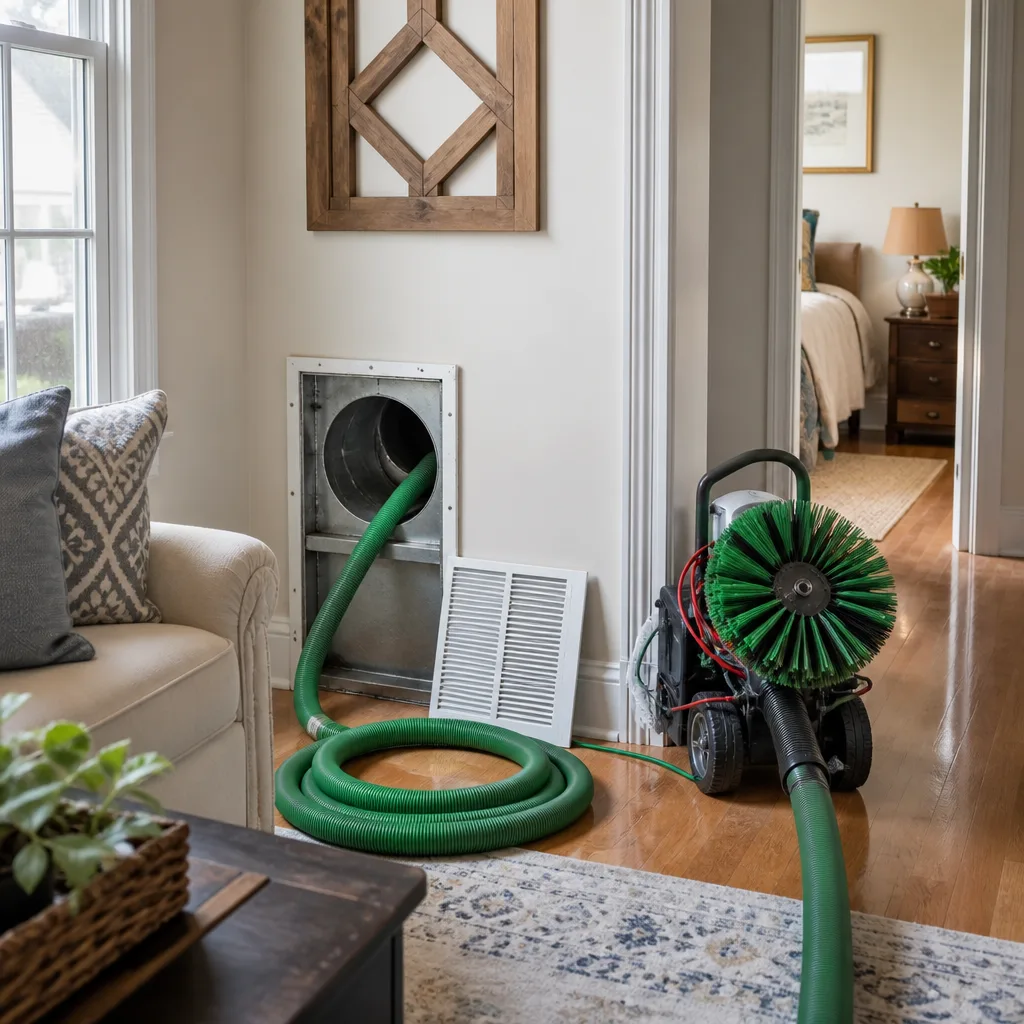
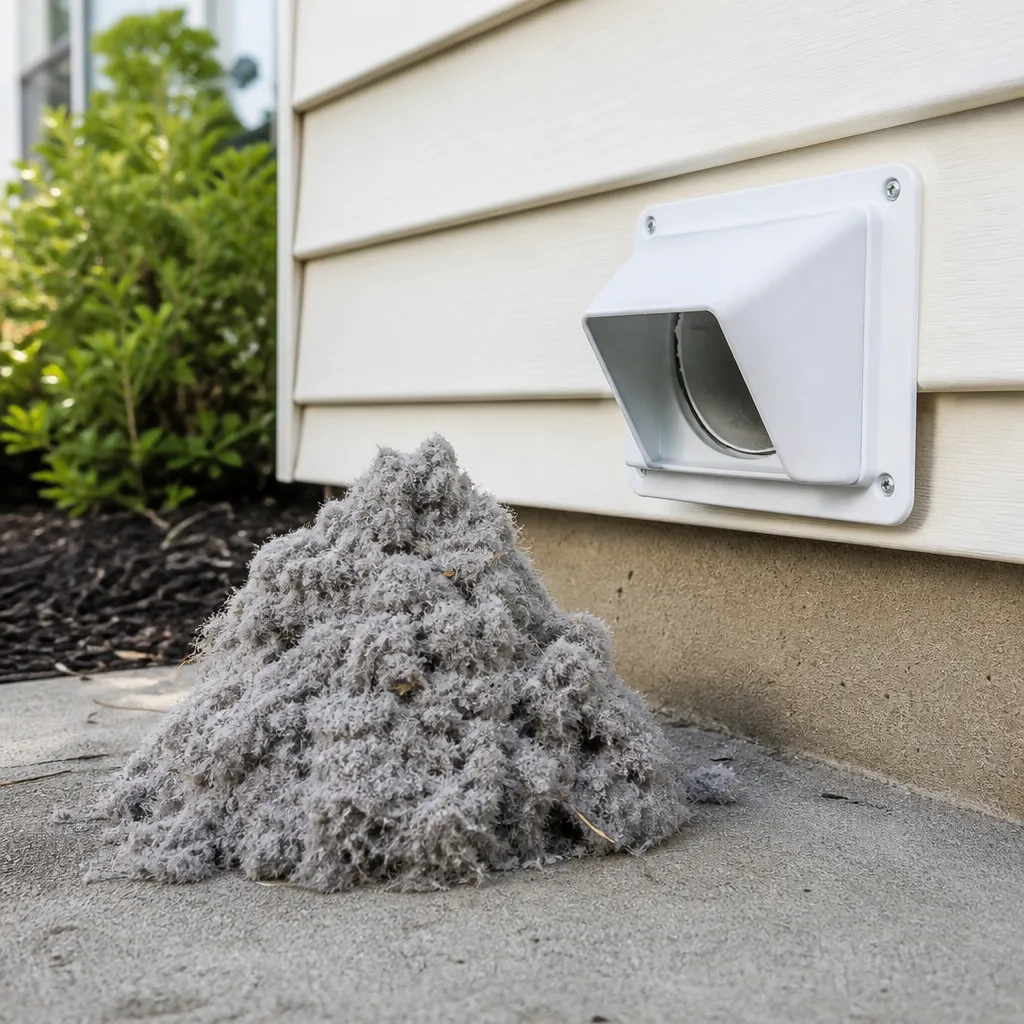
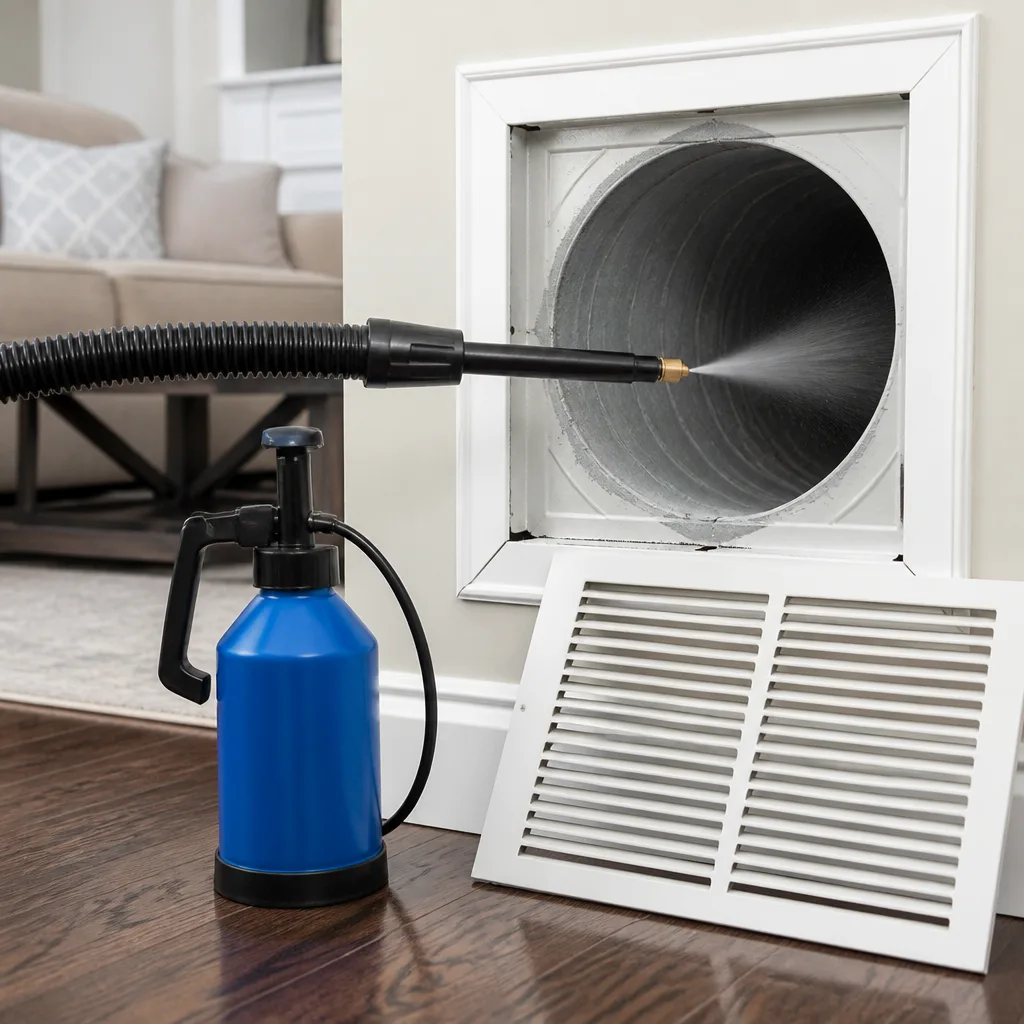
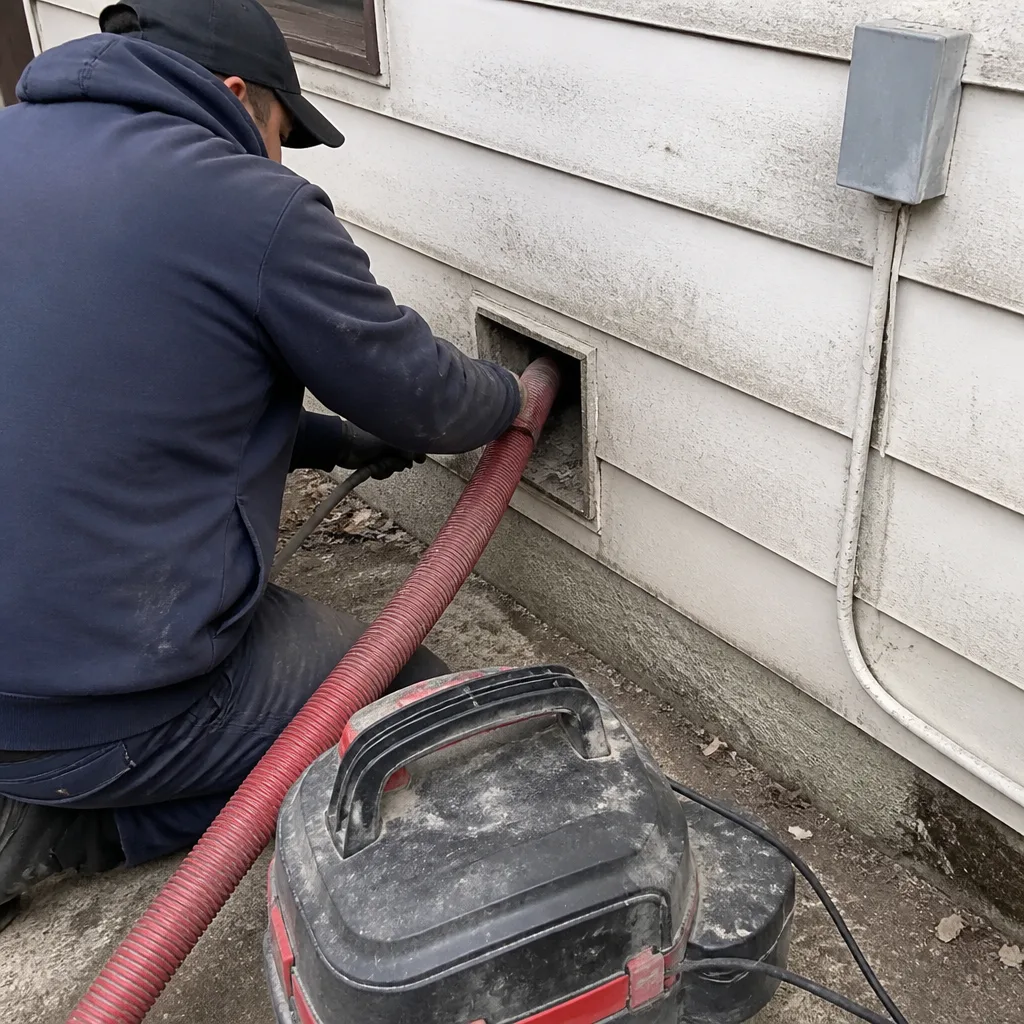 Before
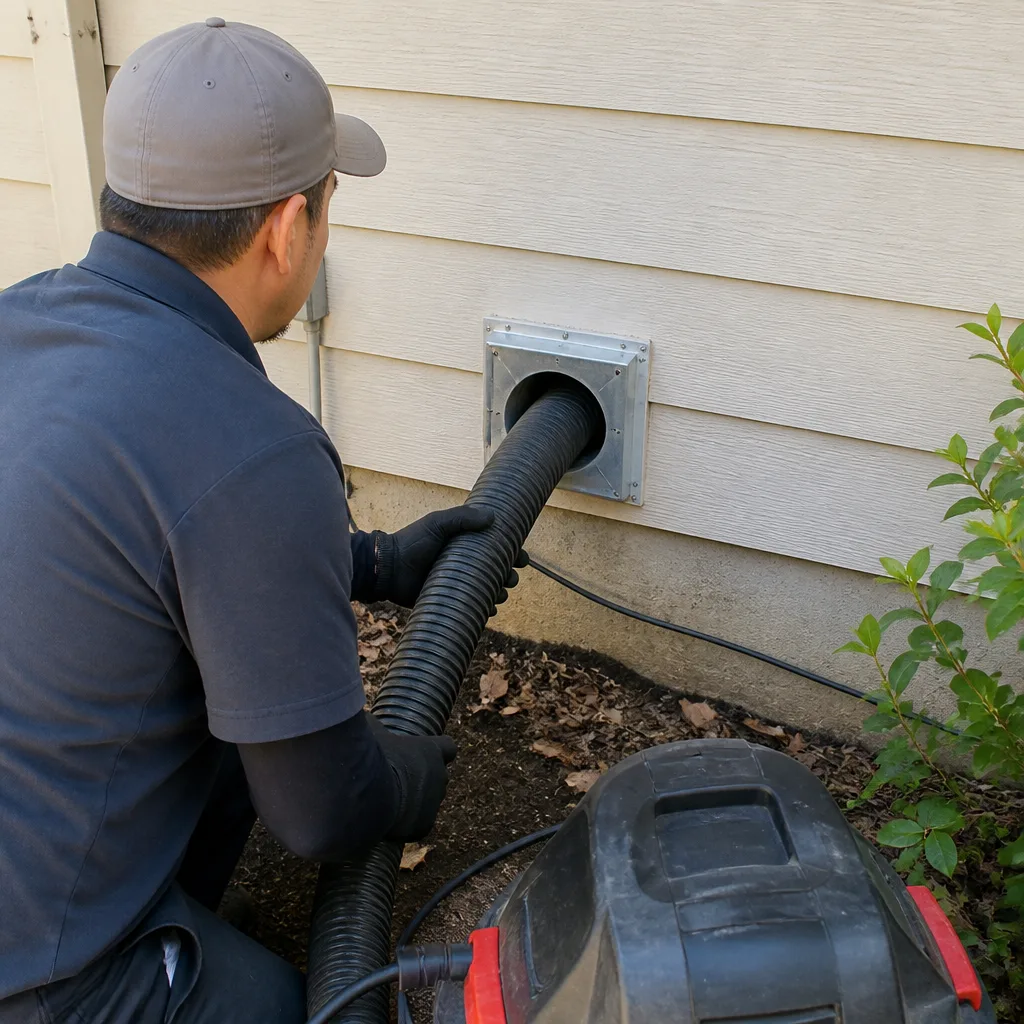 After
After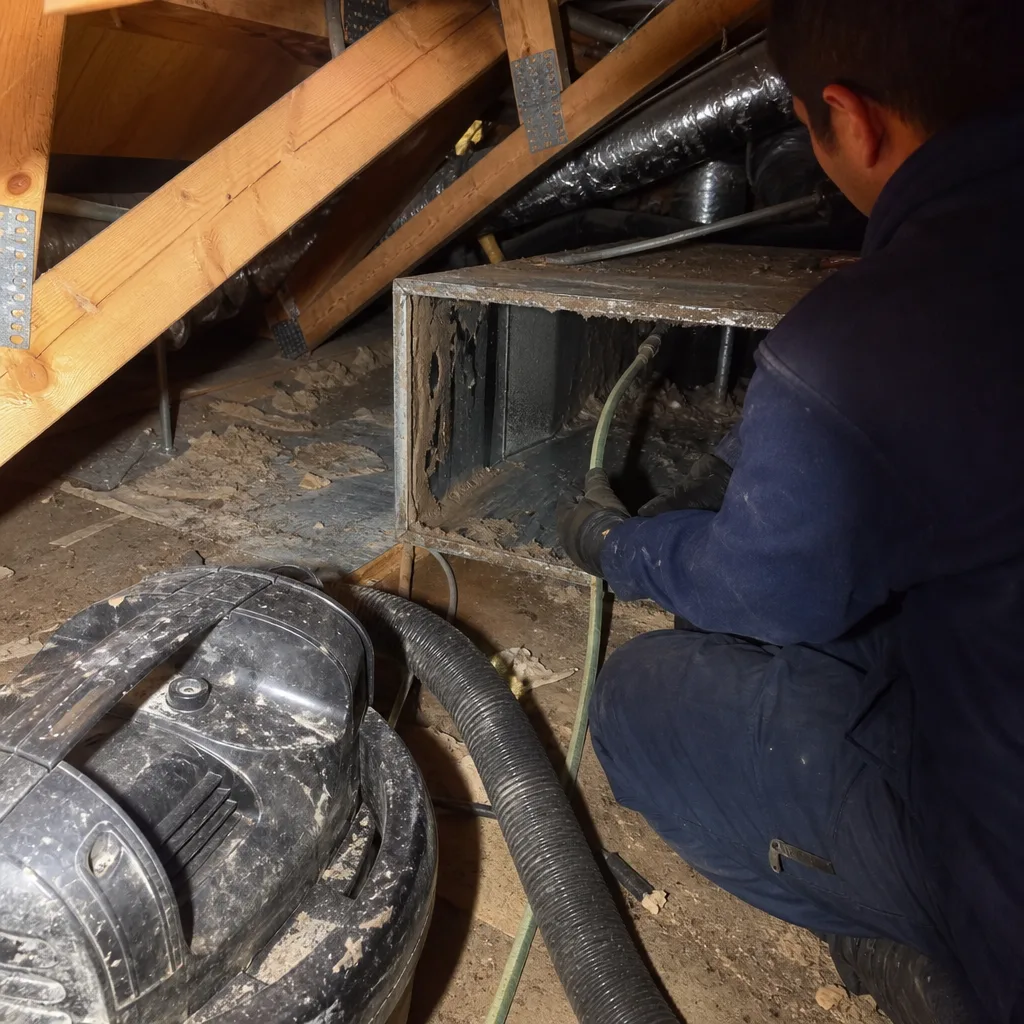 Before
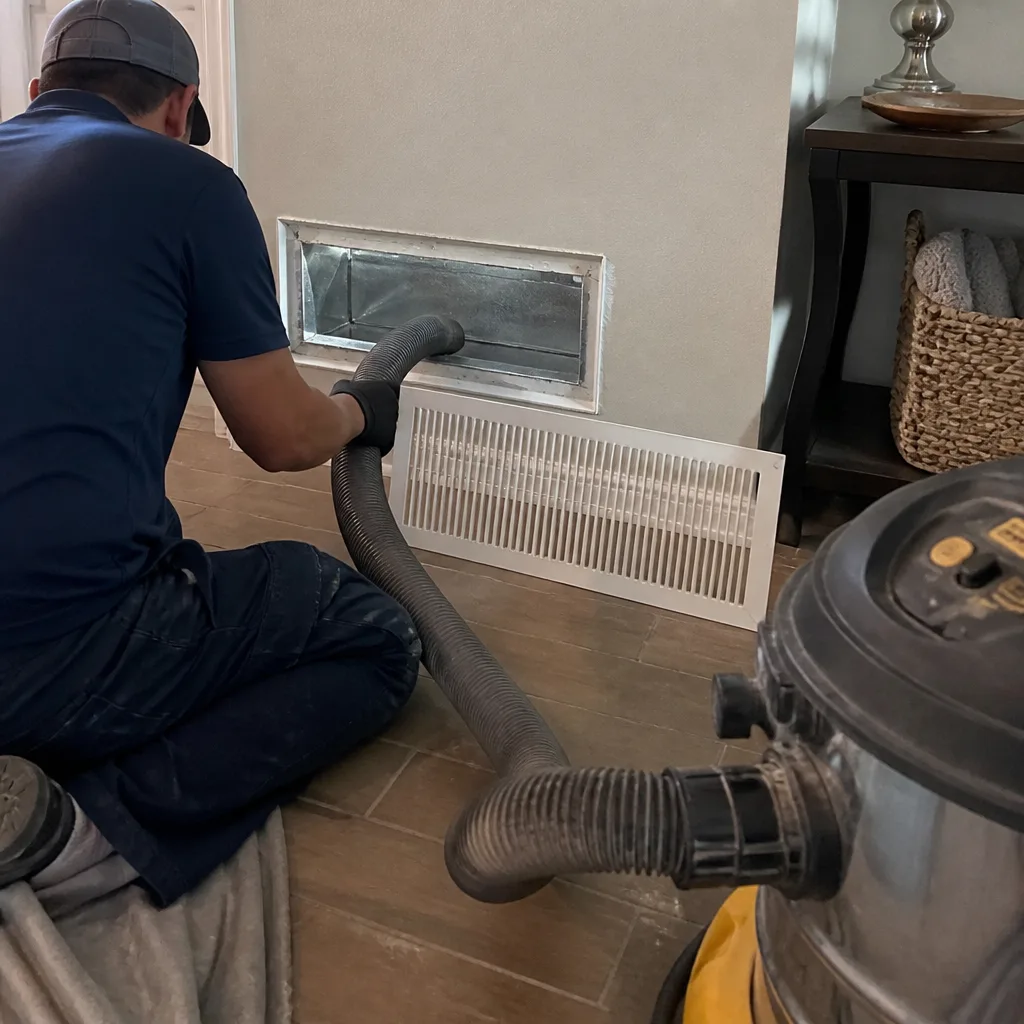 After
After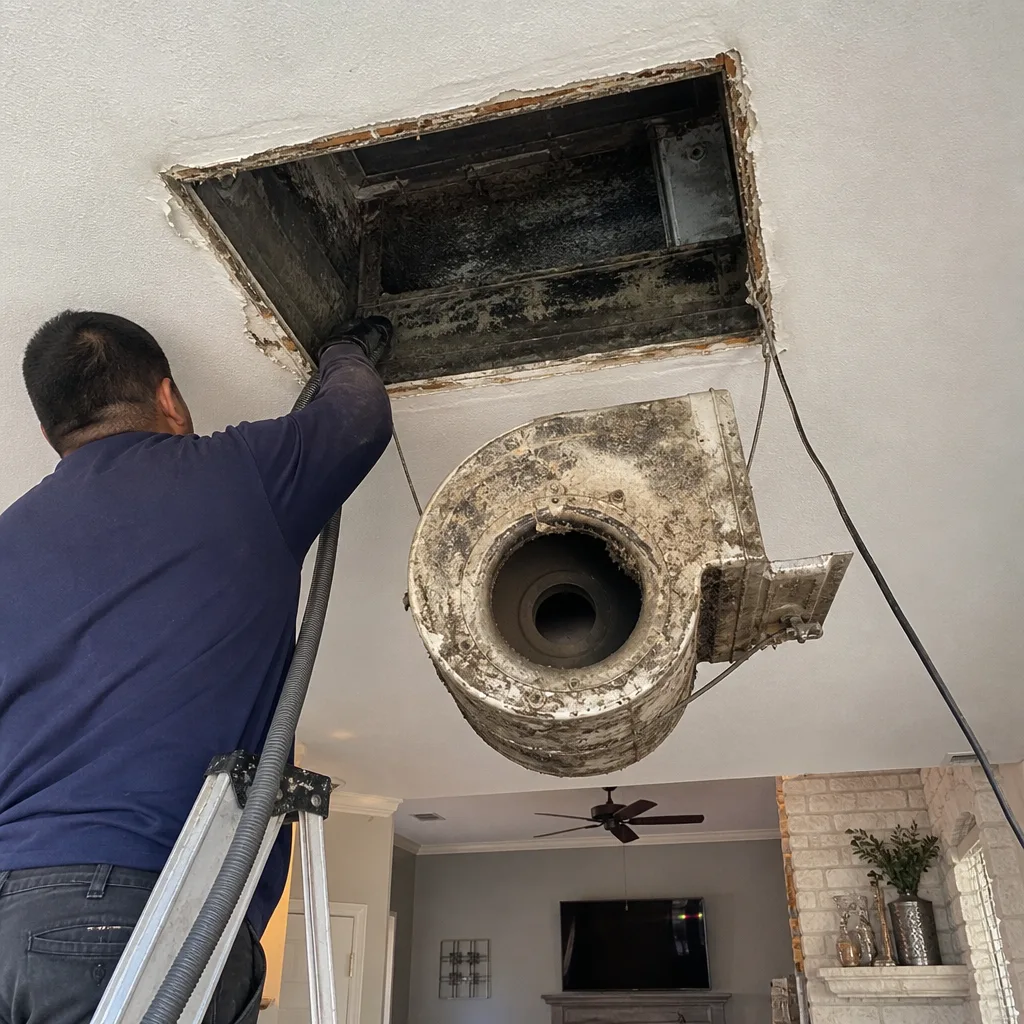 Before
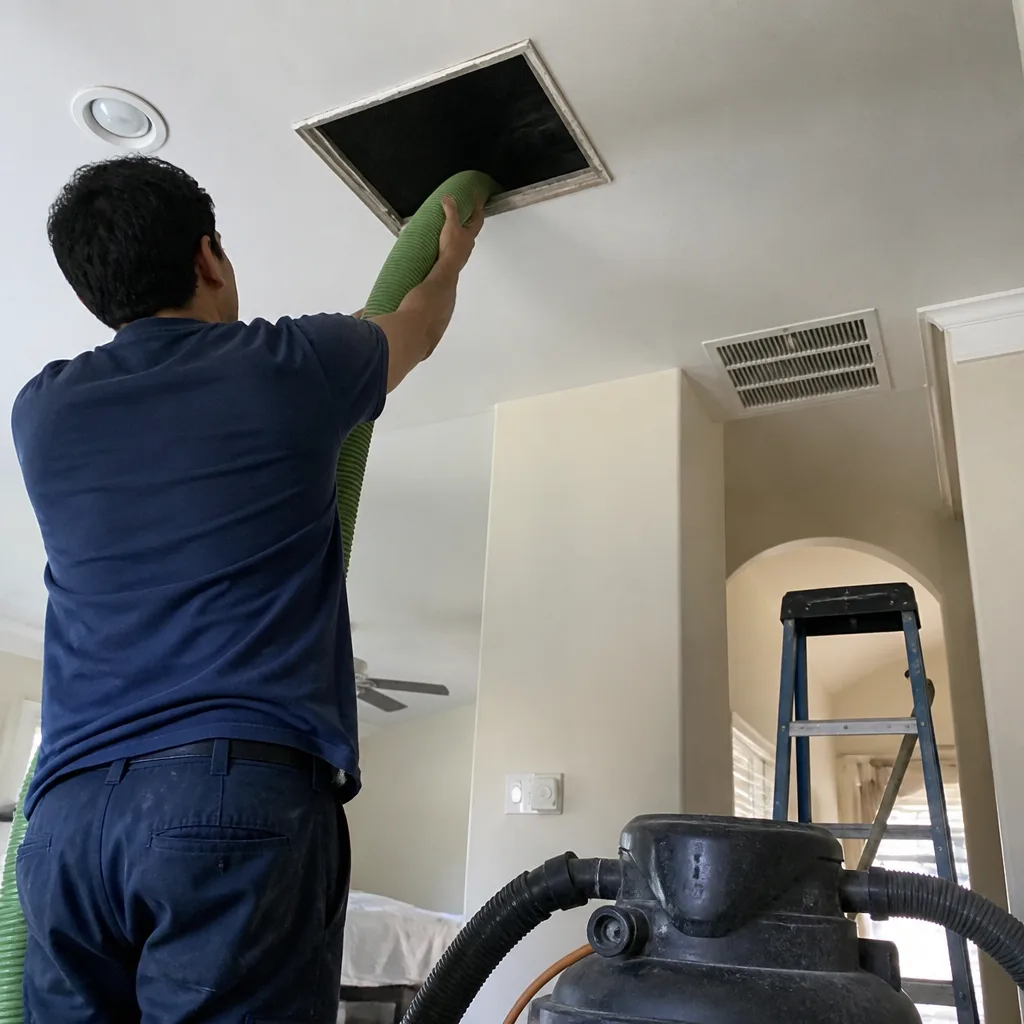 After
AfterVideo Inspection in Leander, TX
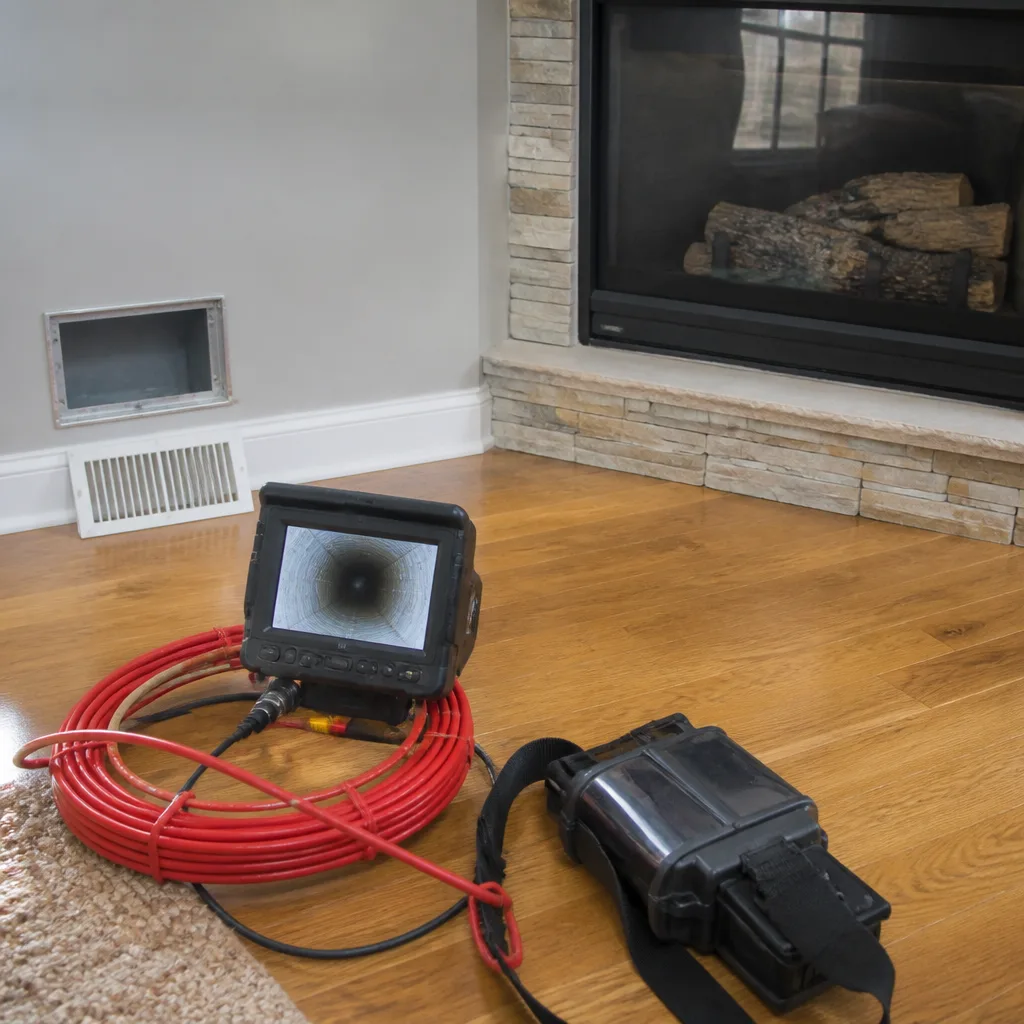
Duct video inspection is exactly what the name says: a camera goes inside your ductwork and shows you what’s there, on a screen, before anything else happens. In Leander, where homes built between 2005 and 2020 often have flex duct runs tucked into tight attic spaces above garages and bonus rooms, that camera is the only honest way to know whether a cleaning is needed, whether a repair is needed, or whether the system is actually fine. CleanRun’s inspection cameras produce still photographs and video footage of every run, and that documentation travels home with you as part of the standard job record – not an add-on, not a summary paragraph.
If you’ve been quoted a flat-rate cleaning by someone who never looked inside first, that quote was built on a guess. Our inspection starts before a price is written, and the price is written before any work starts – that’s Haven Standard Clause 1, and it applies on every job, no exceptions. To see how the inspection fits into the full process, visit our Air Duct Cleaning in Leander service page. Or call (737) 252-1285 and a live person will answer.
When You Need Video Inspection
Not every situation calls for an immediate cleaning. Some call for answers first. These are the scenarios where a camera is the right starting point:
- You’re buying or selling a home in Leander. Homes in neighborhoods like Crystal Falls, Travisso, and Fairways at Crystal Falls frequently change hands with no record of duct cleaning or duct condition. A pre-purchase inspection gives buyers documented evidence of what they’re inheriting. Sellers who can hand over a clean photo record often move through inspection contingencies faster.
- Dust returns within a week of your last cleaning. If a fine layer of debris shows up on registers and furniture surfaces shortly after a cleaning service, the cleaning either missed sections or didn’t remove the source. The camera tells you which.
- You smell something musty or sharp when the system kicks on. In Leander’s climate – hot, humid summers with extended AC runtime from May through October – condensation inside poorly insulated flex duct is common. That moisture creates conditions where biological growth is possible. A camera identifies exactly where the problem is located, so remediation is precise rather than speculative.
- An older renovation or addition was connected to the existing system. Additions built onto homes in the Leander city limits before 2015 sometimes involved duct connections made without permits or inspected by the city’s mechanical inspector. Inside those connections, the camera regularly finds crimped sections, disconnected joints, or construction debris sitting in the plenum – the central chamber where the main trunk line meets the air handler.
- Your energy bills climbed without an obvious explanation. A disconnected duct run dumps conditioned air into an attic or wall cavity instead of into a room. The system runs longer to compensate. The camera locates the gap that the utility bill was trying to tell you about.
- You’ve never had the system inspected and the home is more than six years old. Most Leander homes built after 2000 use flexible duct – a plastic-coated wire helix wrapped in fiberglass insulation. By year six to eight, inner liner sagging, debris accumulation at low points, and micro-tears near fittings are common findings. Without a camera, none of that is visible from a register opening.
Our Video Inspection Process
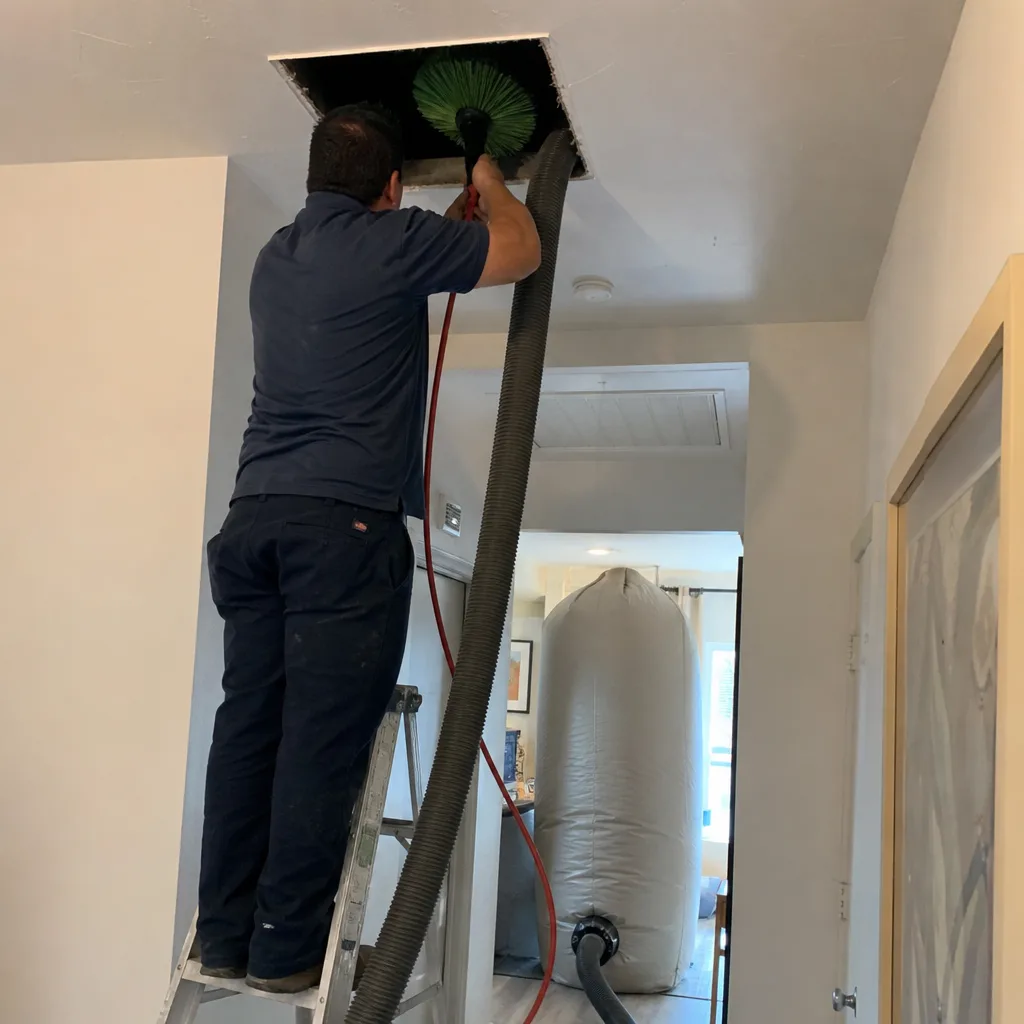
The process is methodical, not theatrical. Here’s what happens from the time the truck arrives to the time you get your photo record.
- System map before anything is touched. The technician walks the home and maps every supply register, return grille, and duct run to the air handler. In a typical 2,200-square-foot Leander home, that’s between 12 and 18 supply runs and two to four return runs. The map becomes the framework for the inspection report – every run gets its own notation.
- Written price delivered before the camera enters the duct. This is Haven Standard Clause 1 in practice. The scope, the price range, and what’s included are written down and handed to you. If the inspection reveals a condition that changes the scope – say, a disconnected joint or a section of failed liner – a revised written price is produced before any additional work is discussed. You’ll never be handed a bill that didn’t exist when the job started.
- Camera insertion at the air handler and plenum. The inspection camera – a flexible rod with a lighted lens on the end – enters the system at the air handler, where the supply plenum connects to the main trunk. This is the highest-traffic point in the system and the most likely location for debris accumulation, biological growth near the evaporator coil drain pan, and connection failures. Everything the camera sees is recorded.
- Individual duct run documentation. Each run is photographed from the register end as well. The technician notes duct material, any visible obstruction, liner condition, and the approximate debris load at low points and elbows. In homes with Rotobrush-compatible duct layouts, the inspection footage directly informs the cleaning configuration used in the next phase. Flex duct with significant liner damage is flagged for repair assessment rather than cleaned – agitating a compromised liner makes it worse, not better.
- Return side inspection. Return grilles pull air back to the handler. They’re also where pet hair, construction debris, and insulation fragments concentrate. The camera confirms whether the return-side accumulation is surface-level – cleared in a standard cleaning – or whether material has migrated into the return plenum and into the air handler cabinet itself, which changes the scope.
- Photo record compiled and delivered. Before the technician leaves, the documented photo record – still images of every run, before and after if cleaning follows, with written notes on findings – is compiled and delivered. You’re not being told your ducts were dirty. You’re being shown what was inside them, labeled by run and location. That record is yours. CleanRun has held this documentation standard since its first job in 2013.
BeforeAfterVideo Inspection Pricing in Leander
Duct video inspection in Leander typically runs between $89 and $175 as a standalone service, depending on home size, number of duct runs, and system accessibility. For a full breakdown of what you can expect to pay, see our guide on How Much Does Air Duct Cleaning Cost? (2026 Price Guide) - Leander, TX. Here’s how the numbers break down:
- Homes under 1,800 sq ft (10-14 runs): $89-$120. Single-story ranch layouts common in older sections of Leander and around Hero Way corridor. Accessible attic, straightforward plenum configuration.
- Homes 1,800-2,800 sq ft (14-20 runs): $120-$155. Two-story plans common in Crystal Falls, Travisso, and the Villages of Leander subdivisions. Second-floor returns and tight attic access above the upper-level bedrooms add time.
- Homes over 2,800 sq ft or multi-system homes (20+ runs): $155-$175+. Larger estate-style homes or properties with two separate air handlers. Each system is mapped and documented independently.
When video inspection is booked alongside an Air Duct Cleaning, the inspection fee is applied toward the cleaning total – the documentation doesn’t cost extra when the two services are performed on the same visit. That’s the standard CleanRun package structure, not a promotional offer with an expiration date.
What does not affect the price: how dirty the ducts turn out to be, how many photographs are taken, or how long the report takes to compile. The written price you receive before the camera goes in is the price. If something discovered during the inspection changes what’s needed, a revised written price is presented and you decide. No surprise line items at the end.
Call (737) 252-1285 for an exact written quote. We’ll ask a few questions about your home’s size, age, and system configuration, and give you a number you can put next to any competitor’s quote.
What the Camera Typically Finds in Leander Homes
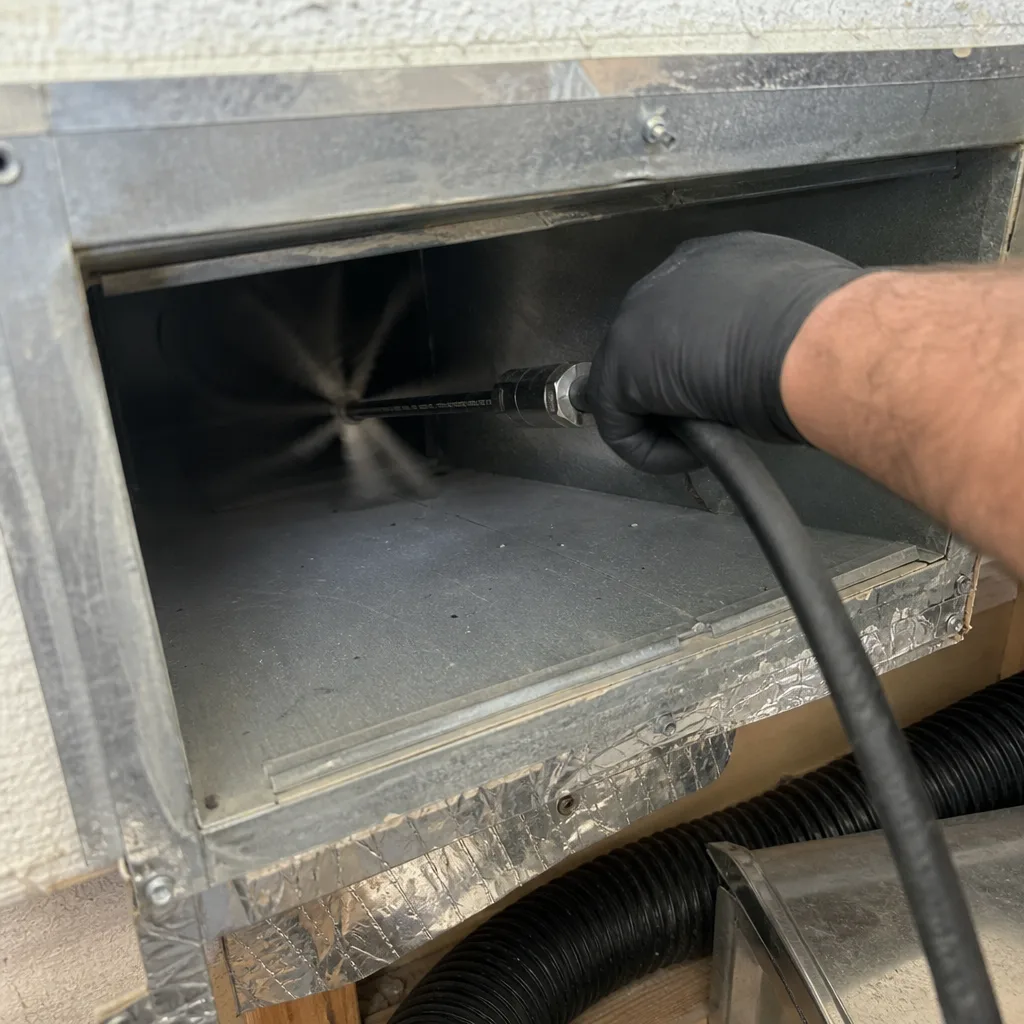
Leander’s growth has been fast. A significant portion of the housing stock was built between 2003 and 2018 by production builders working quickly on large subdivisions. That context matters when you’re looking at what the camera finds.
Construction debris in the plenum is the most consistent finding in homes that have never been inspected. Drywall dust, insulation batting fragments, and wood shavings enter the system during the build when the HVAC system is often run before the structure is sealed. In homes in the Lakeline Ranch and Block House Creek areas, we regularly see this material compacted at the first elbow off the plenum, three to five feet in from the air handler.
Flex duct liner failure is the second most common finding. The inner liner of flexible duct degrades over time, particularly in Leander’s attic temperatures, which routinely reach 140-160 degrees Fahrenheit in July and August. The liner develops small tears near fittings, collapses at low points in unsupported runs, or pulls away from the metal collar at the register boot. None of this is visible from the surface. The camera shows the exact location and extent of the failure, which is what makes a repair estimate accurate rather than approximate.
Blocked or disconnected return runs are rarer but carry higher consequences. A return duct that’s been accidentally sealed during a renovation – by insulation, a misplaced panel, or a drywall repair – creates negative pressure in the living space. The system pulls air from wherever it can find it, including crawl spaces and wall cavities. The camera identifies this quickly; the pressure readings confirm it.
FAQs – Video Inspection in Leander
Is duct video inspection worth it if my system is only a few years old?
Yes, if you have no documented record of what’s inside. Age is not the same as condition. New homes in Leander are built under time pressure, and construction debris in the plenum is common even in systems that are two or three years old. The camera answers the question definitively rather than leaving it as a guess. If the system is clean, the photo record confirms it and you can move on. Call (737) 252-1285 for a written quote specific to your home’s size.
What’s the difference between a video inspection and a standard duct cleaning assessment?
A standard assessment is a visual check at the register opening and at the air handler cabinet – technician looks in with a flashlight, notes what’s visible from the surface. A video inspection puts a camera into every run and documents what’s there with still photographs and footage. The camera reaches elbows, low points, and sections near the plenum that surface assessment cannot see. For any home where a cleaning is being considered, the camera gives you a before record that documents what the cleaning actually removed.
Can I see the footage from my inspection, or does it just go into a report?
You receive the documented photo record as a standard deliverable – still images from each run, labeled by location, with written technician notes. The photo record is yours to keep. It’s the same documentation standard CleanRun has used since 2013, and it exists so you can verify the condition of your system yourself rather than taking our word for it. If a cleaning follows, you receive before and after photos from the same runs so the comparison is direct.
How long does video inspection take in a typical Leander home?
For a home with 14 to 18 duct runs – common in the 2,000-2,400 square foot range that makes up much of the housing stock in Leander subdivisions – the inspection runs approximately 90 minutes to two hours. Larger homes with two air handlers or particularly tight attic configurations take longer. The technician won’t rush the camera through sections to meet a time target; every run gets fully documented. If cleaning is scheduled on the same visit, plan for a half-day block.
Why CleanRun and Not a General HVAC Company
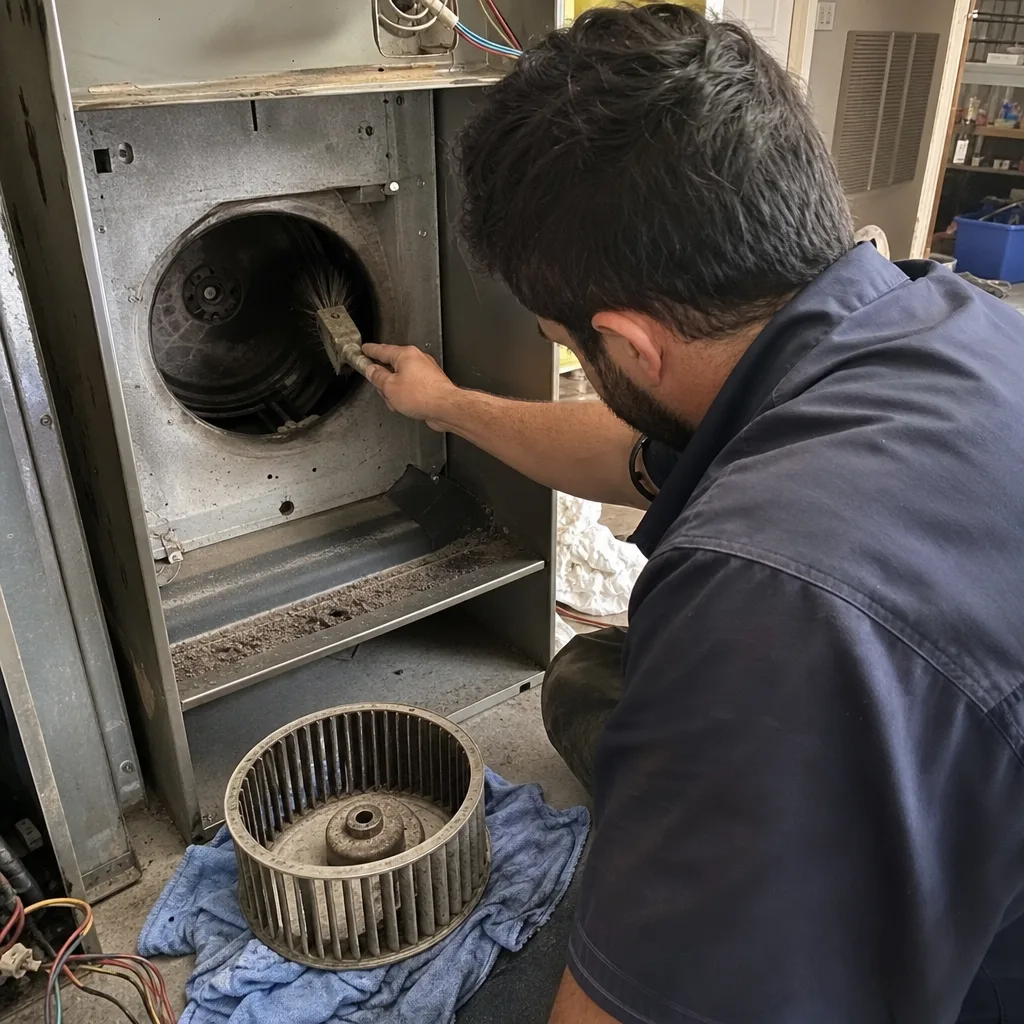
Most general HVAC companies offer duct inspection as part of an annual maintenance visit. The inspection is typically a surface check at the handler and a few register openings – useful for confirming the system is running, not useful for documenting duct condition. CleanRun’s work is limited to duct systems: cleaning, inspection, repair, and sealing, including Commercial Duct Cleaning. That focus means the camera work is not incidental to a broader maintenance call; it’s the primary task, performed with equipment and documentation processes built specifically for it.
Tomas Reyes built CleanRun’s inspection protocol around one principle: the customer should be able to verify everything. The written price before work starts, the photo record at the end, the Nikro and Rotobrush equipment on the truck – all of it is designed to be checked. You can look up the equipment manufacturers before agreeing to the price. You can compare the before and after photos yourself. You can hold the 365-Day Done Right Promise in writing if a problem resurfaces. That’s not a brand positioning statement; it’s the operational structure of every job.
Serving homeowners in Leander as part of CleanRun’s broader service area means we understand the specific building stock, the attic conditions, and the duct configurations common to this part of Williamson County. That context is in the inspection, not just the marketing.
Key Takeaways
- Video inspection documents duct condition with photographs of every run – before and after – delivered to the customer as a standard job record.
- Standalone inspection in Leander typically costs $89 to $175 depending on home size and number of runs; when combined with cleaning, the inspection fee applies toward the total.
- Written price is delivered before the camera enters the duct, every time, with no exceptions – Haven Standard Clause 1.
- Leander homes built between 2003 and 2018 commonly show construction debris in the plenum and flex duct liner degradation at low points and fittings – findings that surface inspection misses.
- The 365-Day Done Right Promise is written into every job. If the inspection or cleaning is not right, CleanRun makes it right.
- Background-checked, uniformed technicians identified by name before arrival – Haven Standard Clause 3.
Schedule a Video Inspection in Leander
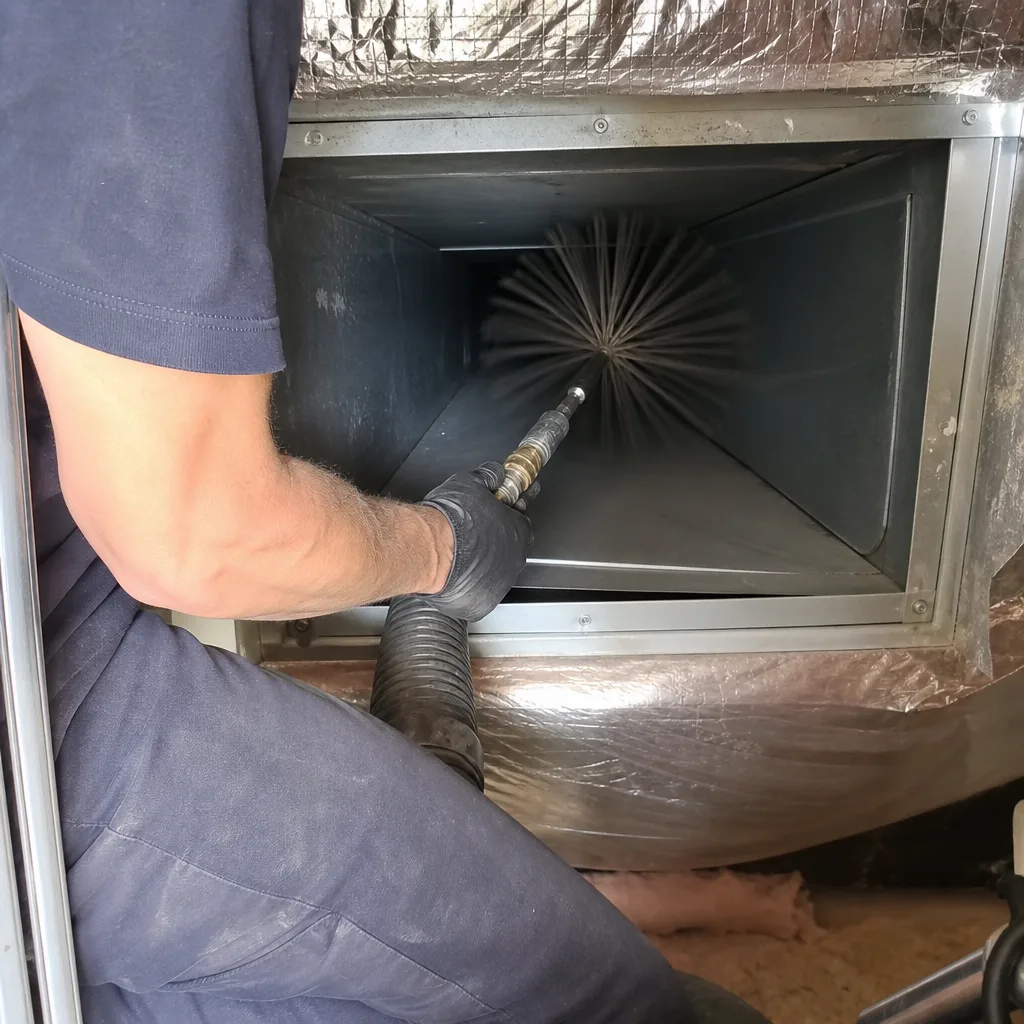
Call (737) 252-1285 to schedule your video inspection or find Air Duct Cleaning Near Me in Leander, TX. A live person answers every call. We’ll confirm your home’s size and system configuration, give you a written price range before the appointment is booked, and send a uniformed technician whose name you’ll know before the truck pulls up. The photo record goes home with you the same day. If you have a competitor’s written estimate, bring it – we’ll put our number next to it in writing at no charge.
Written by Tomas Reyes, Owner at CleanRun Air Duct Cleaning Leander, serving Leander.